Speed bumps ahead: How to help children deal with the stresses of modern living
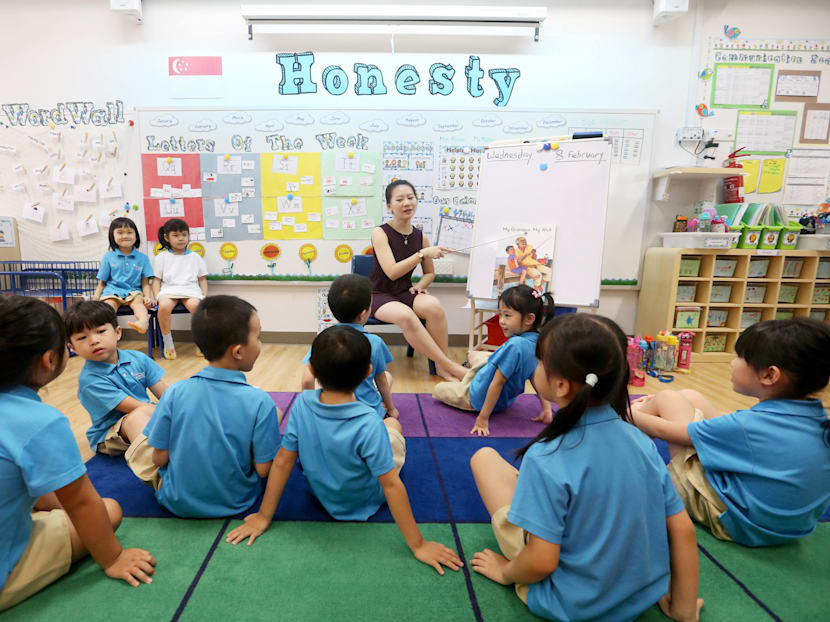
TODAY file photo
Pressures are constantly mounting on children these days. From doing well at school, to excelling at sports, and even when it comes to friendships, modern life places stresses on children, and coping with the inevitable bumps on the road is something parents should prepare them for.
Many parents have bemoaned the fact that their children do not get to enjoy the carefree days of youth they themselves experienced when young.
While this is an exaggeration, there is no doubt that the fast pace of modern life, the need for instant gratification and other aspects of growing up place strains on the young.
For one thing, the changing environment means children these days are more likely to feel let down by circumstances or events that would be considered normal in another age.





For that reason, resilience should be instilled in children from a young age, to ensure they can cope with and bounce back from testing situations.
“Resilience is the ability to cope with and bounce back from adversity,” explained Dr Goh Kah Hong, Head & Consultant, Psychological Medicine, at Khoo Teck Puat Hospital. “It is important to develop resilience from young as we are creatures of habit. Children are much more amenable to moulding and building good habits. However, it is never too late to start.”
So what can parents do to ensure that children are able to cope with life’s challenges? The key is to provide family support and to be good role models.
“Cultivate strong, positive family relationships,” said Dr Sara Delia Menon, a clinical psychologist at Alliance Counselling. “Social connections at home, in school and in the community are a great buffer for life’s stressors. Model healthy coping and self-regulation strategies so that your children see how to manage stress effectively. Talk to your children openly about difficult emotions, and help to recognise these in themselves.
“Create a hopeful and optimistic environment that recognises the difficulties and challenges of life, but maintains a belief that things will get better or that we can learn from our experiences, whether good or bad,” she added.
QUANTITY VS QUALITY
Dr Goh pointed out that there is no one-size-fits-all solution when it comes to parenting, but provided an example that is relevant to the Singapore context with regards to family time: It is a common scenario here for both parents to be working and spending little time with their own children - parenting is often left to helpers or grandparents, neither of which replaces your parenting, especially when it comes to limit setting. The early years are vital in children forming strong and secure attachments, which directly correlates to the development of a sense of security.
Said Dr Goh: “Research has shown that, especially with younger kids, there is no such thing as ‘quality time’ only; quantity also matters.
“We need to make time to be physically and mentally present with our children. Our presence can help them feel secure, feel supported in good and bad times, and develop their confidence and frustration tolerance.”
Dr Menon recommended emphasising the need to look after yourself and others. For example, encourage your children to take a break if they are tired, or make sure that they have good eating and sleeping habits.
It is also essential to maintain a good home routine to provide consistency and security for your children, whilst acknowledging that change is an inevitable and often useful part of life, she said.
Parents should also encourage their children to be more independent. It is only when you take off their training wheels that they will be able to live for themselves and develop mechanisms to cope with stress.
TWO-WAY COMMUNICATION
But while giving children some independence is beneficial, parents should continue to ensure that they are sheltered from some of the harsher realities of life.
“Children are especially prone to influence; a very good example is a child mimicking what he sees from cartoons/movies/games,” said Dr Goh. “We are what we see and what we experience. Which is why children should not be exposed to violence and sexual content inappropriate for their age. Parents should pay particular attention to video games and YouTube videos their children are playing and watching.”
Dr Menon urged parents to provide age-appropriate exposure to their kids.
“It is important to be clear as a parent what your goal is when introducing your child to the ‘real world’, and then question if your expectations are realistic,” she said. “Children across different ages have their own unique way of understanding their environment due to natural changes in cognitive and emotional development. So the same stimuli will mean one thing to a five-year-old, who naturally finds it very difficult to take perspective, and another to a 12-year-old, who is better able to think in more abstract terms.”
As with most parenting issues, communicating with your child is important in helping to building resilience. Dr Goh likened parenting to a tango: You need to feel the give and the resistance while trying to influence and advocate for your children. A good tango partner knows how to adjust and adapt.
“It’s important for parents to be clear in stating their expectations and to be consistent in encouraging children to work towards the goals,” said Dr Goh.
“Remember that communication is a two-way street; while it is important to tell the children what you expect, it is equally important to make sure they are on the same page in understanding your expectations.”