

Staying united in the face of terror
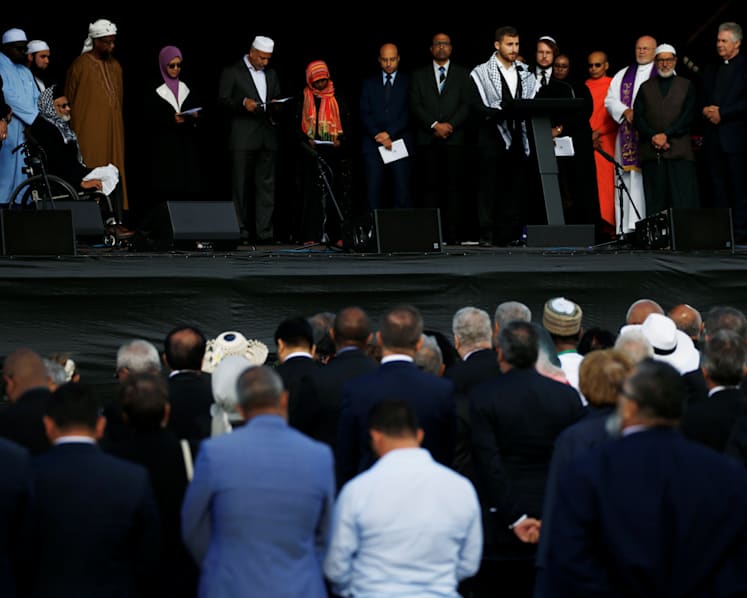
Names of victims of the Christchurch mosque attacks being read out at a national remembrance service.
On Sunday (April 21), multiple churches and hotels were bombed in Sri Lanka by radical extremists killing over 300 people. Just last month, a single Australian gunman with a twisted, racist ideology similarly killed 50 worshippers at two Christchurch mosques in New Zealand.
The random nature and targets of such terrorist attacks have become all too common.
It seems inevitable that Singapore too will, one day, have to deal with the fallout of such incomprehensible terrorist attacks.
What it does to our social fabric will depend on how we choose to respond. It will certainly test our higher ideals enshrined in our national oath of allegiance where we “…pledge ourselves as one united people, regardless of race, language or religion.”





New Zealand Prime Minister Jacinda Arden was quick to unite the country following the attack in Christchurch, reassuring the migrant communities most affected and reminding the world that “New Zealand is their home — they are us.”
Prime Minister Arden went on to demonstrate both leadership and compassion in dealing with the crisis. She reached out to the Muslim community affected, wearing a black headscarf as a mark of respect, and promised to support victims through their grief.
New Zealanders followed their leader’s example. Women across New Zealand donned headscarves and posted photos of themselves doing so. Others declared that the attacker does not speak for them and church leaders offered prayer and solidarity for their “Muslim brothers and sisters”.
This is in stark contrast to US President Donald Trump’s call during the 2016 presidential campaign for a “total and complete shutdown of Muslims entering the United States” following a mass shooting believed to be inspired by the Islamic State terrorist group.
READ ALSO:
- Terror threat: Why Singaporeans should care
- Who says Singaporeans don’t care about terror threat
New Zealand’s response to the Christchurch attack comes as no surprise as it has built an inclusive and tolerant society over many years.
Minority cultures, including that of the indigenous Māori people, can be seen in many aspects of daily life in New Zealand — from their cuisine and language, to what children learn at school and how the country is governed.
Back in 2006, with the support from all sides of politics, New Zealand appointed its first Governor-General of Indian and Pacific descent, Sir Anand Satyanand.
Another melting pot of communities that has remained united in the face of multiple terrorist attacks is London. It faced the devastating 2005 bombings that killed 52 people and a spat of smaller attacks in early 2017.
Each time, the Mayor of London, on behalf of the people, has delivered a message of defiance refusing to be “cowed, intimidated, or divided by any terrorist attack”. That people in London quickly returned to their normal routine also underlined this defiance and sense of unity.
Despite Sri Lanka’s chequered history, one hopes the country stays united as it comes to terms with the recent horrific attack on Easter Sunday.
Soon after the tragedy in Christchurch a community leader from Grafton, a small rural Australian town where the perpetrator grew up, was interviewed in the Australian media.
He noted the homogeneous Anglo culture of the town and the effect this may have had on the perpetrator.
“If the town is very homogeneous, then you’re not used to seeing anybody other than somebody who looks like yourself. And if that is being fed somewhere along the line by some nasty website that’s blaming the Muslims or Afghans or whoever for our problems, then you can sort of see that they don’t have the cultural literacy skills to actually navigate that cesspool or whirlpool that they have got themselves caught up in.”
Award winning filmmaker, Deeyah Khan, who interviewed white supremacists in White Right: Meeting the Enemy and radicalised British Muslims in Jihad: A Story of the Others has suggested that what makes such people usually change is genuine interaction with somebody from the “other side”, who behaves in a way they do not expect.
This creates a dissonance in their mind and gets them questioning their absolute and simplistic view of the world.
She recounts, for instance, her time spent with Brian Culpepper, head of public relations for the Nationalist Socialist Movement, the biggest and oldest Neo-Nazi organisation in the US. Spending time with Ms Khan led him to question his beliefs and eventually walk away from the racist organisation he helped to promote.
It is important for people from different communities in a society to have regular and genuine human interaction with each other to foster empathy and understanding. Segregation, on the other hand, only feeds prejudice, fear and hatred of others.
Singapore has built a diverse and harmonious society, which will hopefully remain united in the face of a terror attack.
It has taken effort by both the people and successive governments to refrain from mixing race and religion with politics, something our neighbours, Indonesia and Malaysia, have struggled to do.
Singaporeans have also accepted some limits on their freedom of speech to protect minorities from unnecessary vitriol, which only exacerbates misunderstandings between different communities and encourages stereotyping.
Perhaps most importantly, however, the Government has made a concerted effort to encourage interaction between the different racial groups in all domains of life to reduce prejudice and promote tolerance.
This has been done through intrusive but effective public policy such as racial quotas for public housing, conscription for all men and reserving seats for candidates from a minority race in Parliament through the Group Representation Constituencies.
We live in a dangerous world where radicalisation can now happen over the internet and attacks can be carried out by both organised groups and self-radicalised “lone wolfs”. All one can do in such an environment is to remain united, build resilience, and confront such hatred head on.
ABOUT THE AUTHOR:
Chirag Agarwal is a former Singaporean diplomat who frequently writes on socio-political issues in Singapore.




