

Voices from the Front Lines: How my patient’s death from Covid-19 made me confront my own mortality
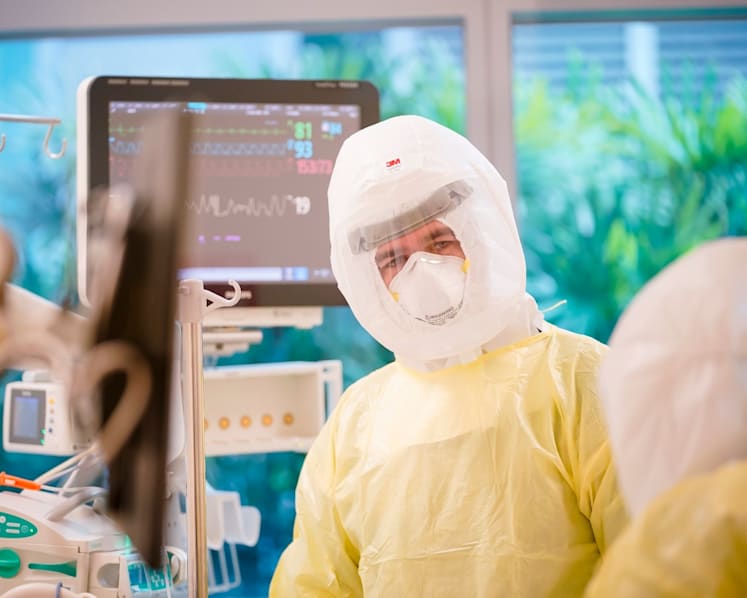
Dr Shanaz Matthew Sajeed of Ng Teng Fong General Hospital.
As the fight against Covid-19 will be a long-drawn one, TODAY’s Voices section hopes to shine a light on the triumphs and struggles of Singapore’s front-line workers by publishing their first-hand accounts.
In this instalment of Voices from the Front Lines, Dr Shanaz Matthew Sajeed of Ng Teng Fong General Hospital recounts how the death of his patient, who was in intensive care for Covid-19, left him feeling vulnerable.
As a specialist in both emergency medicine and intensive care medicine, I have had a unique insight into Singapore’s battle against Covid-19.
I have witnessed first hand the nation’s battle in the emergency department and the intensive care unit (ICU) — the first and final lines of defence.





Soon after Singapore raised its risk assessment alert level to Orange on Feb 7, I was seconded to the ICU full-time in anticipation of a surge in critically ill patients.
It is in the ICU where the sickest patients end up and where one observes first hand the seriousness of the coronavirus. Let me state unequivocally that Covid-19 has the potential to mercilessly ravage the body.
I recall one patient whose loss left an indelible mark on me. The patient contracted Covid-19 after returning from overseas and was admitted to the ICU. The team worked tirelessly to treat the patient, managing her on a ventilator and supporting her failing organs.
Despite the team’s best efforts, the patient’s lungs worsened and became as stiff as rocks, and swelling developed in her brain. It became clear that the patient’s death was imminent.
She died after a prolonged stay in the ICU.
As I spoke to the family that day, their devastation and weariness were palpable. Yet, even in the midst of their grief, I will never forget the family’s expression of gratitude in the face of the myriad of emotions they must have felt.
They thanked the medical team for looking after their loved one and recognised that every effort had been made to sustain her. The hospital extended help to the family through a medical social worker and facilitated a normal burial and funeral, as she had tested negative and was free of the virus before she died.
Having a burial in keeping with their religious beliefs gave them closure and was an important aspect of the grieving process.
As a doctor looking after that patient, I was confronted with my own mortality.
My patient was not old and was fairly healthy before being admitted to hospital. She was a mother of three and a wife to a loving husband.
Being a father to three children, I felt somewhat vulnerable. It made me realise that this virus is no respecter of persons; even younger people can fall seriously ill. It drove home the fact that being alive, healthy and able to go home to our loved ones every day is a blessing.
It made me realise that the perceived inconvenience of the circuit breaker and other First World problems, such as not being able to enjoy one’s favourite beverage or food, pale in comparison to the struggles of patients stricken by the disease as well as their families.
Singapore is still in the midst of its fight against the virus.
The last few months have passed in a blur, but they have crystallised one thing for me: No sacrifice is too big to save a life.
ABOUT THE WRITER:
Dr Shanaz Matthew Sajeed, 38, is a consultant in emergency medicine and intensive care medicine at Ng Teng Fong General Hospital.
If you are on the front lines of the Covid-19 outbreak or know someone who wishes to contribute to this series, write to voices [at] mediacorp.com.sg with your full name, address and phone number.




