

Voices from the Front Lines: What volunteering in workers’ dorms taught me about the shadows behind S’pore’s wealth
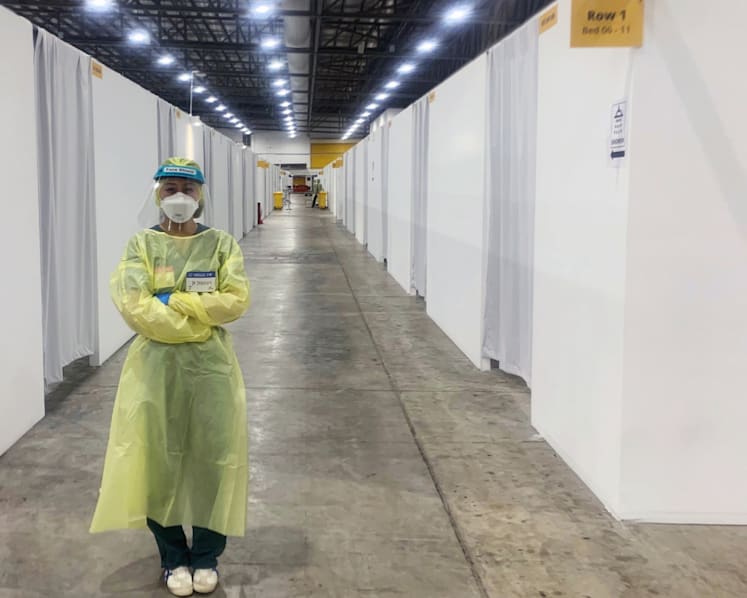
Dr Deborah Chua at a community care facility at the Singapore Expo Convention and Exhibition Centre.
As the fight against Covid-19 will be a long-drawn one, TODAY’s Voices section hopes to shine a light on the triumphs and struggles of Singapore’s front-line workers by publishing their first-hand accounts.
In this instalment of Voices from the Front Lines, Dr Deborah Chua of the Singapore General Hospital says her deployments to migrant workers’ dormitories — the epicentre of Singapore’s fight against Covid-19 — taught her lessons that will direct how she lives and practises as a doctor.
Covid-19 caught the world off-guard.
In Singapore, the number of cases skyrocketed as the virus spread quickly among migrant workers living in large dormitories. To manage the contagion, testing this community of more than 300,000 people became urgently needed.





Several of us were deployed to a mobile team providing diagnostic nose swabs.
I felt uneasy on my first visit to the dormitory. It was a world away from the hospital’s sterile, aseptic operating theatres. We trod warily along the damp corridor of the common kitchen area, feeling out of place in that environment.
Each of us was heavily protected by layers of personal protective equipment, yet the scent of piquant spices managed to permeate our N95 masks.
The workers were ushered into neat files and the process began. Most spoke little English.
After my 10th swab, I perfected a simple spiel: “Hello, sir, I am the doctor checking you for Covid-19 through your nose. Here is some tissue, please pull down your mask and turn away from me. This will be a little uncomfortable, but there will be no pain.”
The response was universal. They listened intently and concurred with small nods.
Still, they had to suppress their reflexes; the swabs were uncomfortable, prompting tears to well up.
The team tested 700 workers.
In the familiar, welcoming comfort of our air-conditioned transport back, I ruminated on the brief but unusual patient-physician relationship.
A glimpse into the lives of this community — so essential to Singapore’s construction sector and economic wealth — led to overwhelmingly disconsolate thoughts. Growing up in this country, I never saw the shadows behind the wealth.
Migrant workers’ fingerprints are found across our economy. But we are struggling to protect them and to provide them with what I felt was decent, basic housing.
Moral injury manifested as guilt.
As a physician, my role extends beyond concern for their health, but also for their basic well-being.
The workers are patients, but they are also fathers, brothers or sons. They are also likely to be sole breadwinners in their families.
I felt that these thoughts required metanoia, a spiritual repentance from me.
I took consolation in the notion that regardless of my patients’ nationalities, healthcare is non-discriminatory. Social media is rampant with a shared sense of identity and solidarity against a common enemy: Covid-19. In the midst of the chaos, we have risen to the call and strive to provide for everyone without exception.
I left with a deep N95 mask imprint on my nose bridge and an even more excruciating question: Did it take a crisis for me to be aware of grave matters of social class, ethnicity, equality and global citizenship?
Did it take a crisis for us to look past the opulence and finally engage with these issues?
These thoughts will continue to direct how I live and practise as a doctor from here on.
ABOUT THE WRITER:
Dr Deborah Chua, 27, is a medical officer in the department of general surgery at Singapore General Hospital. She was first deployed in early April to dormitories housing migrant workers and has also volunteered at healthcare cluster SingHealth’s Covid-19 community care facility at the Singapore Expo Convention and Exhibition Centre.
If you are on the front lines of the Covid-19 outbreak or know someone who wishes to contribute to this series, write to voices [at] mediacorp.com.sg with your full name, address and phone number.




