What I have learnt as a mum amid the Covid-19 outbreak
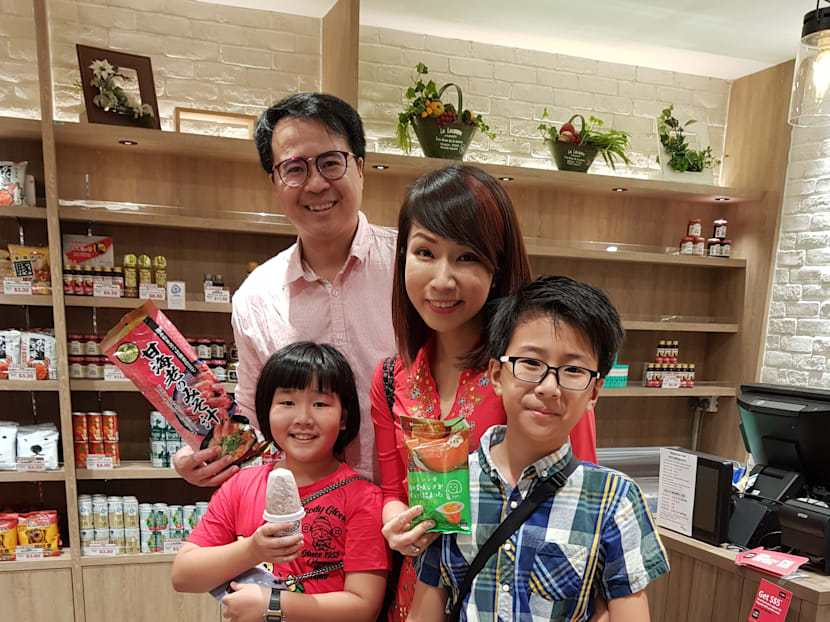
The author, seen here with her family, had to take a nasal swab to test for Covid-19 after she developed a fever and had possible exposure to confirmed cases.
I used to teach career development modules to undergraduates and would always end the classes by speaking about how volatile, uncertain, complex and ambiguous (Vuca) our world has become.
I concluded my last class in October 2019. Just a few months later, the whole world was trying to manage an uncontrollable animal called Covid-19 that has affected mankind in unprecedented ways.
Unexpectedly, the outbreak has taught me a few precious lessons about life and parenting and forced me to confront some personal fears.
First, I learnt that it was alright to be vulnerable in front of people, especially family members. In the middle of last month, I had stomach flu and a slight fever and saw a doctor.





A few days later, I got a call from the Ministry of Health saying that I would be sent by an ambulance to the National Centre for Infectious Diseases (NCID) for a nasal swab.
This was due to concerns about my possible exposure to Covid-19 cases.
I am usually stoic and in control of my feelings, especially in front of family members whom I did not want to worry about me.
However, I did not mask my emotions very well as I was about to board the ambulance — I was a messy cornucopia of worry and sadness.
I feared that I might not be able to see my two children for two weeks or more.
I feared being diagnosed with Covid-19 and unwittingly placing loved ones such as my baby niece and my parents whom I had come into contact with in recent weeks in harm’s way.
I believed my kids, aged 11 and nine, felt my fears too.
There was an unusually awkward silence. I could not help but still give them a hurried farewell hug while blinking away tears and speaking in as normal a tone as possible.
I was strangely unable to articulate my depth of love for my loved ones.
I hesitated in planting a kiss on my husband’s forehead, not only because I was worried about the possibility of infecting him but also as I was coy about showing affection in front of the kids and the ambulance personnel.
Why was I so shy, especially in such a poignant moment?
The results came back as negative, thankfully.
But the few days of waiting made me reflect deeply and emboldened me to want to express my love towards my family more unabashedly.
Why wait till it is too late? Why say nice things only in eulogies or when the person is not around anymore?
I have resolved to express affection and appreciation to my family, rather than be inhibited by shyness or embarrassment.
This means holding hands with my husband or even planting him a kiss on in front of our children and saying “thank you”, especially during this circuit breaker period when it is just so easy to focus on the numerous daily tasks to complete.
I have also learnt to navigate the topic of death with my children.
This has never been an easy one for me — I never liked departures.
I have had very painful memories of how my grandma died just six weeks after a diagnosis of pancreatic cancer and how my grandpa had a sudden heart attack and was gone before I could fulfill my promise of tailoring a nice suit for him for my wedding.
It was equally heart-wrenching to bid farewell to a friend’s baby and to a dear friend who slept and never woke up.
As the Covid-19 death toll rose throughout the world, my kids began to ask questions which I have always found difficult to answer. “Where do dead bodies go?” “Why must people die?” “Why can’t medicine help them?”
We invariably also spoke about how one day, their father and I would leave this world as well. I could still frame that moment in my mind, when I held both of their hands during bedtime and tried my best not to maintain eye contact.
I reassured them that I would take good care of my health and safety and be around as long as I could.
However, if something did happen, there would likely be enough from insurance payouts and my Central Provident Fund monies for them to live a normal life, all the way till university at least.
First, the whimpers came, then the grip on my palms got tighter and the boy uttered in a pleading voice: “Can you please don’t go so soon... We don’t need the money! We just want you!”
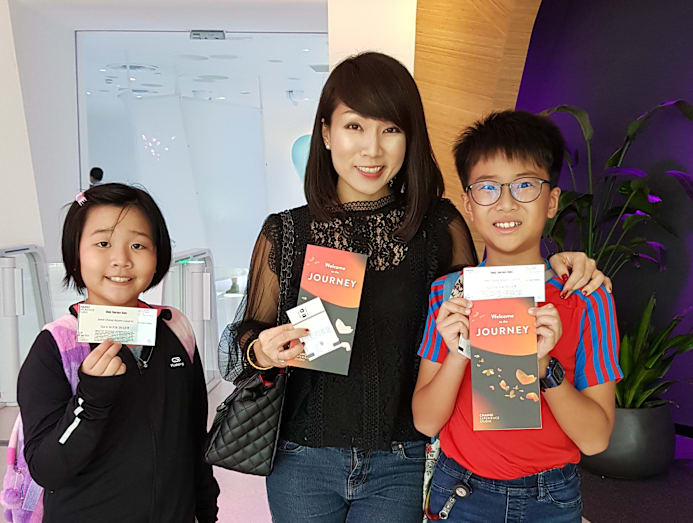
The author with her children at Jewel Changi Airport in December 2019. Photo courtesy of Yvonne Kong-Ho
As Singapore and the world continue their fight against the coronavirus, I am cognisant of the fact that there may well be other forms of Covid-19s that we have to be mentally and psychologically prepared for in future.
When the severe acute respiratory syndrome (Sars) hit Singapore in 2003, I just finished my A-Levels and was a relief teacher.
I remember how schools closed for two weeks, and as fatalities rose, Singaporeans began to shun healthcare workers.
It was an uncertain time but it passed relatively quickly.
I did not get to work for two weeks but I spent time then reading and resting.
Fast forward to 2020 and it is a different world, a different outbreak.
Almost every nation is affected, some tragically more than the others. Schools in Singapore will be closed for a month.
This time round, I have my children, my ageing parents and relatives, my baby niece and my work to take care of. Still, I can count myself lucky.
I have friends who are undergoing cancer treatment, friends who have survived cancer and friends who have just given birth. I am worried about how Covid-19 would affect them.
I wish with all my heart that my children do not see another pandemic or the use of the acronym Dorscon (Disease outbreak response system condition) again, even though deep down, I know that is unlikely.
So I hope they would remember how we manage this Covid-19 together — by being contented and grateful for what we have, by helping those in need, by sending our loved ones surprise fruit boxes to keep their spirits up.
And by being responsible and staying at home.
It is indeed a Vuca world ahead for them but I would want them to know — they do not have to be victims of their circumstances.
They can take control of the situation, rise above the challenges and draw inspiration from how we overcome Covid-19.
Together as a family, as a nation and as one world.
ABOUT THE AUTHOR:
Yvonne Kong-Ho works in a university, specialising in workforce development. She has a son aged 11 and a daughter who is nine.