

What school life taught me about foreign affairs
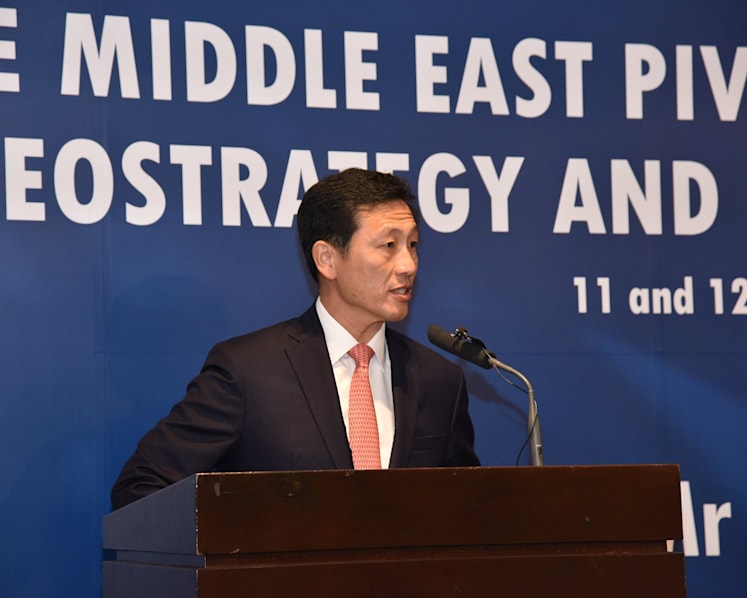
Speaking at the annual conference of the National University of Singapore's (NUS’) Middle East Institute (MEI), Mr Ong outlined three major long-term trends that can make the managing of foreign relations more challenging.
The most important lesson in foreign affairs and in schools is that a student’s well-being ultimately depends on himself or herself, and that is not a function of size, said Education Minister Ong Ye Kung. Speaking at the annual conference of the National University of Singapore's (NUS’) Middle East Institute (MEI), Mr Ong also outlined three major long-term trends that can make the managing of foreign relations more challenging. Below is an excerpt from his speech on Monday (Feb 11).
When I first received the invitation from MEI to attend the conference, I thought the institute must have sent it to the wrong Minister, as I am neither involved nor an expert in foreign affairs or the Middle East.
But MEI is part of NUS which the Ministry of Education oversees, so maybe that’s why. It is most kind of MEI to invite me.





Having to deliver a speech on foreign affairs, I began to discover the parallels between education and foreign affairs, and I realised that the most essential foreign policies that I learned over the years, I had actually learned them in school and not in the civil service. Let me explain.
I attended a kindergarten which was part of a primary school. So my classmates and I were naturally the smallest students in school. From our tiny perspectives, the upper primary kids were huge, and we had to share a playground. I remember an incident when I was hit on the nose by a big kid while playing.
Fortunately, other than that incident, most of the time we played and co-existed peacefully with one another, despite our disparate physical sizes. On hindsight, that was possible because there were strict school rules that were adhered to – the teachers were always watching and in those times, teachers could use canes.
So when I joined the civil service years later and heard Bilahari (MEI Chairman Bilahari Kausikan) saying that small countries need international rules to survive, I understood it immediately.
My second lesson in foreign affairs was in secondary school. Students naturally liked to hang out in groups, but amongst them were groups led by big and tall alpha-males, with a significant number of side-kicks and followers. Most of them hung out to play football, basketball or just to fool around.
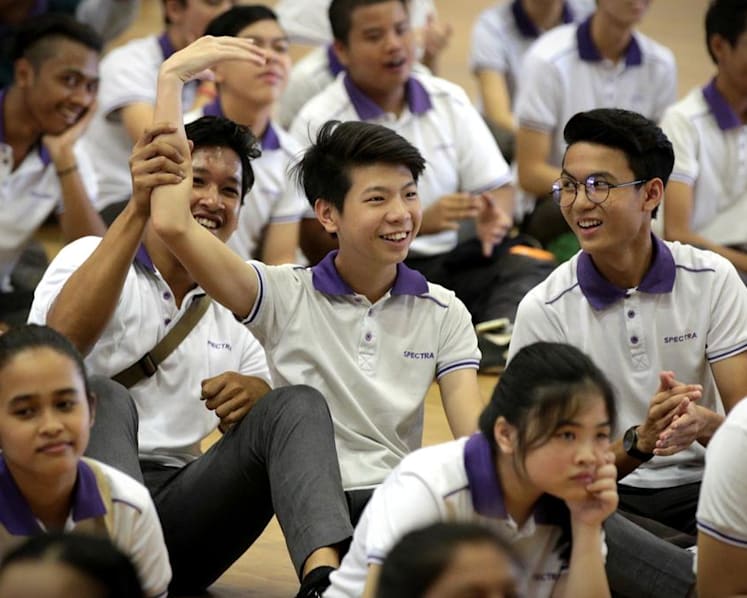
There were groups that were more intimidating too, and they could get on each other’s nerves. But my friends and I were not quite affected as we were not part of them — we belonged to the larger “non-aligned movement”.
It helped that there were many activities in schools – lessons, CCAs, school gatherings, camps and outings — where natural groupings were broken up, and students mingled and did activities together. So we had opportunities to make friends throughout the school, even with the alpha-males themselves.
So when I became active in the Apec circuit years later, and was part of the effort to prevent the formation of trading blocs that split along the Pacific, the need for common platforms to encourage interactions between groups was not a difficult concept to understand.
Exclusive blocs set the pre-conditions for conflict, and we must always build bridges across oceans and continents.
There is a corollary to this lesson, which is that students willingly come out of their comfort zone to participate in various lessons and school activities, because the settings are orderly and non-threatening.
That essentially is the role of Asean – a neutral, non-threatening, central arena where countries, including big powers, can engage each other.
Asean remains central to Singapore’s foreign policy. It is far from perfect. But one of the reasons that the Middle East is saddled with conflict is the absence of such an inclusive regional architecture. That was the situation in South-east Asia in the 1960s and early 1970s, when we were then called the “Balkans of Asia”.
Asean has managed to contain the conflicts since.
Finally, notwithstanding all I have said, the most important lesson in foreign affairs and in schools is that a student’s well-being ultimately depends on himself or herself, and that is not a function of size.
If you do your school work well, you submit your homework on time and are helpful to the rest of your classmates, chances are the teacher will know you and keep an eye on you, and your friends will watch your back.
Similarly, foreign policy begins at home. Ultimately, it is about how our country is run, how cohesive our society is, and what value we can bring to the world. We are determined to make a small island state in South-east Asia, straddling across important trading routes and sea lanes, relevant and important to the world.
A preference for strong international rules; building bridges across continents and cultures; Asean centrality; foreign policy begins at home – these are evergreen principles that have stood the test of time. For the rest of my speech, let me talk about a few major long-term trends, that can make the managing of foreign relations more challenging.
US-CHINA TIES
First is the trajectory of United States-China relations. This is the most important bilateral relations in the world, and the global community has a stake in it. It is all too easy to be pessimistic about this vital bilateral relationship.
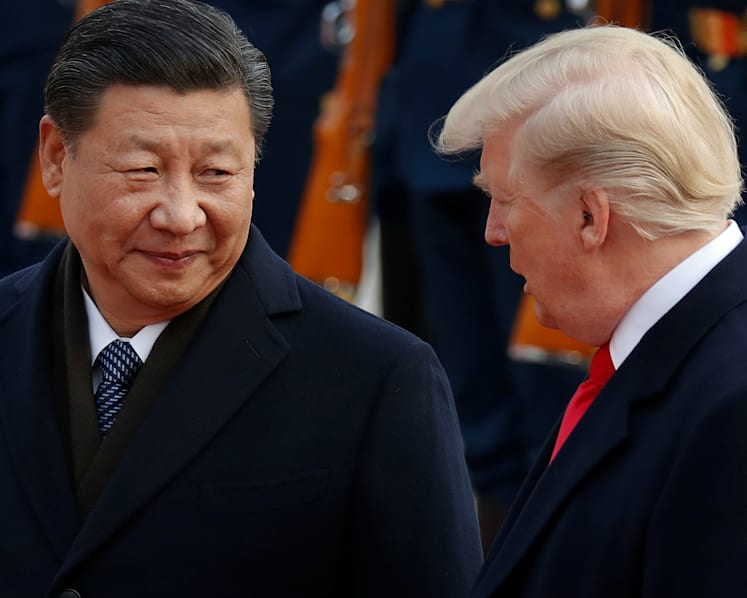
But too much pessimism is as bad as naïve optimism. I can give you two reasons to believe that a US-China war is unlikely, and they may eventually work out a new modus vivendi between themselves.
One is the unprecedented level of interdependency between the two powers — in trade, investment, finance, currency, people, and tourism. I do not think any two major powers in history had the same level of interdependency and stakes in each other’s well-being.
You can ride on popular sentiments to enter a trade war, but very soon prices in supermarkets will go up, and businessmen will find export business disappear. When reality hits, governments will find it difficult to justify sustaining such a self-flogging campaign.
Two, while global powers will inevitably engage in intensive competition, history may judge the US and China, on the whole, as benign powers with no fundamentally irreconcilable conflict of interests, which characterised US-Soviet relations.
After World War II, the US played an instrumental role in maintaining global order and regional stability. Today’s international order is a construct led by the US. In this process, the US opened up its markets and investments, and engaged in security co-operation with various regions in the world.
During the 1970s, it held the line in Vietnam, and prevented Communism from spreading throughout South-east Asia, and Singapore from becoming a Cuba of the East.
As for China, whenever she opened herself up to the world, trade across the Indian Ocean and South China Sea flourished, and South-east Asia benefited.
40 years ago, China made the monumental decision to embark on reform and opening up. This in turn resulted in its decision to negotiate entry into the World Trade Organisation, which it succeeded in doing in 2001.
Since then, it has lifted hundreds of millions of its people out of poverty in the process of reforming and opening up. In other words, China has concluded that it shall be part of the international order shaped by the US, and it is doing so in its own interest.
Technology may well be the centrepiece of the contest between the powers in years to come, and there has to be peaceful platforms for both sides to work out such issues.
The relations between the US and China can be fundamentally constructive and positive. They will eventually reach a new modus vivendi in East Asia. A crucial question is whether this will extend to West Asia or the Middle East.
ECONOMIC TRANSFORMATION
The second trend is the need for economic transformation. It is an imperative driven by advancements in technology, and has to be confronted by governments around the world. But let me focus my comments here on the Middle East, which is most impacted by the fast changing global energy consumption mix.
Fossil fuels, I believe, will continue to be a major source of energy in the foreseeable future, but the long term trend, I think, must be a shift away from oil. A driving force is climate change.
In the coming years, we should expect greater investments in renewable energy. With cost continuing to come down, renewable energy will be an increasingly viable alternative to fossil fuels.
The problem of intermittency still has to be dealt with, but the rise of renewable energy will likely accelerate and gather momentum.
Perhaps the more significant factor affecting the oil-producing Middle East countries is the energy revolution happening in the US. The regulatory and legal environment enabled US industries to extract oil and gas from deep rock formations through fracking.
Productivity improvements have made production cost more and more competitive; so even when oil prices were at US$45 per barrel, oilfields throughout the US — Permian, Eagle Ford and many other basins — continued to flow.
Oil production in the US has gone up from about 5 million barrels per day, to about 10 million now over the last five, six years, making US a net exporter of crude and finished product in 75 years. Production is projected to rise to 14 million barrels per day by 2020, surpassing those of Russia and Saudi Arabia.
The economics of producing unconventional oil and gas is a peculiar one. It is more like manufacturing — small upfront investment, fast time to market, limited production cycle – making the US a very agile producer. It can cut back when prices are depressed and increase production when prices are high.
This also means the US is progressively becoming the swing producer which can influence global oil prices.
This shift from fossil fuels to renewables, and the increasing influence of the US as a swing producer, will change the way the US defines its interests in the Middle East. It is not likely to lead to the US withdrawing from the Middle East, but the manner in which the US engages the region is already being recalibrated.
This will in turn affect the first factor of US-China relations, and shifts in the global dependence on Middle East oil must have profound geopolitical implications for the region.
Many Middle East countries are trying to reduce economic dependence on oil and gas, probably in recognition of these trends, and they are seeking alternate engines of growth.
They are pursuing economic reforms, diversifying their economies, developing the services sector, focusing on educating the young, and empowering women.
Economic transformation is always a difficult and daunting process.
Today, amongst the Middle East cities, Dubai is probably the most bustling, an aviation centre and a magnet for tourists. Dubai started this transformation early, because it had almost run out of oil.
POLITICS IN AGE OF TECHNOLOGY
The last trend I would like to talk about is the evolution of politics. Politics, I think, has changed in recent years, and I believe this is also brought about by technology.
Just as radio and television have changed politics and elections, the Internet and social media are disrupting them even more.
It will not just be a matter of mobilising protestors or online campaigning. Nor will it inevitably lead to democracy breaking out everywhere as some thought a decade ago.
More profound changes to politics are happening, because social media has fundamentally altered the way people receive information, communicate with one another, socialise and coalesce.
I think democracy is most healthy when it is a contest of big ideas about the future, and of firmly held beliefs, values and conviction of political leaders.
Then, people vote for the best leaders and ideas; the results are respected, the losers take a step back and compromise, society unites and moves forward. That is ideal democracy.
But today, the system is turning out somewhat differently. Ironically, in the Internet era, voters are bombarded with excessive information of varying accuracies, and are not sure if they are getting the right information to make informed decisions in an election or referendum.
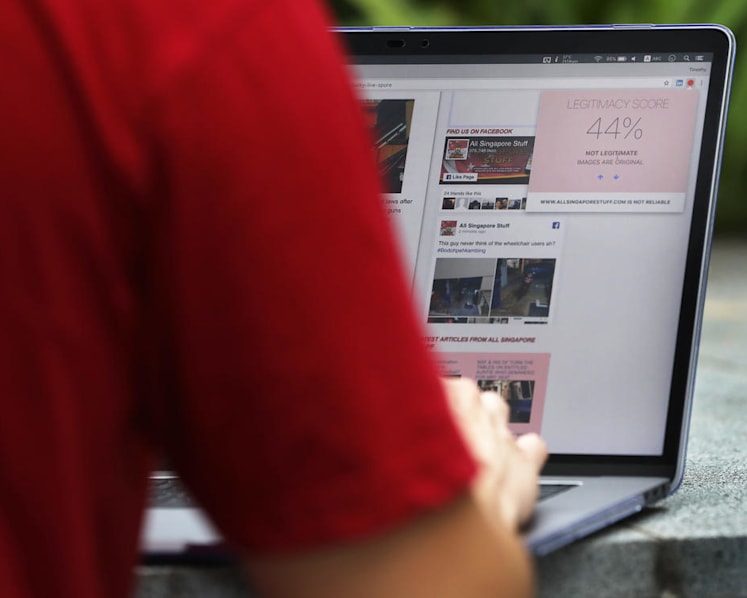
Personality has become as important, or perhaps more important, than capability. We have seen how political bickering continues even after the dust of contested elections has settled. The imminent possibility of foreign interference in domestic politics makes things worse.
How election issues are defined has also changed. The Internet freely shares the lived experiences of citizens and connects them. A voter today may still belong to a large political segment defined by ethnicity, gender, age or education level, but he is also likely to take on multiple identities and causes at a nano political level.
And the narrow interests of such small groups can somehow go viral and be amplified to dominate the national agenda. This is the process by which society divides itself into even smaller tribes defined by minute commonalities. This affects every country regardless of the specific form of their political system.
Political parties will behave differently too. Campaign managers can use big data to slice and dice their voter base into tiny segments. In extremis, they can send political messages customised for the individual voter.
The result is an explosion of issues, causes and interests. When we observe elections around the world, politics is at risk of becoming more like a round-the-clock competition in public relations as opposed to a contest of big ideas for the future; an unending cycle of assertion and pushbacks; a divisive rather than unifying force.
In physics, we know that Newton’s laws break down once we go down to the quantum level. At that level, it is like Alice in Wonderland. Particles can appear at two places at the same time, get entangled together, or fly through each other.
So when technology shrinks politics to that nano level or even smaller, we can imagine democracy starting to break down too.
We must all hope that democracy continues to work well. It is imperfect but still the best system known to mankind. If for some reason it can no longer unite societies and show a clear path forward for countries, then foreign policy will suffer too, because foreign policy begins at home.
I have spoken on three trends which I think have profound implications for every country in the long term, regardless of their political systems.
It is not yet entirely clear how they will affect the Middle East, but we can be sure that there will be some sort of impact, and it is not too early to start thinking through different scenarios. The conclusion will likely be that we need fresh and bold solutions.
Yet, the more complex and uncertain the challenges are, the more we need to stay true to the basic principles I learnt growing up in school, and talked about in the earlier part of my speech.




