What Xi Jinping and Pope Francis have in common
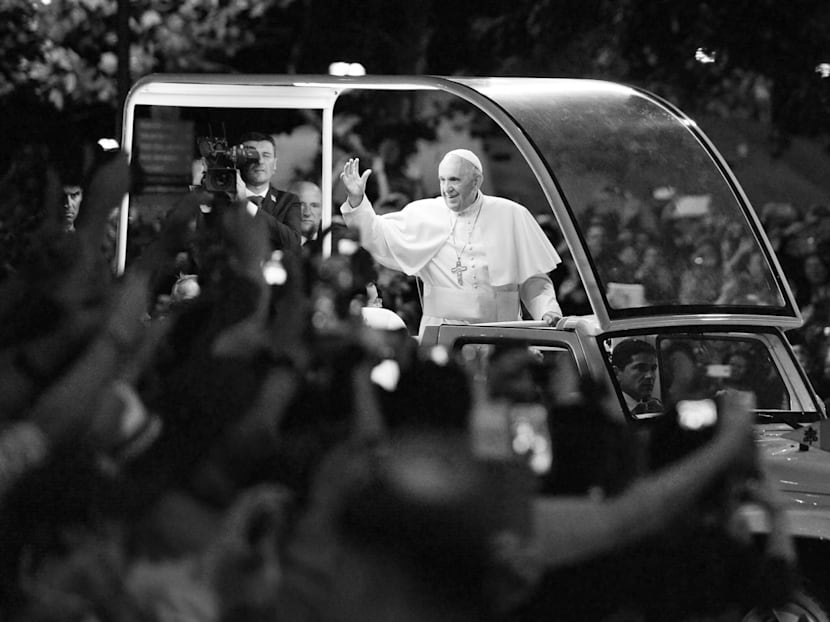
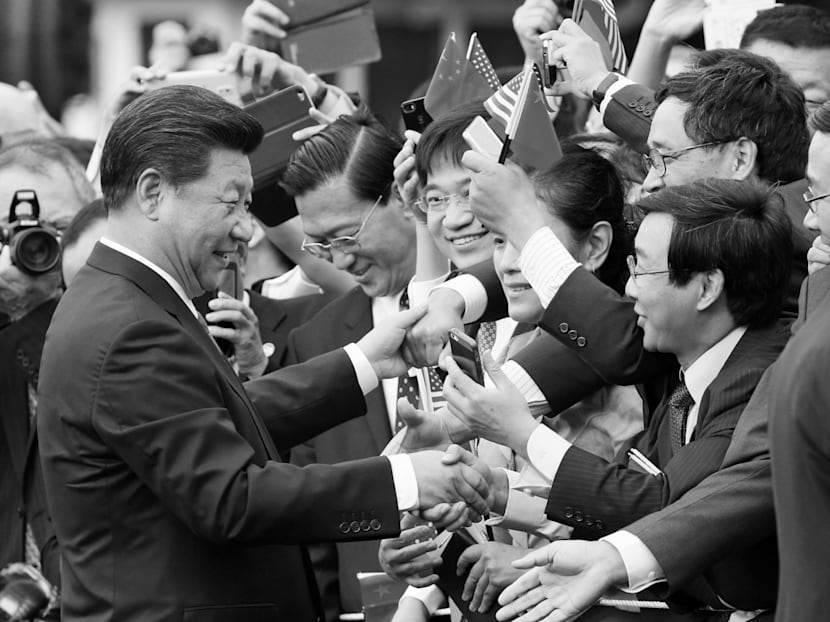
On the surface, the two world leaders making high-profile visits to the United States last week have little in common, except that each stands at the head of more than 1 billion followers. But although Xi Jinping runs a global economic and military power while Pope Francis is a spiritual guide who, as Stalin observed, has no divisions, they do in fact share a common challenge.
Each man is in the midst of a historic struggle to defeat an entrenched bureaucracy that has constrained his predecessors. And in each case, the success of the leader’s chosen mission will depend on how that struggle turns out.
For Mr Xi, the structural challenge lies in the remarkably effective mechanisms of government developed by the Chinese Communist Party in the quarter-century since the Tiananmen crackdown in 1989. Eschewing the cult of personality that had developed under Chairman Mao, the senior party leadership learned how to diffuse power among themselves. Dispersing political clout changed the struggle for advancement within the party from a winner-takes-all contest into a game with multiple victors, taking the edge off its viciousness.
With the spreading of power came another innovation: After 10 years, the most senior leaders would rotate out of power. Mild transparency and substantial continuity would be afforded by determining the chain of succession well in advance. Thus Jiang Zemin gave way to Hu Jintao, and Mr Hu in turn to Mr Xi — all basically on schedule.





The predictability and regularity of this process played an enormous role in China’s stunning economic success over precisely the period in which this political model obtained. The rising economic tide lifted the boats of senior leaders more than those of ordinary people as corruption worked its way into the system. But arguably the creation of a class of rich senior party leaders had a positive effect on China during this era. Roughly speaking, the leadership’s incentives were aligned with those of the country: The only way they could get rich was if the country did, too.
Mr Xi now confronts the consequences of this form of government. Several hundred thousand party members are powerful enough to matter. All want to keep themselves well-off and, if possible, pass on their status and wealth to their children.
Collectively, however, the party runs a huge risk if its corruption continues unabated. Eventually, the Chinese public will get tired of seeing so much of the wealth it has created being diverted to a parasitic overclass. The risk is especially great as China’s economic growth slows.
Mr Xi’s response has been to consolidate power to a degree unknown since Deng Xiaoping retired almost 25 years ago. He has made himself more visible than recent Chinese leaders, hoping to develop personal charisma to support his efforts. But his anti-corruption campaign is the central plank in his efforts toward consolidation.
Mr Xi won laughs and headlines by telling American tech executives in Seattle last Tuesday that his anti-corruption campaign was not something out of House of Cards, focusing only on his political enemies.
Maybe that is true — but maybe a better analogy is Game of Thrones, specifically the purge of House Baratheon. It is possible to purge only real sinners and to do it out of sincere anti-corruption motives, while still gaining power in the process. Mr Xi has public-spirited reasons to reduce corruption within the Communist Party, yet he also knows that by doing so, his own authority will be enhanced.
The grand question facing Mr Xi is whether to step down at the end of his 10-year presidential term, as his two predecessors did. That will be in 2023, and the job will be unfinished. But remaining in power would create a significant risk to the stability and continuity that has been crucial to China’s advance.
CHANGING AN INSTITUTION
Pope Francis has been the unlikely beneficiary of his own predecessor’s unprecedented decision to step aside. One can only wonder whether that predecessor, the doctrinally conservative Benedict XVI, now regrets breaking with tradition to open the door to a reformer.
Pope Francis’ papal legacy will depend to a large degree on his war against the Curia, a courtly bureaucracy that that’s far older than the Chinese Communist Party and arguably better entrenched. To combat financial corruption, Pope Francis has fired officials and appointed external auditors. And he has repeatedly signalled his contempt for the bureaucracy, moving out of traditional papal apartments and maintaining a second office out of the reach of Vatican bureaucrats.
Then there is the problem of accumulated wealth in the church. Pope Francis appears to think of such wealth as corrupt and corrupting. And of course, both inside and outside the Vatican, the echoes of scandal over sexual abuse by priests — another form of corruption — continue to resound.
The upshot is that, to a much greater extent than Mr Xi, Pope Francis is relying on symbolism and his own personal charisma as anti-corruption weapons. Part of this is in the nature of the job.
Unlike Mr Xi, Pope Francis cannot have corrupt officials jailed or executed. If Mr Xi reminds some of Mao in his partial embrace of a cult of personality, Pope Francis is looking to the precedent of Pope John Paul II, whose global popularity helped strengthen him within the church.
Observers of the modern papacy have suggested that no significant reform effort in the Vatican has succeeded in the last century. Does Pope Francis have a chance of success? It is appealing to think that by appointing new cardinals and leading by humble example, he can break corruption.
But it is hard to change an institution without significant coercive power over the people who work there. Pope Francis is a more inspiring figure than Mr Xi. But his odds of defeating corruption are no better — and probably a bit worse. BLOOMBERG
ABOUT THE AUTHOR:
Noah Feldman is a professor of constitutional and international law at Harvard University and the author of six books, most recently Cool War: The Future of Global Competition.