Why all parents need sabbaticals from their families
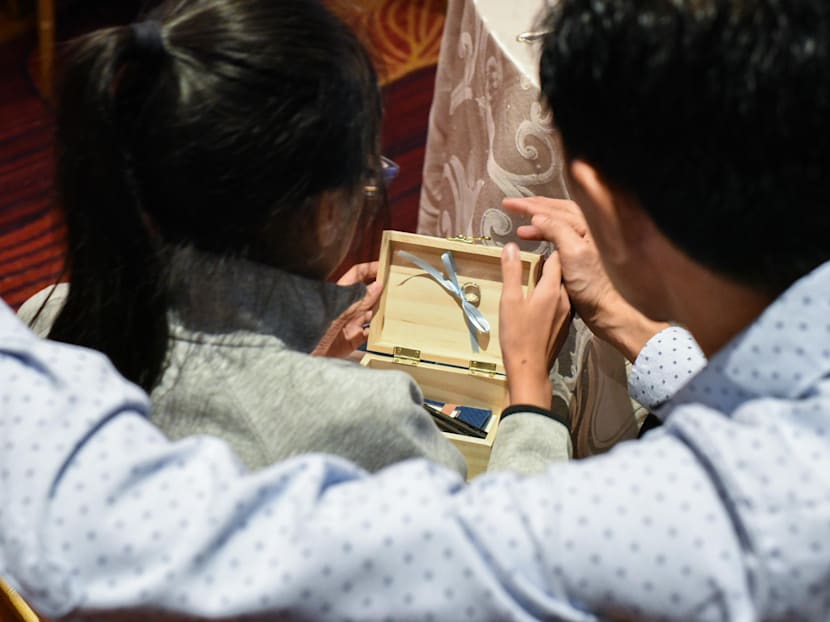
Family life is about repetition and being together every day, but the problem is children and adults just don’t have much in common, says the author.
Arguably, the main point of business travel is escaping family life.
I have just spent five weeks away covering the World Cup, and though I often walked around Russian cities wishing I could show my wife and children what I was seeing, and though FaceTime calls weren’t enough, and though I worked 14 hours every day, the brutal truth is that I was grateful for the respite from family.
Parenting sabbaticals keep parents sane.
Family life isn’t easy. Love is the easy bit. I care much more about my children than about me.





Since they were born, I’ve come to regard my own death as a management issue.
But the problem is being together every day.
Children and adults just don’t have much in common. Kids find most of our conversations as boring as we find theirs. Family life is about repetition.
On Monday evening, everyone comes home and you have dinner together and, in the intervals between bickering, you find out a little about each other’s days.
You tuck them in, tell them mechanically that you love them, then stagger off drained to spend what remains of the evening paying for their school lunches online.
On Tuesday morning, it starts all over again.
I’m bewildered by the sheer number of hours our somewhat randomly assembled group (genes being the only criteria) spends together.
I see more of my children on the average weekend than I see of some close friends in years.
When I was a child, the start of school on Monday morning felt like the end of freedom. Now that I’m a parent, it feels like the beginning of it.
And because my kids see me so often, it’s almost impossible to present my best (or most adequate) self to them.
I already dread reading their debut novels. Admittedly, I am especially unsuited to family life.
I am so keen on being alone that I’ve worked happily in an office by myself for 20 years, and I’m enough of a workaholic that I spend much of my time with my kids listing in my mind all the things I should be doing instead.
I try to think of full-time parenthood as just a phase — “a (long) season of life”, as the journalist Nicholas Lemann called it.
If I get to 80, I’ll have spent only about a quarter of my life doing it. I’m hoping for a third age of freedom, and I’m also hoping I won’t be too decrepit to enjoy it.
But while I’m in this parenting phase, I need the odd break.
Living alone and living in a family are both unsatisfactory, so the trick is to mix them up.
Raising children in Paris, I see parents around me getting sabbaticals all the time.
The typical French person retires by about 60 and lives to 83, so the country has an ample supply of fit, idle grandparents willing to take in the children for the endless French holidays.
Many of them also have large homes in idyllic if jobless countryside. This system is so institutionalised that French hotels fill up every September with grandparents recovering from their summers with the kids.
French parents can also send their children for long stays at colonies de vacances (holiday camps), often organised and subsidised (in the Franco-Soviet tradition) by the parents’ employers.
Many of my Parisian peers ship out the offspring on the first day of each school holiday, then go back to bed.
They seem to do this without guilt. I’ve never heard a French parent say, “Lilou’s childhood is so short, I couldn’t forgive myself for missing a day of it, so we’re going to spend the next two months chained together at some benighted campsite.”
One friend delights in telling me about his weeks alone in his flat, often without even his wife. I want to slap him.
Not being French, I haven’t had five days alone in my flat for a decade.
The British upper class solves the whole problem of family by raising their children in boarding schools.
The rest of us Anglos need parenting sabbaticals. The best way to get one is to claim that, regrettably, your employer is forcing you to go on a long journey.
However, this strategy is gender-dependent.
When my wife travels for work, she constantly gets told, “Oh, you must miss your children so dreadfully.”
She has become strangely reluctant to travel for work.
It’s different for dads. A World Cup is a sea of men, and in the month I spent eating peanuts in media centres with fellow journalists or shoving each other to get into press conferences, precisely one of them asked me if I was finding it hard to be away from my children.
That man left the World Cup early because he was worried about the declining quality of his interactions with his toddler on Skype.
Soon after the World Cup, I get a bonus: for the first time ever, my children have consented to go on a two-week sleep-away camp.
For the first time in 12 years, my wife and I will have a fortnight alone together.
This is wonderful. It is also terrifying — like starting a relationship from scratch.
Come September, my parenting sabbatical will allow me to attack family life with fresh gusto.
But when I told this to a friend, he said, “No, it will just make it harder for you to go back into the dungeon.” THE FINANCIAL TIMES
ABOUT THE AUTHOR:
Simon Kuper is a sports writer and columnist at The Financial Times