The Big Read in short: Dreams crushed but entrepreneurial spirit lives on in some
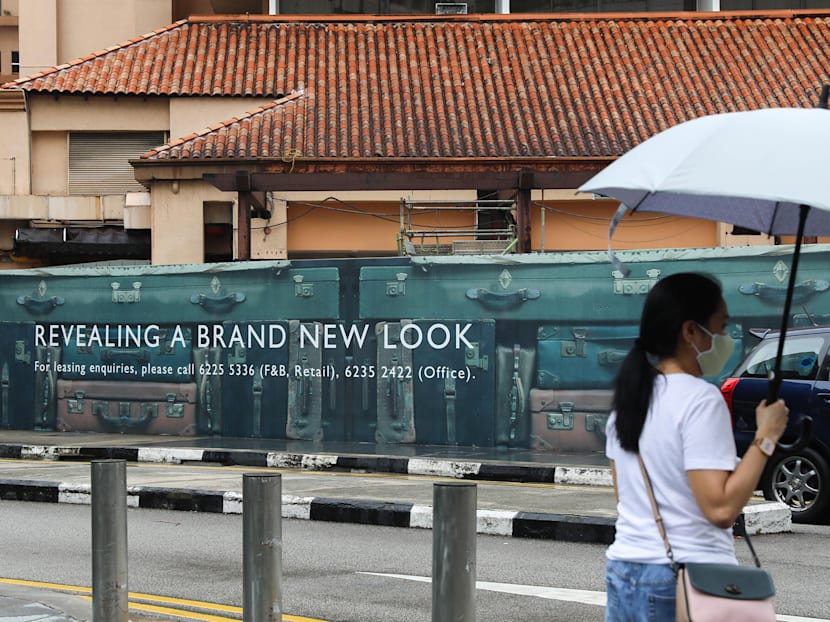
Italian restaurant Modesto’s served its last meal in July last year after operating for 23 years. It was formerly located at Orchard Rendezvous Hotel.


Each week, TODAY’s long-running Big Read series delves into the trends and issues that matter. This week, we look at how some entrepreneurs saw their promising business decimated by Covid-19 but they are hoping to bounce back. This is a shortened version of the full feature, which can be found here.
- The Covid-19 pandemic had a ‘bulldozing effect’ on businesses in Singapore
- While it is expected for businesses to shut during any crisis, many of them that bowed out were making healthy profits before Covid-19 struck
- Cash flow management, high rents and the unpredictability of the pandemic were some of the main challenges entrepreneurs faced
- But business owners also cited several lessons they have learned in contingency planning, such as reserving enough cash for longer periods of downturn
- Some have used the downturn to adjust their business models or embark on totally new ones fit for a pandemic-stricken economy
SINGAPORE — It was supposed to be the year of expansion for Mr Sean Tan’s pet hotel business. Since its inception in 2016, his business had been growing steadily and investors were keen to pump in money for another pet hotel in 2020.





But not only were his expansion plans thrown in disarray when the Covid-19 pandemic hit early last year, the 33-year-old founder of Nord Pets also had to fold his business as people no longer needed to leave their pets under his care as travel stopped.
“At the end of 2019, we were all geared up to expand in 2020. Suddenly this thing happened. The emotional experience was quite tough,” Mr Tan told TODAY.
Nascent companies like his were not the only ones badly hit. Italian restaurant Modesto’s served its last meal in July last year after operating for 23 years.
As its two restaurants were located in hotels in Orchard Road and served breakfast for tourists, the decimation of global travel meant that he lost a huge segment of his customers, said owner Ashok Melwani.
Dine-in customers were also not enough to cover the losses as limitations in group size and the new norm of social distancing also did not fit in with his business model, which tended to cater to large family gatherings.
“So many customers said, ‘Oh how can you close. Please change your mind.’ They cried in the restaurant, so I also cried with them,” said the 62-year-old businessman who has now retired.
The reversal of fortunes for businesses is a familiar tale around the island ever since Covid-19 swept through Singapore and the rest of the world, like a juggernaut, upending lives and businesses.
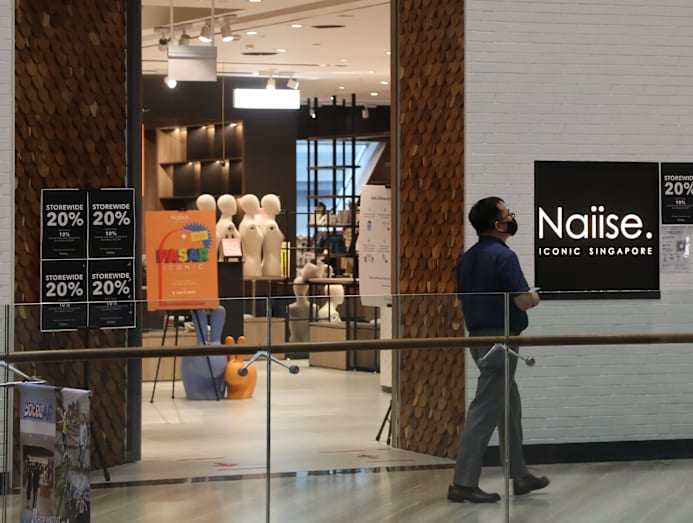
Last week, founder Dennis Tay of homegrown retailer Naiise cited Covid-19 as the reason for his decision to liquidate the company and file for personal bankruptcy, although there have also been complaints of Naiise defaulting on vendors’ payments in the past five years.
But even companies which had been making healthy profits before Covid-19 struck have not been able to survive its onslaught. Many are smaller-sized companies, which typically do not have the cash reserves which large companies do that could help cushion the impact or facilitate the shifting of their business models.
‘A BULLDOZING EFFECT’ ON BUSINESSES
While the shuttering of some companies here is not unexpected, there were some viable ones that unfortunately had to bite the dust as well.
Mr Kurt Wee, president of the Association of Small and Medium Enterprises (Asme), said that there are many factors behind a business owner’s decision to shut down.
“Sometimes it is not the fault of the business owner, it is the economic situation that forces them to do it,” he said.
Part of the challenge this time is the fact that the pandemic has lasted much longer than what many businesses are normally used to in a crisis, said Associate Professor Lawrence Loh, director of the Centre for Governance, Institutions and Organisations at the National University of Singapore (NUS) Business School.
“The Covid-19 pandemic has a bulldozing effect than just a normal churn (in businesses),” said Assoc Prof Loh.
As a result, some businesses, which had continued to press on and ride out the storm in past crises, may be more risk-averse and conservative under the current conditions.
CHALLENGES THAT PROVED INSURMOUNTABLE
At the height of the pandemic last year, the biggest challenge for business owners was to find ways to continue paying their bills despite plummeting revenues.
With physical stores not allowed to open during the circuit breaker, followed by low footfall even after the gradual reopening of the economy, entrepreneurs in the retail sector told TODAY that they had to turn to e-commerce.
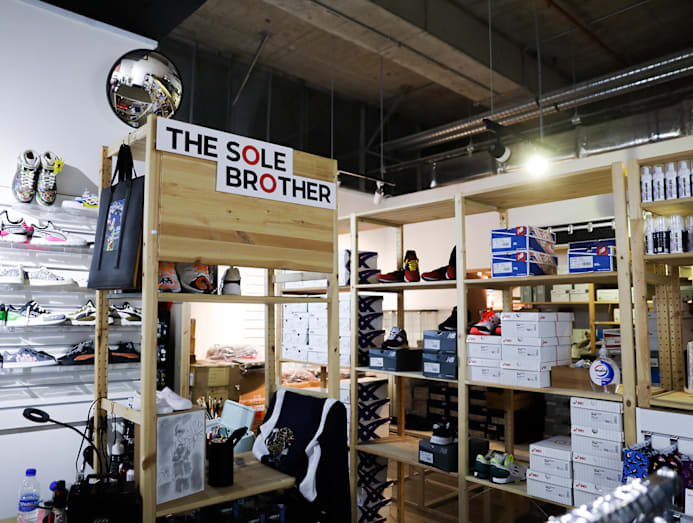
However, even though Mr Vince Foo, founder of sneaker shop The Sole Brother, made the transition and even organised livestreaming sessions to sell his products, he could only sell them at hugely discounted prices that barely allowed him to break even.
Since the distributors and suppliers, whom he got his inventory from, had all started to slash their prices after the circuit breaker, he had to follow suit as well.
Tying his cash flow to his inventory was the start of his cash crunch, said Mr Foo.
With costs piling up and sales unable to recoup the losses, Mr Foo decided to close his physical store at Marina Square and is now making the transition to a fully online business.
While entrepreneurs accept the need to adapt their business models to the new normal, some say they can only do so by making a huge capital investment, a move they are not inclined to make since the returns are not guaranteed.
Mr Melwani of Modesto’s said the concept of a breakfast buffet, which was what his restaurant specialised in, is no longer viable in the Covid-19 era of social distancing and it would take a lot of capital to change to table service.
While the Government has worked with the banks to provide loan schemes which will see the authorities taking 90 per cent of the risk share of the loans, Mr Melwani said he did not want to put in new funds when there was no clue how long Covid-19 would last.
“If I am 40 plus years old, I don’t mind fighting this fight. I’m 62… If I go through this loss, when can I earn it back?” he said.
As for Cantonese restaurant and bar Sum Yi Tai, its founder Sandra Sim said that she was still experiencing a drop in sales of about 40 to 50 per cent even though business picked up after Singapore exited from the circuit breaker.
Uncertain as to whether the situation would improve in the next few months and to avoid getting themselves into huge debts, she and her partner decided to shut their restaurant in November last year.
Getting a loan to sustain business was also out of the question for her.
“What if there is another lockdown?... There are no tourists coming in also… We cannot be sure if we put in another few hundred thousand dollars things will be okay... There is no projection because we don’t know what's going to happen,” she said.
One common thread in TODAY’s interviews with these entrepreneurs was the challenges they faced in negotiating with their landlords on rental rebates.
Mr Tan of Nord Pet Hotel said there was a chance he could have bought more time to save his hotel, and think of other ways to earn revenue through other pet-related services, if rental relief had come earlier. He made the decision to shut in April last year with his hotel operating till June.
Amid the tough business environment, the unequal playing field between landlords and tenants in the retail leasing space garnered much public attention last year, with tenants complaining that the field has been tilted to the advantage of landlords.
Last month, the Government announced that it will be introducing fair tenancy laws involving the leasing of retail premises. This code of conduct will be based on a set of guidelines put forth by a committee made up of landlords, tenants, government representatives and industry experts.
LESSONS LEARNT
While no one could have foreseen the extent of the economic damage that Covid-19 would wreak on Singapore, some entrepreneurs say the pandemic has offered them lessons that could be used as they adjust their business models or plan for their next business ventures.
Ms Sim said she would consider planning for cash reserves that could last longer, instead of just having a kitty that could last six months.
Cash flow management was an aspect which he did not monitor closely as he thought that as long as he had new products in his store, there would be customers, said Mr Foo.
He also said he made the mistake of not conserving capital and exiting earlier, unlike veteran entrepreneurs.
Instead, he chose to soldier on and ended up burning six years of his retained earnings and his personal savings.
“For me, typical Singaporean Chinese, male, chauvinistic. Because of my ego, I struggle, struggle, struggle,” said Mr Foo.
When asked why he decided to throw in the towel, he said: “There is nothing for me to burn anymore. If I continue to burn it would be my property. If I burn, where are my wife and family going to be sheltered? I cannot do that”.
Mr Melwani said businesses would have to be far more imaginative in thinking of different scenarios when they plan for contingencies.
Post-Covid-19, businesses will be more focused on how they can be more sustainable and be in a better position to withstand shocks, Mr Wee said.
“They are probably thinking about sourcing diversity, diversification of revenue pipes and revenue source and designing a leaner manpower that is just as effective,” he added.
NEVER SAY DIE
Despite the massive upheaval caused by Covid-19, it’s not all doom and gloom for the entrepreneurs who have incurred massive losses.
Asme’s Mr Wee said that while it is a waste for such viable businesses to fail amid the pandemic, it is the reality of doing business.
“Within the lifespan of businesses, there are many ups and downs, many small successes and failures. It’s never perfect,” he said.
“We have to be accepting of failures, and not to allow any judgement to cloud that new ideas cannot come because new ideas come all the time.”
Indeed, some entrepreneurs interviewed by TODAY have found ways to build a business model that works in a pandemic-hit economy.
During the circuit breaker, for example, Ms Sim started trying out a new chicken recipe and is now selling the dish online through deliveries.
After Sum Yi Tai closed, she started her own private dining business that is now fully booked until October.
Mr Foo of The Sole Brother is now adapting his online business to be more service-oriented, where he will be conducting workshops and classes on how to customise sneakers or refurbish preloved ones.
Despite the adversities that these entrepreneurs have had to endure, one thing is evident in their interviews with TODAY: Their ingenuity and resilient spirit have not deserted them.
“I always tell young people ‘follow your dreams’ … You can start something small. You never know where you will end up. (When) I started my private dining and soy sauce chicken business, I had no idea it would be so popular too,” said Ms Sim.
Apart from dealing with his business setback, Mr Foo let on that his mum was diagnosed with vertigo, and both his father and wife were afflicted with cancer last year. But he is taking everything in his stride and continues to look forward.
“Don’t give up. As long as I am still alive, there is hope. Once you give up on yourself, no one can help you. My mentality is that,” he said.