

The Big Read in short: Fight against dengue to get harder
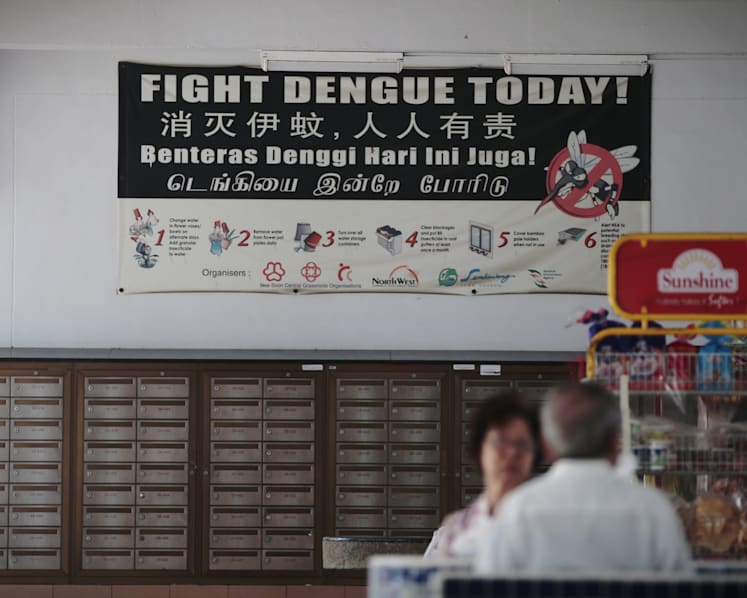
Even without the effects of climate change, Singapore is an ideal breeding ground for mosquitoes, with its tropical climate of high humidity, hot temperatures and steady rainfall all year round.


Each week, TODAY’s long-running Big Read series delves into the trends and issues that matter. This week, we look at why Singapore’s dengue problem has refused to go away and what is to come in the relentless battle against the virus. This is a shortened version of the feature, which can be found here.
SINGAPORE — The latest dengue figures paint a grim picture and an epidemic could well happen again this year.
Mid-way through the year, there have already been 5,184 dengue cases — more than the whole of last year. The virus has also claimed five lives so far, tying with the total death count in 2018.
The weekly number of dengue cases has also soared to a three-year high — a total of 467 dengue cases were reported in Singapore in the week ending June 15, based on the latest figures from the National Environment Agency (NEA). In March 2016, weekly number of cases peaked at 637.





Associate Professor Ng Lee Ching, who is the director of NEA’s Environmental Health Institute (EHI), boiled down dengue transmission to three main factors: The Aedes mosquito population, the strength of the virus, and immunity of the general population.
The Aedes mosquito population has been increasing — growing 25 per cent from March to April — with the majority of breeding sites found in homes, said Assoc Prof Ng.
“Herd immunity is also generally low in Singapore, and could have further weakened given that there was a low incidence of dengue cases in the last two years,” she added.
In 2017, dengue infections in Singapore fell to a record 16-year low with 2,772 cases. Last year saw a total of 3,285 cases.
Since 2016, the current dominant strain here is Den-2. This is a change from the dominant strain during the 2013 outbreak, when it was Den-1.
Assoc Prof Ng noted that the change in strain could mean that a section of the population is no longer immunised. But given that Den-2 has been dominant since 2016, this was not a strong factor behind this year’s spike in dengue cases.
HOW CLIMATE CHANGE AFFECTS DENGUE
A study published about two weeks ago suggested a link between rising temperatures and an increased risk of dengue transmission.
Published in the journal Nature Microbiology and reported in The New York Times on June 10, the study warned that climate change will exacerbate the spread of dengue fever.
Warming temperatures help expand dengue’s range because as it gets warmer, mosquitoes can thrive in more places where they could not previously. The time it takes a mosquito to become a biting adult and the period between when a mosquito picks up a disease and is able to pass it on are also shorterned, said experts.
The study predicted that dengue risk will increase in south-eastern United States, coastal areas of China and Japan, and inland regions of Australia, based on researchers' analysis of climate change data, urbanisation, as well as resources and expertise available to control the virus.
Overall, the study predicts 2.25 billion more people will be at risk of dengue in 2080 compared to 2015, bringing the total population at risk to over 6.1 billion — or 60 per cent of the world’s population.
Even without the effects of climate change, Singapore is an ideal breeding ground for mosquitoes, with its tropical climate of high humidity, hot temperatures and steady rainfall all year round.
Some experts said the study has little relevance to Singapore, since the Republic already has “near-ideal conditions for dengue transmission”. But most of them noted that the link between climate change and dengue could still have several consequences for Singapore.
For one, the virus could become “fitter”. An increased circulation of the dengue virus would provide even more opportunities for it to evolve, said Professor Ooi Eng Eong, deputy director of the Emerging Infectious Diseases (EID) Programme at Duke-NUS Medical School.
Strains of dengue virus with increased fitness would then spread more effectively and thus increase the likelihood of outbreaks — not only within a region, but transnationally.
Taking into account “Singapore’s strategic location as a trade and travel hub”, it is only logical to expect new strains of dengue virus to be introduced here even if they had evolved in different parts of the world, Prof Ooi added.
Global warming could also change the urban environment in Singapore — which is good news for the city-loving Aedes mosquito.
It has been established that the Aedes mosquito breeds predominantly in artificial containers found in human habitats. It also rests in cool and dark places indoors, has a flight range as far as 300 metres, and can traverse high-rise buildings.
“Building design may change in response to warmer temperatures, increased risk of floods and heavy rains. Aedes aegypti is well adapted to the urban environment and some of these adaptations to global warming could be favourable for Aedes aegypti to thrive,” said Prof Ooi.
‘A NEVER-ENDING BATTLE’
Given the obstacles Singapore faces in eliminating the mosquito menace, what more can be done in this never-ending battle against dengue?
While the ongoing Wolbachia trials are regarded as one of the most innovative methods, the NEA has previously said they do not amount to a “silver bullet”.
“Going back to the basics” is essential — individuals have to make sure they clear stagnant water and eliminate breeding spots, said Assoc Prof Ng.
“It all goes back to source control… (It is about) good housekeeping, throwing out stagnant water. These mosquitoes like (to breed in) artificial containers,” she said.
Even so, source control alone cannot eliminate dengue outbreaks, said Prof Ooi.
“History has taught us this lesson,” he added. “Even with the Aedes aegypti eradication effort in the Americas that successfully eliminated yellow fever and dengue for a brief period, Aedes aegypti rapidly re-populated tropical and subtropical regions in the Americas once the programme stopped, due partly to the high cost and hence non-sustainability of the programme.”
Experts, including Prof Ooi, cited the potential of a safer and “more effective” dengue vaccine to improve the population’s chances against the virus. And it will continue to be a battle on multiple fronts.
Dengvaxia, currently the only commercially available dengue vaccine for people aged 12 to 45 years old, provides incomplete protection and those vaccinated can still be infected with the disease.
Clinical trials have found that those who have never had dengue before are at higher risk of getting severe dengue infections if they receive the vaccination.
“Dengue prevention needs more effective tools to be used in concert with vector control if we are to reduce the risk of outbreaks,” said Prof Ooi. “New tools such as vaccines, drugs and introduction of Wolbachia to either reduce mosquito population further or render mosquitoes resistant to infection by dengue virus are all needed.”
Accelerating the development of such tools is of utmost urgency, he reiterated.




