

The Big Read in short: Party insiders reflect on disappointment of PAP’s GE showing
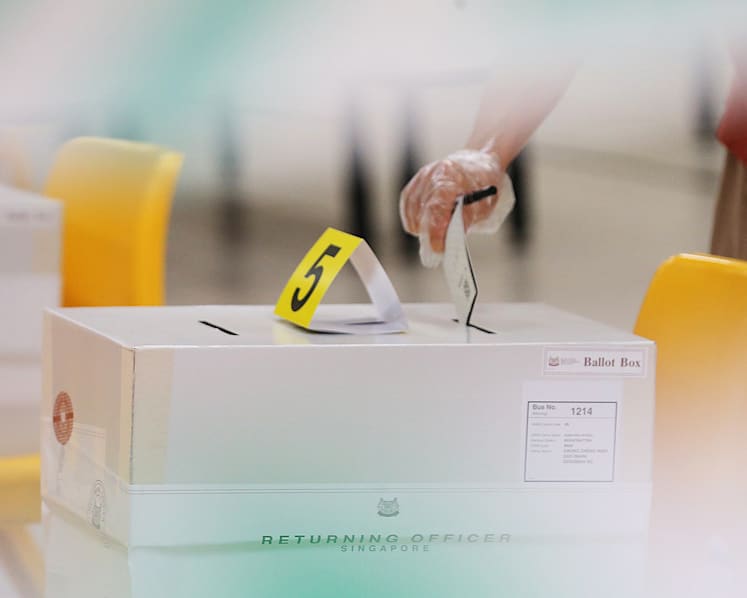
PAP’s performance this General Election may have fallen short of the party’s expectations, but insiders said that its overall vote share was in line with its electoral showings in the past three to four decades.


Each week, TODAY’s long-running Big Read series delves into trends and issues that matter. This week, we speak to activists and senior members of the ruling People’s Action Party to pick apart its performance in the recently concluded General Election. This is a shortened version of the full feature, which can be found here.
- PAP's 61.2 per cent overall vote share fell short of the 65 per cent mark that party insiders had hoped for
- Activists felt that party was distracted by opposition messaging and had glossed over hot-button issues
- Short campaign timelines, late deployments also led to some confusion, lacklustre candidate recognition
- Apart from younger voters, middle-aged workers affected by pandemic also contributed to vote swing
- Heng Swee Keat’s performance being questioned; talk rife over whether succession plans need reviewing
SINGAPORE — The People’s Action Party’s (PAP) overall vote share of 61.2 per cent missed the 65 per cent mark that the party was aiming for, party insiders told TODAY.





The ruling party was also hoping not to lose more parliamentary seats to the opposition — but it did, after its main political rival, the Workers’ Party (WP), won the newly formed four-member Sengkang GRC.
While PAP’s performance fell short of its own expectations, the party insiders noted that its overall vote share was in line with its electoral showings in the past three to four decades.
Since the 1984 General Election (GE), PAP has garnered around 60 to 66 per cent of the popular vote, with the exception of GE2001 (75.3 per cent) and GE2015 (69.9 per cent). The two outliers saw exceptionally strong performances by PAP, owing to voters’ flight to safety post-9/11 in the 2001 polls and the “Lee Kuan Yew effect” in the 2015 elections.
Still, the party insiders felt that PAP could have done better in this GE, if not for a host of factors behind the scenes that contributed to the below-par showing.
While party discipline meant they would typically keep their views within the party, the 11 PAP members whom TODAY interviewed — ranging from rank-and-file branch activists to retired Members of Parliament (MPs) and former political office-holders — offered their frank opinions, on condition of anonymity, on what they thought had gone wrong during the campaign.
One activist, who is in her mid-30s and has been involved with the party for over a decade, said: “The problem with my dear PAP is that many activists have given feedback over the years, but there is still a large inertia about changing its tactics, about embracing social media, and accepting that there are things within the party that need to be relooked.”
Another 25-year-old activist, who has been with PAP for eight years, said: “The old guard of the party refuse to listen to the youth. They love tried-and-tested plans, and they are technocrats scared of taking risks… It may take a generational change before they change their ways.”
With the ruling party licking its wounds after GE2020, TODAY looks back at the landmark election through the eyes of the activists and senior party members, who gave insiders’ accounts of how certain narratives played out during the election and picked out what worked well for PAP, and what was left wanting.
OPPOSITION WAYLAID PAP’S AGENDA
A poll by Blackbox Research that was released post-GE2020 found the opposition’s arguments on diverse voices had cut through PAP’s messaging of jobs and livelihoods.
Insiders said that the PAP leadership was keenly aware of where voters’ attention were turning to after Nomination Day, such as on the debate over the Non-Constituency MP scheme and the threat of an opposition wipeout.
On July 4, PAP's second assistant secretary-general Chan Chun Sing urged opposition parties to refocus on tackling the Covid-19 pandemic and its economic fallout at a press conference. Prime Minister Lee Hsien Loong’s online lunchtime rally on July 6 and Senior Minister Tharman Shanmugaratnam’s online speech on July 7 also helped steer the conversation back to PAP’s message.
These late efforts could have helped solidify the 60 per cent base that believes in PAP’s long track record of stewarding Singapore, one activist said.
However, online attention had also shifted towards police investigation into past statements made on social media by WP’s Raeesah Khan, who was then a candidate for Sengkang GRC. PAP’s main agenda was further waylaid when it issued a July 6 statement commenting on her case.
One activist in Marsiling-Yew Tee GRC said it was difficult to avoid refuting the opposition’s claims that it saw were false. However, in hindsight, the party’s rebuttals to the rival Singapore Democratic Party — such as its false claim over Singapore’s “10 million population target” — may have backfired and distracted voters from PAP’s central message, the activist said.
LATENT CONCERNS UNADDRESSED
Several veteran activists also noted that during the hustings, PAP may have glossed over hot-button issues that preceded Covid-19, such as the reserved presidency and the Protection from Online Falsehoods and Manipulation Act, among others
For example, in rebutting SDP’s false “10 million population target” claim, PAP had focused on questioning the integrity and honesty of the opposition party’s leaders, without addressing voters’ concerns about the country’s population size and immigration policies.
They felt that more could have been done to assuage voters’ unhappiness over them before Polling Day, especially since topics such as the reserved presidency lent credence to WP’s “blank cheque” argument, which had taken on a life of its own.
Activists said that the closing remarks by then WP candidate Jamus Lim in a televised live debate — that WP is trying to deny PAP a blank cheque — was an effective foil to PAP’s call for a strong mandate. It was akin to former WP chief Low Thia Khiang’s comments during GE2011 that the opposition is there to act as “a co-driver” to slap the ruling party if it drives off course.
A former PAP MP said: “Immediately when you say ‘no blank cheque’, voters, without prompting, will also form examples in their minds of how PAP had acted as if it had a blank cheque… To me, this shows that we have not explained policy well enough.”
Another activist, who had served the party in the previous two GEs, said: “These are hot-button issues — just because they were lurking under the carpet in this GE does not mean that people have forgotten about them.”
Asked about this, Mr Liang Eng Hwa, MP-elect for Bukit Panjang, said that he did encounter concerns over the Central Provident Fund and foreign labour from voters he interacted with in GE2020, which he was not able to address in the nine days of campaigning.
“I could not engage them fully and so I duly noted them, and will work towards hearing from residents on what more needs to be done and raise these issues in Parliament.”
CAMPAIGNING CURTAILED BY COVID-19
In past elections, campaigning was left to each constituency team and not centrally controlled from the party headquarters.
But with Covid-19 affecting how the party interacted with voters, some of these de facto plans could have been improved ahead of time, a young activist volunteering in the central part of Singapore said.
As a result, when the elections were called amid a pandemic, activists described a confusing and mad rush to put their plans into action.
The Blackbox study had also found that PAP had far more social media mentions over the course of the campaign — a 72 per cent share, compared with WP’s 18 per cent.
Quantity, however, did not translate to quality. In terms of the overall campaign, 45 per cent of poll respondents felt that WP’s campaign was better than expected, versus 40 per cent for PAP’s.
The opposition, especially WP, had presented a more coherent digital campaign because it was leaner and could target its appeal to the constituencies where it was contesting, the PAP activists said.
Some noted that PAP also needs to rethink how it conducts its physical outreach to voters to cope with the difficulties of a short campaigning period.
An older activist serving the PAP branch in the opposition stronghold of Hougang said: “Overall, PAP should improve on its ability to interact with voters because we failed to touch the hearts of people who disagreed with us. We need to do more to convince (people of) why the PAP is good, and not why the opposition is bad.”
LATE SWITCHES AND SURPRISE DEPLOYMENTS
There were two big surprises on Nomination Day: PAP's first assistant secretary-general Heng Swee Keat’s move to contest East Coast GRC from Tampines GRC and PAP's organising secretary Desmond Lee’s move to West Coast GRC from Jurong GRC. They had both been two-term MPs in their former constituencies.
The moves were largely seen by analysts as a tactic to shore up the East Coast slate against WP, and the West Coast slate against the Progress Singapore Party’s “A” team that included its founder, former PAP stalwart Tan Cheng Bock.
Some party activists were unhappy with the way candidates were “parachuted” into constituencies late in the process, leaving them with little time to prepare for the campaign.
In some GRCs, including Sengkang GRC, activists said that candidates new to the area generally dragged down the votes for the constituency.
“Voters nowadays don’t like this sort of parachuting and throwing people in at the last minute,” one activist said.
The former MP whom TODAY interviewed also described how Singaporeans no longer plumped for PAP candidates holding higher ranks in the Government, unlike in the past, when talent was sparse and citizens held political office-holders in higher regard.
He noted that this was one reason why WP managed to win Sengkang GRC against a four-man team that included three former political office-holders.
NOT JUST THE YOUTH VOTE WHICH SWUNG
In their preliminary assessments, many political observers attributed PAP’s slide in vote share to the party losing a large section of votes from the youth, who wanted diverse voices in Parliament and saw the need for checks and balances in government.
The party’s loss in Sengkang GRC, which has a younger demographic compared to constituencies comprising mature estates, was a case in point.
However, Blackbox researchers noted that it was unlikely the youth vote was a key factor behind the decline in PAP’s overall vote share compared with GE2015, and that voters under 30 represented only about a quarter of the electorate.
Party activists and PAP MPs-elect said they believed that the national swing against the ruling party came from another demographic apart from the youth: Middle-aged workers concerned about jobs, especially with the economy being battered by the Covid-19 pandemic.
Speaking to TODAY, Ms Nadia Ahmad Samdin, MP-elect for Ang Mo Kio GRC and the youngest on the PAP’s slate, noted that her generation of millennials grew up as digital natives, so expressing different ideas and opinions came naturally to them.
However, there are also signs of a maturing democracy across different demographics, she added. “It’s fairly clear that the party acknowledges that it does not have a monopoly of ideas, and is looking for different viewpoints,” the 30-year-old lawyer said.
Ms Jessica Tan, MP-elect for East Coast GRC, said that she also sensed a shift among the middle-aged demographic in her ward some years back, before the pandemic struck. During GE2020, she had observed that more middle-income residents had been approaching her to give feedback on national policies, and that they were not necessarily millennials or young people.
SUCCESSORSHIP TESTED
Late in November 2018, PAP’s succession plan was set in motion when Mr Heng was chosen as its first assistant secretary-general, paving the way for him to take over the reins from PM Lee as the country's leader.
One senior activist defended Mr Heng’s performance in the polls, stating that the PM-designate was not able to spend more time on the ground, compared with the WP candidates that included social media darling Nicole Seah.
Nevertheless, most party activists who spoke to TODAY were disappointed with the 53.4 per cent of the vote share won by PAP’s five-man East Coast GRC team. Though the party ultimately retained the often closely fought constituency, questions have arisen over whether PAP needs to rethink who should succeed PM Lee.
Party activists acknowledged the strong challenge that WP had presented in the East Coast GRC in past elections, though they had hoped that Mr Heng could win by a larger margin to prove that he could win the nation’s mandate in the future.
In a commentary published last Sunday, The Straits Times’ Editor-at-Large Han Fook Kwang questioned: “Will the new circumstances (presented by the pandemic) require a different leader to rally and mobilise the people?”
While PM Lee had signalled his intention to hand over power before he turned 70, he pledged in his July 6 virtual lunchtime rally to see Singapore through the Covid-19 crisis with his older colleagues as well as the fourth-generation leaders before handing the reins over to the next team.
With a Cabinet reshuffle expected in the coming weeks before the new term of Parliament begins, talk is rife among party activists about whether someone else will be up for the prime minister’s job.




