

The Big Read in short: Why Singapore is still not a cycling nation
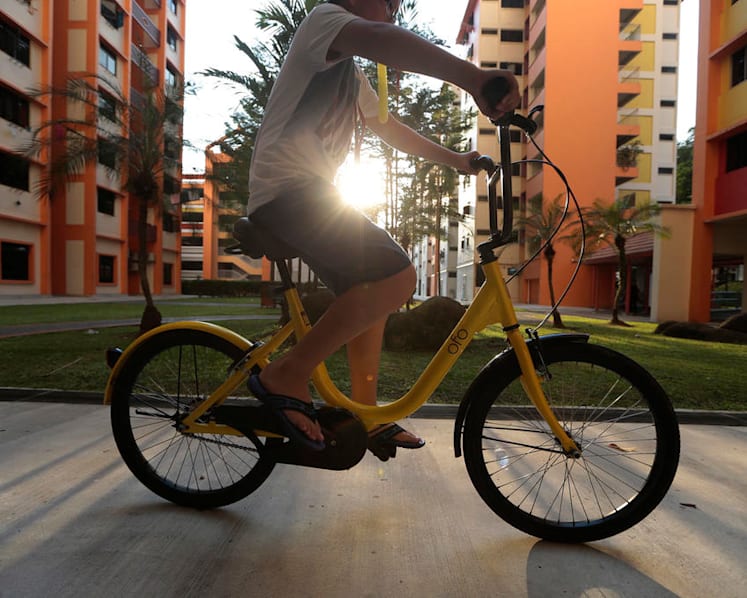
Over the next five years, LTA said it would add some 100km of cycling paths by building new ones and expanding existing networks in towns such as Taman Jurong, Bishan, Toa Payoh and Bukit Panjang.


Each week, TODAY’s long-running Big Read series delves into trends and issues that matter. This week, we look at why cycling has, by and large, remained a minority pursuit, in spite of the Government’s efforts to improve the infrastructure. This is a shortened version of the full feature, which can be found here.
SINGAPORE — It was about a decade ago when Singapore took its first big steps towards becoming a bicycle-friendly city.
Nationwide efforts to improve the cycling infrastructure in housing estates kicked off in February 2009, with the Land Transport Authority (LTA) announcing a S$43million intra-town cycling programme, starting with five HDB towns — Yishun, Tampines, Taman Jurong, Pasir Ris and Sembawang.
A year later, the LTA, along with several other agencies such as the Urban Redevelopment Authority and the National Parks Board, unveiled the National Cycling Plan, incorporating the earlier programme.





Under this initiative, 700km of bicycle paths will be built by 2030, with cycling routes developed for recreational and short commuting purposes. These intra-town cycling routes would also be integrated into a comprehensive network throughout the island.
Today, about 120km of bicycle infrastructure has been built, including those in nine residential towns: Tampines, Sembawang, Changi-Simei, Pasir Ris, Yishun, Punggol, Jurong Lake District, Bedok and some parts of Ang Mo Kio.
Together with the more than 300km of park connectors which have been built, Singapore is past the halfway mark of the 700km target.
Apart from cycling paths demarcated in red, bicycle wheeling ramps were built along staircases, among other things.
Over the next five years, LTA said it would add some 100km of cycling paths by building new ones and expanding existing networks in towns such as Taman Jurong, Bishan, Toa Payoh and Bukit Panjang.
The authority is also looking at “providing more inter-town cycling routes to connect cyclists directly from their homes to the city, such as the Geylang-City and Queenstown-City links that are underway”.
While efforts are being made to enhance the connectivity of cycling networks, riding the two-wheeler seems to remain a minority pursuit in Singapore.
Speaking to The Straits Times in 2017, LTA’s then-director of active mobility Tan Shin Gee said she hoped that 4 to 6 per cent of all trips are done by bicycle. Currently, the figure is about 1 to 2 per cent.
WHY PEOPLE ARE NOT CYCLING MORE
The hot and humid Singapore weather.
Lack of “end of trip” facilities, such as showers at work places and secure bicycle racks.
Concerns over safety, especially on roads. “Cyclists are still considered as pests on the roads, and there is still this tension between cyclists and drivers,” said one cyclist, a 36-year-old fine arts lecturer who only wanted to be known as Ms Joey.
Having to share space on designated cycling paths, where there is an increased presence of personal mobility device (PMD) users and straying pedestrians. Ms Jenn Chen, 24, a marketing executive who uses her own bicycle to get from her home in Tampines Street 11 to the MRT station in Tampines Central, pointed out that “the e-scooter riders often go at fast speeds”, which may be dangerous for others on the path.
WHAT CAN BE DONE
Mr Francis Chu, the co-founder of cycling enthusiast group Love Cycling SG, felt that it is time to tweak some traffic rules and make adjustments to the infrastructure, in order to accommodate the growing presence of cyclists on the roads.
Taking a leaf from Taipei’s experience, he suggests that there could be a “slow lane”, where speed limits on the left lanes on multi-lane roads could be reduced to 40km/h, so as to reduce the speed difference between two wheelers and cars.
In the Taiwanese capital, advance bicycle boxes or “safety boxes” in front of cars are demarcated on roads to allow cyclists to get a few seconds’ head start before proceeding.
However, transport experts such as Dr Park Byung Joon from the Singapore University of Social Sciences (SUSS) believe that demarcating a “slower lane” could create “bottlenecks” in traffic, not only along a particular road, but subsequent ones.
With Singapore being a land-scarce city, creating safety boxes may not be a feasible option as well.
To make cycling a more attractive option for commuters, some cyclists have suggested fixing bike racks on public buses so that it would be more convenient for them to use a bicycle for first- and last-mile journeys.
In Los Angeles, for example, most buses are fitted with bicycle racks.
Experts, however, caution that that while such improvements could be experimented, safety issues could arise. They also questioned if such racks — which mean cyclists would require time to mount and dismount their bicycles — were feasible during peak hours.
THE BIGGEST OBSTACLE: HIGH POPULATION DENSITY
Despite efforts to make cycling more commonplace here, one of the biggest hurdles that cannot be wished away is Singapore’s high population density, said experts.
Singapore had a population density of around 7,796 people per square km last year. This is about 1.5 times that of Amsterdam, for example, which has a population density of 4,908 people per square km.
The experts noted that roads are already “close to saturation point” during peak hours, and public transport is unlikely to be able to accommodate extra space for two-wheelers.
Said Dr Park Byung Joon, an urban transport expert from the Singapore University of Social Sciences: “While all the other factors such as the hot weather come into play, at the end of the day, Singapore is an extremely dense city. If our population is already so dense, what are we going to do when we each have bikes?”
Also, for most commuters, the current public transport system already provides “great connectivity”.
Dr Walter Theseira, a transport economist from the SUSS, said: “The physical reality of cycling... is that it takes more time and energy to go a certain distance than motorised transport, all else equal.”
“Cycling therefore has a hard time being competitive with motor transport when commuting distances are longer, or when traffic is managed well.”
CORRECTION: An earlier version of the story stated that about 120km of bicycle infrastructure has been built, or less than a quarter of the 700km target under the National Cycling Plan. This is incorrect. More than half the target has been reached, with 120km of bicycle paths and over 300km of park connectors in place. We are sorry for the error.




