'Grieving who I used to be': When a stroke hits in your 30s
More young adults in Singapore are experiencing strokes, and their recovery journeys are often challenging especially coupled with the pressure of getting back to work quickly or returning to a lifestyle they once enjoyed.
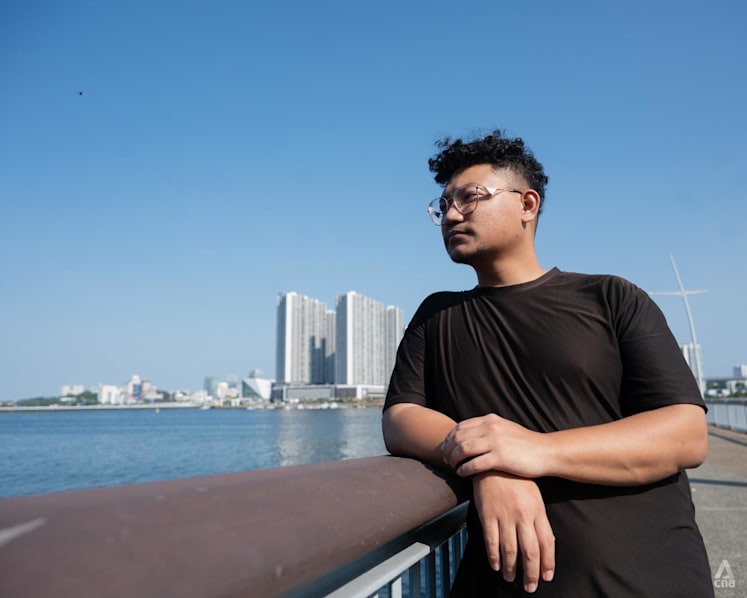
Even after physical recovery, younger stroke survivors may continue to face "invisible" challenges such as fatigue, memory lapses and difficulty concentrating. (Photo: CNA/Justin Tan)

This audio is generated by an AI tool.


For most adults, their 30s are a time to think about starting a family, ticking off more places on their travel list, and maybe moving into a new home.
But over the past decade, for some Singaporeans, those aspirations have been derailed after they experienced a stroke, which occurs when blood flow to the brain is cut off, depriving brain cells of oxygen and causing them to die within minutes.
This could potentially lead to lasting disability or even death.
While older adults still make up the majority of stroke patients, doctors are seeing a concerning uptick among those in their 30s and 40s.
According to the Singapore Stroke Registry Annual Report 2022, published in 2025, for those aged 40 to 49, the incidence of stroke climbed about 20 per cent over a decade, from 82.3 per 100,000 people in 2012 to 99.1 in 2022.





Even in the 30 to 39 age group, incidence rose from 20.2 to 25.3 per 100,000 in the same period – an increase of about 25 per cent.
While the rise in stroke cases among younger adults is in part due to greater awareness and faster diagnosis, much of it is due to a "genuine increase" in risk factors, said Dr Benjamin Tan, a consultant in the division of neurology at the National University Hospital (NUH).
These include high blood pressure, high cholesterol, diabetes and smoking – all of which can damage blood vessels over time and lead to clogged or weakened arteries.
Doctors said lifestyle habits are also driving these conditions at younger ages. Chronic stress, long working hours, poor sleep, heavy alcohol consumption, physical inactivity and diets high in processed foods all play a role.
But these factors do not fully explain the trend. "Very often, stroke in a younger patient is due to a combination of lifestyle risk factors and an underlying medical condition," said Dr Rohit Khurana, a consultant cardiologist at The Harley Street Heart and Vascular Centre.
These may include congenital heart issues, blood-clotting disorders and autoimmune diseases, which may go undetected until a stroke occurs.
Dr Tan added that strokes in adults aged 30 to 49 are generally more common in men, who tend to develop vascular risk factors earlier.
"Women have some hormonal protection before menopause, but their risk can rise slightly during periods such as pregnancy, the postpartum phase or with oral contraceptive use. Overall, the risk remains low for most healthy women."
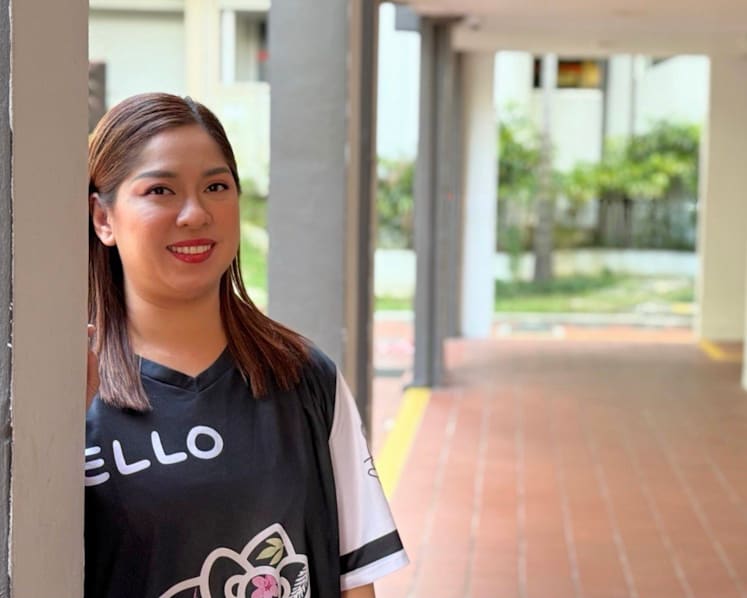
Doctors and occupational therapists told CNA TODAY that strokes in this age group are particularly challenging because they severely disrupt the lives of people who are in the thick of their working years and may be raising children or supporting ageing parents, as well as managing financial responsibilities.
And while younger patients may have greater potential for physical recovery, they also tend to place higher expectations on themselves to return quickly to their previous lives, which may not always be realistic.
Ms Magdalene Chia, a stroke case manager at NUH, said expectations at work and the pressure to remain breadwinners can push younger patients to try to recover quickly, amid fears of job loss if they do not return soon.
While this may motivate them to work harder in their recovery, Ms Sophia Chan, a senior occupational therapist at Stroke Support Station (S3), cautioned that this tension can lead to overexertion, feeling discouraged and difficulty sustaining a return to work.
Rehabilitation, she said, should go beyond physical impairment to include how best to resume job roles, how to ease back into their social lives and family responsibilities.
Even after physical recovery, patients may struggle with "invisible" effects such as memory lapses, fatigue, and slower processing speed, which can affect their ability to cope at work.
These "invisible" cognitive and emotional challenges can affect stroke patients across age groups, but for younger survivors, they are often felt most acutely at work and in managing complex daily responsibilities, said Ms Chen Zhenzhen, senior principal occupational therapist at NUH.
CNA TODAY spoke to three survivors who each suffered a stroke in their 30s to learn about the challenges they faced in rebuilding their lives and forming a new personal identity in the aftermath.
WHEN HIS DREAM LIFE UNRAVELLED
Before his stroke at 36, Mr Ian Tang was "living the dream" in Taiwan, where he was working as a community manager for Blizzard Entertainment, a renowned video game company.
He thoroughly enjoyed his work and his career was on an upward trajectory at the company, whose video games he played as a child.
Life outside work was falling into place, too. Mr Tang, now 44, married his long-time partner in 2017, when he was 35, and the couple were keen to start a family.
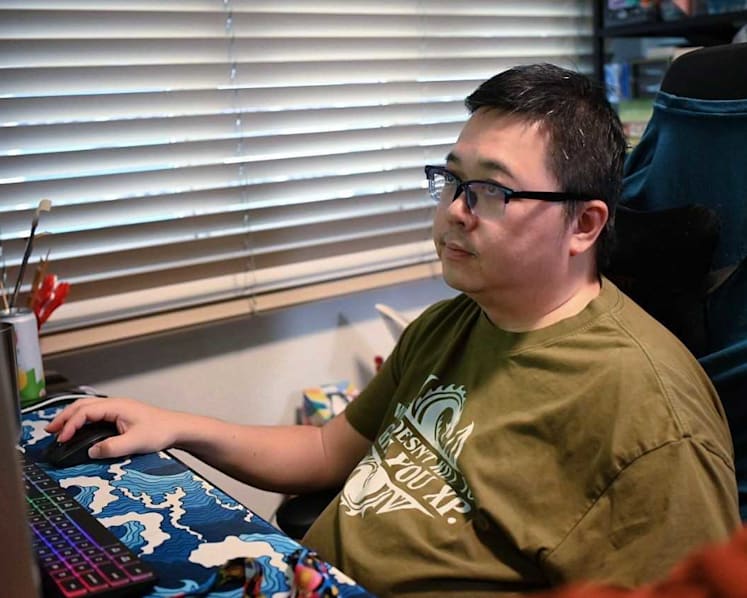
Then, one morning in November 2018, while he was messaging friends, something "felt off". As he sat on a chair on his balcony, his mobile phone kept slipping out of his left hand and he struggled to pick it up. Moments later, he lost his balance and collapsed.
"Normally, if you fall, your body reacts to stop yourself, right? But there was almost no defensive reaction. I couldn't control my body," he said.
"I just knew I was falling forward onto the floor and wondering how I ended up there."
Alone in the apartment as his wife had left for work, he mustered all his strength and crawled to the toilet, where he ended up lying for hours before blacking out.
His wife found him, some eight hours post-stroke, when she returned home from work. He tried to tell her he was having a stroke and asked her to call for help, but his garbled words came out as gibberish.
He later lost consciousness and regained it only days later in hospital, where he learned he had suffered a haemorrhagic stroke, which is a bleed in the brain caused by weakened blood vessels. He was unable to move, but he could still communicate.
In the months that followed, the life he built began to unravel. Mr Tang spent several months in the hospital undergoing intensive rehabilitation and lost his job while still recovering.
"I thought I could go back to work. Then, the HR staff came to the hospital to tell me I had been retrenched."
With no job and no work visa, the couple returned to Singapore in 2019, moved in with his in-laws and continued his rehabilitation at Tan Tock Seng Hospital.
By then, he had regained some independence. He could walk, albeit slowly with a walking aid, talk and manage basic daily activities with minimal assistance.
In the last six years, his mobility has improved, but his left hand remains weak to this day.
Given his marketing and communications background, Mr Tang thought his roles in the industry would be manageable physically, so he began attending job interviews once he felt ready soon after returning to Singapore.
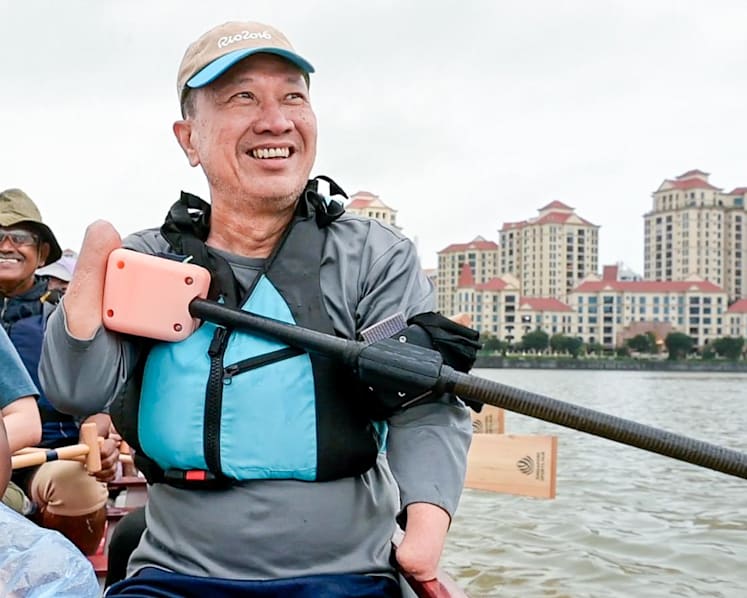
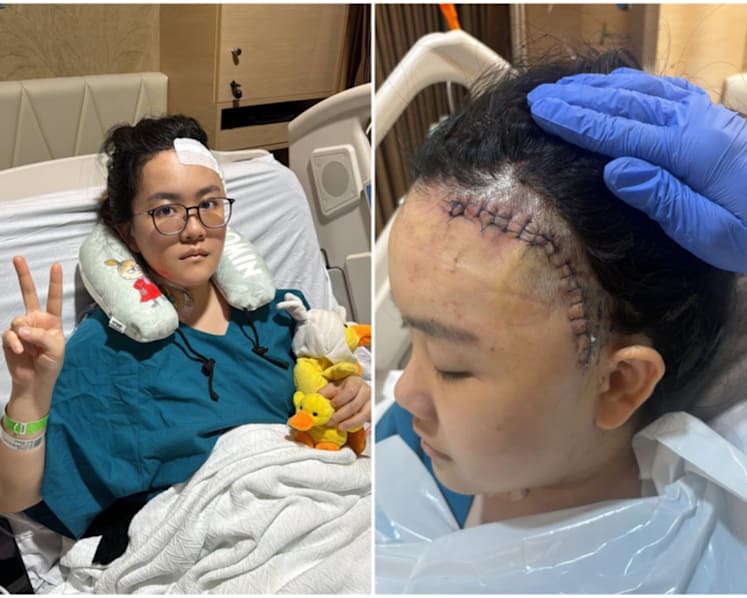
He eventually found a role at a local advertising agency in early 2020 – about 14 months after his stroke – but it was short-lived. Days later, the COVID-19 pandemic hit and he was retrenched again.
Even during his short stint at the advertising agency, he found that returning to work was far more difficult than he expected, even though his role was mainly desk-bound.
"It was very naive of me to think that returning to work was just about being able to do the work. There is the whole 'ecosystem' too, like how to eat lunch and how to get to work."
The setbacks took an emotional toll. He became unusually angry, snapping at strangers over small things, and did not understand why. Only after speaking to a counsellor did he realise he was grieving.
"I was grieving who I used to be, because that person is dead and gone, along with what I had and who I could have been."
Recovery, he learnt, was not linear. Progress slowed after the first six months, and some abilities, such as the use of his left hand, did not return.
Besides physical rehabilitation, he joined stroke survivor support groups where he noticed a gap in the kind of support for younger survivors, who often have to tackle issues such as going back to work and navigating intimacy on their own.
Mr Tang eventually found his footing in the social service sector before moving to his current role as a specialist at the National Trades Union Congress (NTUC), supporting creative freelancers.
The Tangs also had to put aside dreams they once thought were a given, like starting a family.
After the stroke, life wasn't about big plans anymore. It was about getting by day to day, figuring out how to go back to work, and juggling life together, so naturally, decisions about the future just took a back seat, he said.
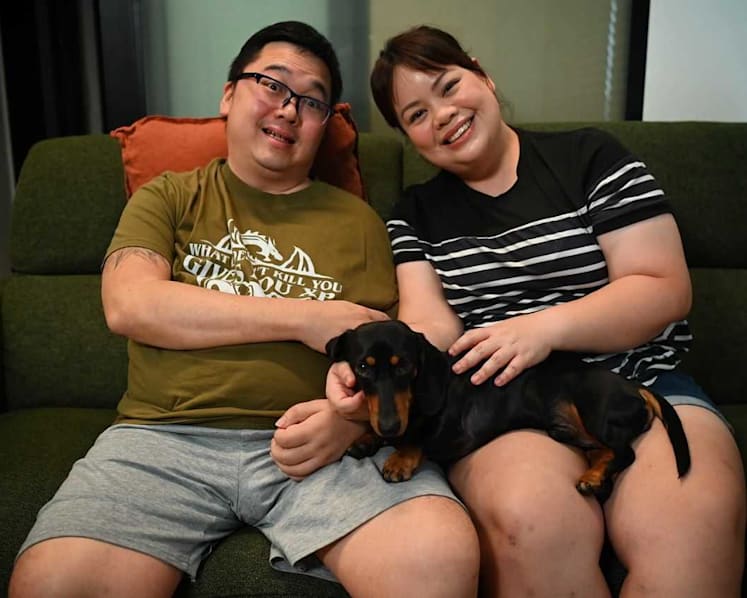
"Life still goes on. Instead of focusing on what I lost, I told myself to look at what I have gained: a second chance at life, a chance to see my nephews and niece grow up, and to adopt Bruce, our darling dachshund."
A KEEN FOOTBALLER WHO NOW WATCHES FROM THE SIDELINES
Mr Muhammad Rafi Sawal was always on the go – travelling between work sites, working outdoors in the sun and rain, and spending weekends with his wife and four young daughters, aged between six and 12.
The 42-year-old technician has also been active from a young age, taking part in sports such as cycling, football and jogging.
Then, in October 2023, when he was 39, everything changed. He returned home late and was getting ready for bed when he noticed his left hand and leg feeling "like jelly".
He showed his wife his awkward gait. She immediately sensed something was off and told him to call an ambulance. While they were waiting for it to arrive, he lost consciousness.
When he woke up in hospital, he did not recognise anyone at first – not even his wife of 13 years.
Doctors diagnosed a basal ganglia haemorrhage – a type of stroke caused by bleeding deep within the brain. Because of his age, they opted to monitor him rather than operate. Gradually, his memory returned – first his wife, then his parents, then his children.
But physically, he had lost almost all function on the non-dominant left side of his body.
After four weeks in the hospital and further rehabilitation, he was discharged. And that was when the reality of his condition set in.
"Recovery made me feel like a completely different person. Before, I could run, jump, and squat. After discharge, the left side of my body couldn't move properly."
"I felt very disheartened. I couldn't believe this had happened to me. My morale was very low. At one point, I felt like there was no point in living," Mr Rafi admitted.
"But what kept me going was my family. My wife, siblings and daughters became my pillars. They gave me motivation and emotional support."
Still, there were moments that stung.
Friends he used to play football with would invite him to join them for a game but he had to turn them down because he could not run yet.
Recovery was slow but steady. At first, Mr Rafi could take only a few steps with crutches and otherwise relied on a wheelchair. Within three months, he no longer needed the wheelchair. Another three months later, he could let go of the crutches, and after another two months, he stopped using a walking stick altogether.
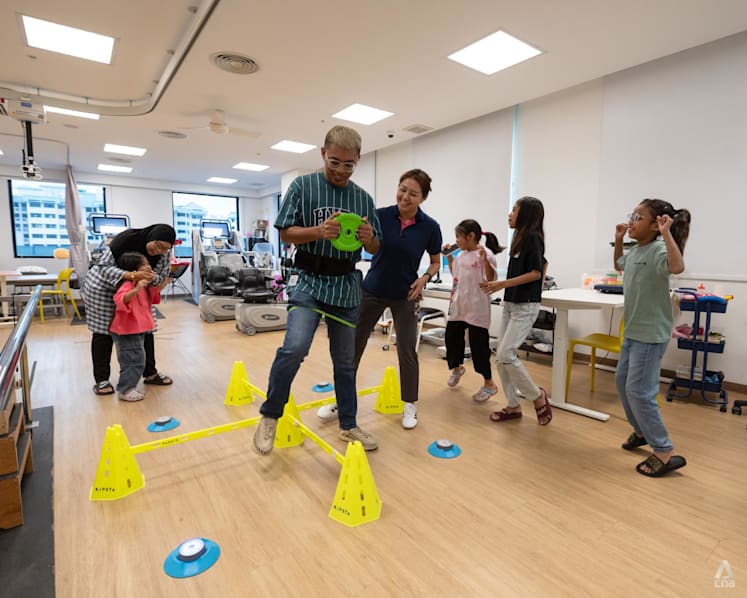
Today, he appears outwardly well but still goes to therapy at Stroke Support Station (S3) in Jurong Point shopping centre, with some "invisible challenges" remaining.
Mr Rafi still feels some numbness, heaviness and suffers from coordination issues on his left side.
"Sometimes people assume I'm fully recovered. But I still cannot carry heavy loads, bend down easily, run or jump properly. Cognitively, I'm mostly okay, though occasionally I may stammer."
Given his previous role involved physical tasks, his return to work about a year after his stroke involved a change in job scope.
He now does more supervisory duties and is grateful for his boss who helped him with the transition back to work. His doctors have also told him that he will eventually be able to get back to playing football.
Despite everything, Mr Rafi does not see himself as "limited". He continues to volunteer at the Jurong Spring Community Club, helping low-income residents with their grocery needs, a place he helped out at even before his stroke.
"I don't want people to say: 'You had a stroke, so you're excused.' If I can do it, I will do it," he said.
HELPING SURVIVORS RETURN TO WORK
In Singapore, the early stages of stroke recovery, which extend from hospital care to community rehabilitation, are relatively well-structured.
But when formal rehabilitation scales back, it is in this longer-term phase of recovery and daily life that gaps become more apparent, particularly as survivors seek to stay active, return to work and rebuild their lives.
An international study led by researchers from the National University Health System (NUHS) found that while more than 80 per cent of young stroke survivors achieve good functional recovery, only about 60 per cent successfully return to work.
Support, experts said, needs to go beyond medical rehabilitation to include social, emotional and practical aspects.
Organisations such as the Singapore National Stroke Association (SNSA) provide programmes ranging from fitness sessions and community activities to peer support, befriending and counselling, with support that recognises younger survivors’ life-stage needs.
"For younger stroke survivors, concerns about returning to work often come up early. Many are at a stage of life where career progression, financial commitments and family responsibilities are significant," the association told CNA TODAY.
"Because of this, the urgency they feel to recover quickly and return to life as they knew it can be especially strong."
SNSA supports survivors by linking them to employment support pathways through partners such as SG Enable, SPD (formerly the Society for the Physically Disabled) and ABLE (Abilities Beyond Limitations and Expectations).
But even with these in place, challenges remain.
"In many cases, the effects of stroke are not always visible, which can lead to misunderstanding or insufficient support in the workplace," said an SNSA spokesperson.
Similarly, Ms Ng Rei Na, executive director of S3, said there is still a lack of sustained, post-rehabilitation support for stroke survivors, noting that recovery does not end at discharge and, for younger survivors in particular, is about getting back to life, not just basic functionality.
To address this, S3 is opening Singapore's first stroke-focused adaptive gym later this year, providing a structured, clinically guided environment for survivors to rebuild strength, endurance and confidence beyond rehabilitation.
The organisation has also held a post-stroke intimacy workshop, reflecting how recovery for younger survivors extends into areas such as relationships and family life – aspects that are often overlooked in traditional care.
It has also launched an innovation lab where more than 45 stroke survivors are co-developing solutions with innovators, designers and engineers, driven by a desire to give back.
"I THOUGHT I WAS PERFECTLY FINE"
At 32, Mr Nur Azhar Hanafiah thought he was doing everything right.
The paramedic exercised regularly, watched his diet and had regular medical screenings, which never revealed any health issues.
"I had no symptoms. I thought I was perfectly fine," said Mr Azhar, who is single and lives with his 65-year-old father and 102-year-old grandmother.
Then, last June while he was on the night shift and helping an accident victim with minor injuries, he suddenly became a patient who needed attending to.
He felt weakness on the right side of his body. His leg gave way first, followed by his arm. Within seconds, he felt giddy and developed a severe headache, while his speech became slurred – typical for stroke victims.
As a trained medical professional, he knew instantly that something wasn't right and that he was having a stroke.
He handed over the case to his colleagues as his symptoms worsened. Although they briefly subsided, within minutes, he was in a debilitated state.
Given the start-stop nature of his symptoms, he thought he was suffering from a transient ischaemic attack (TIA), often described as a "mini stroke", which is less serious than a full-blown episode.
He quickly called the operations centre to dispatch another ambulance for the patient and one for himself, so they could both be taken to NUH.
There the doctor later confirmed that he had indeed suffered a stroke and not a TIA. He was also told he had high blood pressure and high cholesterol – the first time he had heard it, despite going for annual medical check-ups.
"I couldn't accept it at first. I was only 32 at the time. I kept asking myself, why did I get a stroke?"
The shock quickly gave way to worry because he wondered whether he would be able to work again.
"I kept thinking about my income and what would happen to my family if I couldn't return to work. If my condition didn't improve, what could I do next?"
Mr Azhar was hospitalised for about three weeks. When he was discharged, his dominant right side was still affected. He struggled to walk independently, and even simple tasks such as brushing his teeth became difficult.
But the physical challenges were only part of it. Most frustrating, he soon realised, was his cognitive ability. Just the simple act of talking and engaging in conversations would leave him feeling very tired.
He experienced what doctors describe as "brain fatigue" – a deep exhaustion that made conversation and concentration difficult. At times, he would sit quietly "in a daze", trying to recover.
"The depression came when I realised recovery wasn't going to be one month," he said.
"During recovery, I felt quite lonely. The person who supported me the most was my helper. She followed me for my exercises at home and kept me company. Sometimes we would have heart-to-heart conversations."
Caregiving pressures added to the strain.
His father struggled to accept that he had had a stroke, even as Mr Azhar was recovering, and expected Mr Azhar to carry on as usual, including sending him to appointments and tending to his day-to-day ailments.
At the same time, he was preparing to start a part-time degree programme in paramedic science, just about a month after his stroke.
But coping with school during his recovery was overwhelming. Mr Azhar said that simple things like holding conversations with his classmates left him exhausted, let alone trying to keep up with lessons.
As for work, he was able to return to work four months later in a modified role where he handled administrative work, training coordination and rostering.
Still, the transition was not easy. The job required sustained concentration, which often triggered fatigue and tension headaches, so he had to take frequent breaks, especially in the first few weeks.
There were also financial adjustments as his desk-bound role involved a 30 per cent pay cut.
He also missed the intensity and meaning of frontline work, from managing life-and-death situations to supporting vulnerable patients and their families in moments of crisis.
With his strong desire to return, he soldiered on with intensive rehabilitation. Every day, he pushed himself to stay active, going for walks twice daily and keeping up with daily activities at home.
He also underwent physiotherapy and occupational therapy to rebuild his strength and coordination.
By the end of 2025, he was assessed to be fit to return to his regular duties as a paramedic.
"You can't take your health for granted. Even if you feel fine and think there's nothing wrong, sometimes it doesn't mean you're actually healthy," said Mr Azhar.