Why I want my kids to experience ordering food in their school canteens
As a parent of two, Ms Jillian Lim worries that an overreliance on prepacked bento boxes in schools will take away precious opportunities for children to practise valuable soft skills in their everyday lives.
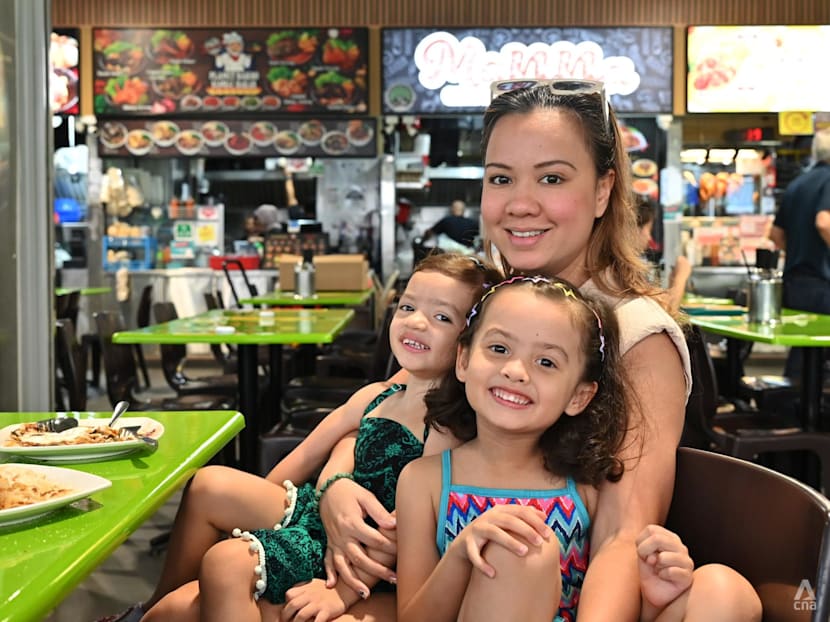
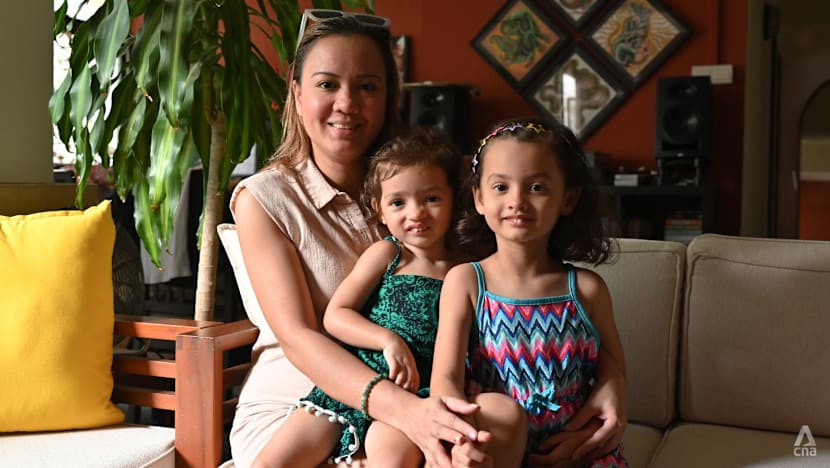
Ms Jillian Lim with her two daughters at a neighbourhood food centre on Jan 23, 2026. (Photo: CNA/Justin Tan)

This audio is generated by an AI tool.


By now, a lot of fuss has been made about the new standardised meals being rolled out in schools across Singapore.
As a parent of two young children and a former young child myself, I offer this potentially controversial opinion: an overreliance on preset bento boxes has the ability to set back our kids' development.
Journey back with me to a time when children weren't just allowed but expected to run errands for their parents.
In the late 1990s, my family and I lived in Ang Mo Kio. It was a typical Singapore public housing estate: a car park in the middle of a cluster of housing blocks, with a couple of coffee shops just across the road.





In the months leading up to my Primary 1 year, my mother decided I would take charge of fetching breakfast for the family. She would give me money, breakfast orders from herself and my father, and send me on my way.
To this day, the combination remains burned into my brain: one egg prata, one onion prata, and one egg-onion prata. Sounds simple enough.
The orders cost S$0.80, S$0.70 and S$2 respectively. My mother would give me a green S$5 note and expect me to deliver the correct change into her hand when I returned.
Now, an educated guess would be that she was doing this to train me in counting change. No, boomer! She was doing something far better.
Anyway, even by today's standards, training your child to count money is largely irrelevant as most schools and places accept cashless payments.
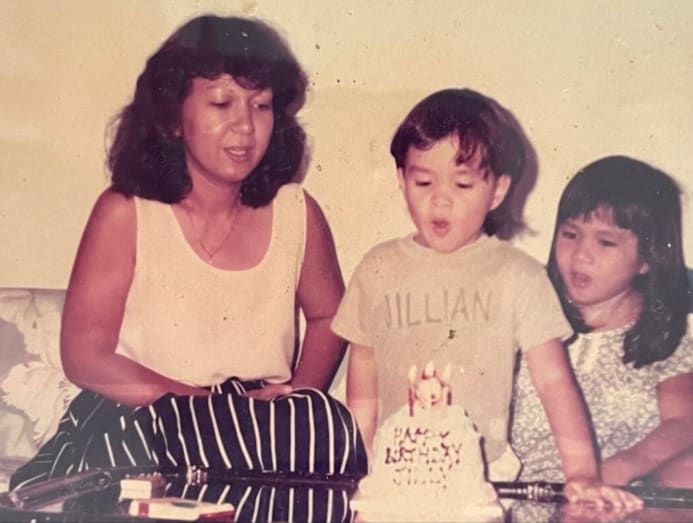
As someone who has spent nearly two decades working as a broadcaster and presenter, it may be hard to believe but I was a shy, soft-spoken child growing up, especially when it came to strangers.
Before the prata errand, the biggest responsibility I'd had till then was to "chope" tables when we dined out as a family.
My job was to protect their empty chairs from strangers who tried to plonk themselves at the table, while my parents got the food and my sister, three years older, was in charge of the drinks.
My big line, scripted and rehearsed countless times, was this: "Sorry, the seats are taken."
But now, I was going to be entrusted with ordering, too. Finally, I had hit the big-time!
FACING MY FEARS
The first day of my new "job", this was the scene: Six-year-old me valiantly battling a snaking line to the prata stall, with adults cutting the line in front of my small, short body.
The drink stall "aunty" was screaming orders in the background, her voice earsplittingly shrill. My tiny fist was gripping the S$5 note tight, my mind repeating the order endlessly, my legs blocks of cement.
Finally, the man at the prata stall noticed this lonesome child. "Ah! What you want!"
My throat was tight.
"One egg, one onion, one egg-and-onion," I squeaked out, the words barely escaping my mouth.
He repeated the order back to me – "one egg, one onion" – and turned to throw the order together.
He left out my egg-and-onion! Despite my alarm, I stayed silent. What was more important was that the ordeal was almost over.
I trotted back home, whereupon my mother swiftly rejected the order and instructed me to go back to reorder the entire thing. One egg, one onion, one egg-and-onion.
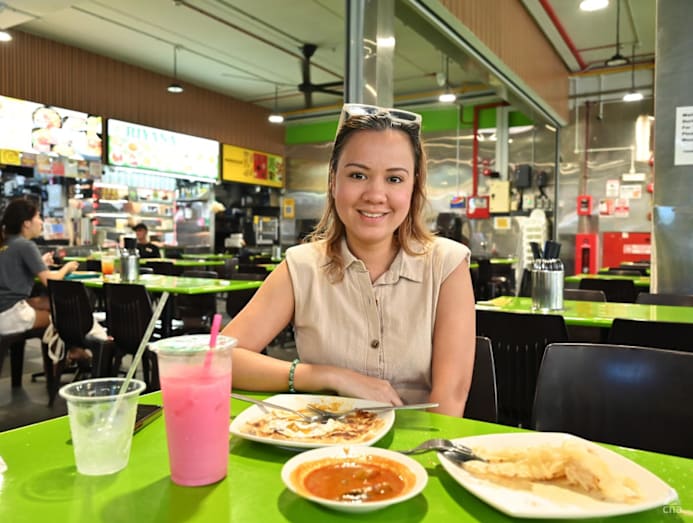
Within five minutes, I was back again. The coffee shop was a little less crowded, the line was shorter, but none of that made any difference to my petrified state.
"What you want!"
"One egg, one onion, one egg-and-onion."
I was on the verge of tears at this point. Noticing that, the "uncle" repeated the order in a gentler tone. "One egg, one onion?"
I could hold it no longer – I cried.
A young man, probably more teenager than adult, stepped up and told the seller my order: "She wants one egg, one onion, one egg-onion. Total three."
They both had a laugh.
In that moment, I learnt two things.
First, telling the hawker the total number of pratas I wanted from the start could have made communication clearer.
Second, a prata containing both egg and onion was called "egg-onion", not "egg-and-onion" as you would refer to a "ham-and-cheese sandwich".
VITAL LIFE LESSONS IN THESE EVERYDAY MOMENTS
This is about so much more than just ordering food.
It's the small nuances and life skills like that, and the use of colloquial language, that children are going to be missing out on without such experiences.
It's the confidence to advocate for yourself when things go wrong that children need to practise and hone.


Later in the same year, at the same coffee shop, there was a western stall. I volunteered to order dinner. My mother wanted a sirloin steak, medium. Why she had to indicate the size of the steak was lost on me as I was a strict fish-and-chips girlie.
She gave me the money and I placed the order, but alas! The money wasn't enough.
Why, I asked? The seller replied: "This is ribeye, it costs more."
I took the steak to my mum and asked for more money.
"This isn't what I ordered and I'm not paying more," was her reply.
Back I went, steak in hand. "I didn't order a ribeye, I ordered a sirloin. Can you make a new one, please?"
The hawker said: "Ribeye only S$3 more, you cannot pay? So cheapskate."
Outraged, I ran back to tell my mother what the awful man called her for not wanting to pay more for a smaller steak.
She explained that "medium" referred not to the size, but the doneness. She told me that is what people do, they try to upsell you in all sorts of ways – and how proud she was that I stood my ground and got the right order.
I am even prouder to report that in over 30 years of living, I have never once been pressured by a gym, hair salon or facial establishment into buying a package I didn't want or feel comfortable paying for.
FOR OUR KIDS TO SPEAK UP, THEY NEED PRACTICE
I am not trying to villainise the bento box scheme being rolled out in school canteens. On the contrary, I strongly feel they should be an option.
Not all children want to come out of their shells to interact with strangers, and some really don't need the extra mental load of deciding what to eat every day.

However, it's crucial to recognise that taking away regular opportunities for children to order their own food goes beyond building their decision-making skills.
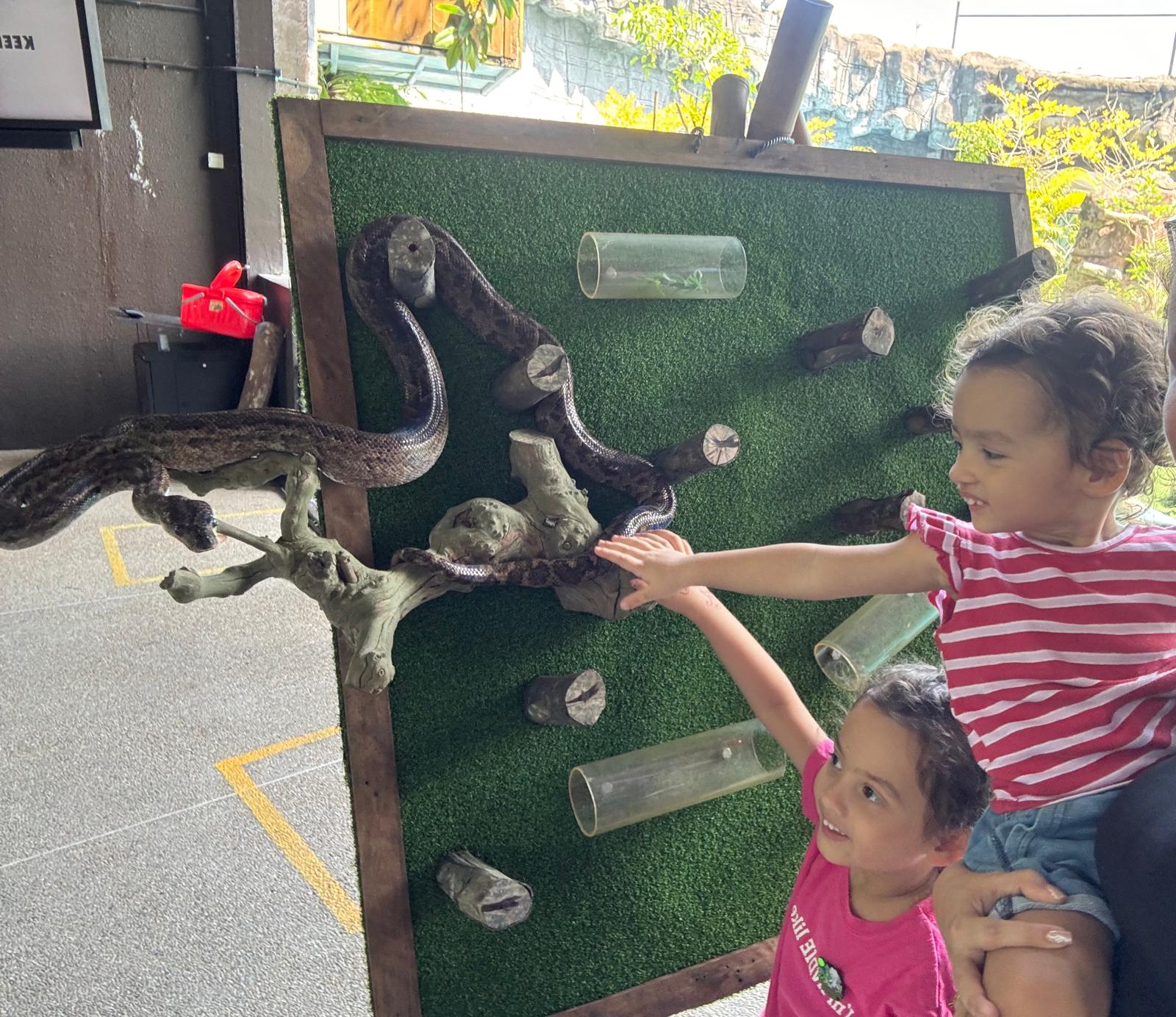
On a recent family outing to the zoo, at the end of a live show, a crew member brought out a python for audience members to touch.
My daughters Lily, aged five, and Ziggy, two-and-a-half, made a beeline to join the growing queue, while my parents and I waited at the top of the amphitheatre.
A mother carrying her young son cut the line in front of my girls, and another family followed suit.
I was all ready to storm down and cause a scene – until I heard Lily's voice pipe up: "Excuse me! My sister and I were in front of you!"
This was followed by, "And we were in front of you also!", directed to the second family.
Everyone found it charming and readily moved aside, and up went my two girls to touch the snake. My parents and I watched them from our spot metres away, beaming proudly.
It is these soft skills that children and adults alike need to constantly practise in our everyday lives.
Are we raising children who look service workers and cleaning attendants in the eye as human beings deserving of their gratitude? Are we raising children who say "good morning" and "thank you" to those they share spaces with, instead of just fixating on checking their phones?
Or are we raising children who will eventually grow up to deploy what has been dubbed the "Gen Z stare" – a mute look so powerful and, in my opinion, disrespectful, that wards off any further or follow-up questions while making recipients feel silly for asking any in the first place?
In an age where "speaking up" increasingly means writing nasty things on social media and Google reviews, how we treat each other matters more than ever.
Life can't be a bento box, neatly divided into separate sections where one part never has to touch another, and we can always know what's coming well in advance.
As Forrest Gump said, it's a box of chocolates and you never know what you're going to get. And these everyday surprises don't have to be a bad thing.
Jillian Lim is a mother to two girls and one Singapore Special. She has nearly two decades of experience in broadcasting, and is now pursuing her degree in business marketing.
If you have an experience to share or know someone who wishes to contribute to this series, write to voices [at] mediacorp.com.sg (voices[at]mediacorp[dot]com[dot]sg) with your full name, address and phone number.