

How can measures against high-sugar drinks curb diabetes and obesity?
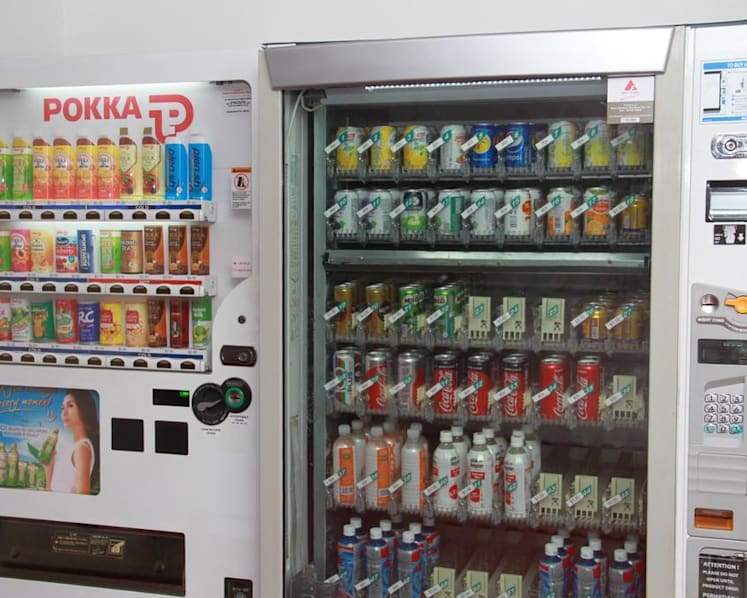


The Ministry of Health (MOH) has invited public feedback on four options to reduce Singaporeans’ consumption of sugary drinks in its ongoing war against diabetes.
MOH’s efforts to seek public views are welcome. But what is probably more important is the evidence on the relative effectiveness of the measures, and the practical and ethical implications of each.
The four options are: 1) An outright ban on pre-packed high-sugar drinks; 2) Single or tiered taxes on these drinks; 3) A ban on advertisements of high-sugar drinks; and 4) Mandatory front-pack labeling on sugar and nutrition content.
Of these, the first two are likely to draw more public attention and scrutiny.





Economists have a strong preference to tax goods which cause third-party harms (what economists call negative externalities) rather than to ban them entirely.
Why?
First, a tax preserves consumer choice while a ban removes it entirely. There is inherent utility in preserving choice and in allowing consumers to engage in mutually beneficial exchanges.
Any cost-benefit analysis of the vices needs to take into account the fact that some people find them enjoyable, as well as the fact that the harms caused by such consumption are mostly borne by consumers themselves, rather than by society at large.
As JS Mill argued in On Liberty, “the only purpose for which power can be rightfully exercised over any member of a civilised community, against his will, is to prevent harm to others.”
Furthermore, while we can link specific diseases to tobacco or alcohol consumption, it is more difficult to do so with sugary drinks, which are only one out of many potential sources of sugar for consumers.
Given that we do not ban tobacco and alcohol, a ban on high-sugar drinks is clearly excessive and disproportionate to the harms they cause.
Second, a tax allows the state to raise revenue from the consumption of something that imposes some costs on the rest of society. A ban does not.
In addition, a ban incurs potentially high costs of enforcement to deter smuggling and other unintended consequences.
The costs of driving consumption to zero might be so high as to outweigh the benefits from doing so. This is why even for something more harmful and addictive as smoking, the economically sensible policy is not an outright ban but high tobacco taxes.
Third, evidence elsewhere suggests that a tax on sugary drinks can be quite effective in reducing consumption.
The effectiveness of a tax in reducing consumption depends on how price-sensitive consumers are. The more price-sensitive they are, the more effective a tax in reducing consumption.
Compared to tobacco and alcohol consumption, both of which can be highly addictive, consumers of high-sugar drinks are more price-sensitive. There are also close substitutes to high-sugar drinks (e.g. the low-sugar version of fizzy drinks).
High price-sensitivity and the availability of substitutes mean that demand for sugary drinks is more elastic than it is for alcohol and tobacco.
This means that a small increase in price will lead to a relatively large reduction in sales.
This is borne out by experiences elsewhere. When Mexico slapped a nationwide tax of 1 peso (then 8 cents) a litre on sugar-sweetened beverages in January 2014, sales fell by 5.5 per cent in the first year, and 9.7 per cent in the next.
TAXING UNHEALTHY BEHAVIOUR
While a tax on sugary drinks is much preferred to an outright ban, that does not mean a tax is without its own challenges.
To begin with, any tax on consumption is regressive since lower-income people consume a larger share of their incomes than do rich people.
This does not mean that there shouldn’t be any tax on consumption, but simply that there should be compensating mechanisms for the poor (such as higher GST credits) if consumption taxes are increased.
Second, the problem is not with sugary drinks as such. Rather, it is high sugar consumption with sugary drinks being just one of possibly many sources of consumers’ sugar intake.
Thirdly, while a tax on high-sugar drinks is easy to implement, it is also important for the authorities to quantify the social costs of high-sugar drinks or of obesity more generally, not just the private costs. It is the former that justifies a tax, not the latter.
Theoretically, a far more direct approach would be to impose a tax on obesity. There are, of course, ethical and practical problems with this, but it is still worth understanding why taxing obesity is economically efficient, even if it cannot be implemented.
The Institute of Economics Affairs (IEA), a think tank in Britain, recently examined the net social costs of smoking, drinking and obesity in the United Kingdom.
It found that in the case of smoking and drinking, the taxes paid by consumers combined with the savings in government spending (especially pension savings) from smokers and, to a lesser extent, drinkers dying at a younger age far exceeded the social costs they imposed in terms of health, environment, crime and other costs.
The net savings were more than £14 billion each year for smoking and more than £6 billion for alcohol.
This means that smokers and drinkers in Britain are taxed too heavily. Put another way, they are subsiding the rest of society rather than the other way round.
This raises the question of whether the same is true for Singapore (where tobacco and alcohol are heavily taxed), even if there are no significant pension savings from smokers dying prematurely.
Finally, the IEA observed that the direct health costs of obesity are large, larger in fact than the social costs of smoking.
While there are some savings from obese people dying prematurely, the fact that they do not pay any additional taxes results in obesity incurring net social costs of about £2 billion each year.
In short, smoking and drinking are over-taxed, while obesity (which is partly caused by high-sugar intake) is under-taxed in the UK.
This raises all sorts of policy conundrums, since it is much easier for governments to tax smoking and drinking rather than it is to do anything about obesity.
Seen in this light, a tax on high-sugar drinks in Singapore should be the first step to account for the true social costs of obesity.
Other steps MOH can consider include non-price measures such as setting a limit on the size of serving cups used for soft drinks at restaurants and self-service shops, and requiring fast food restaurants to change their default option of soft drinks to the low-sugar versions.
An intelligent application of these nudges, combined with a wider tax on high-sugar foods and drinks, would begin to reduce the net social costs of obesity.
ABOUT THE AUTHOR:
Donald Low is Associate Partner at Centennial Asia Advisors.




