

Older staff are right to stick around in the workplace
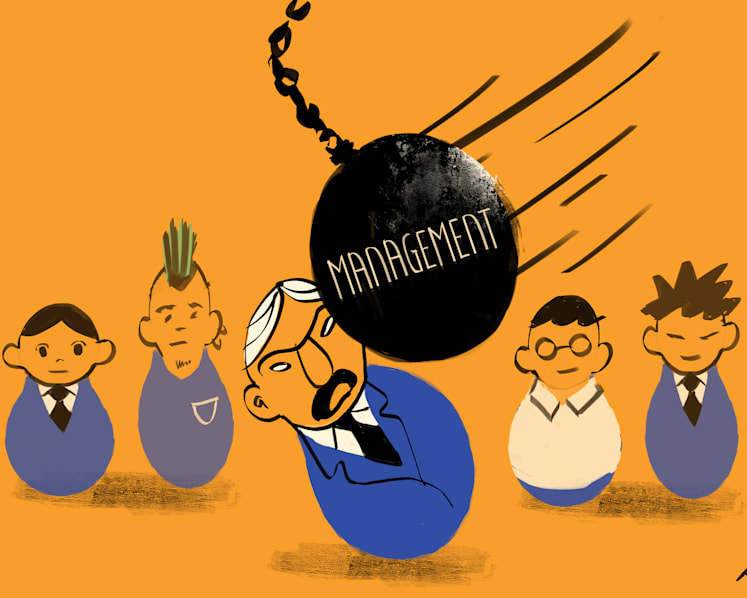
It is not right for mid-career managers to hire only staff younger than themselves, says the author. Nor is it best practice to shunt wrinklies out of the door when we reach 57.
Millennial, you can have my job when you prise it from my cold, dead fingers.
Admittedly, my age suggests you might not have long to wait. But if we reject the tired assertion that journalism (or banking, or bus driving) is a young man’s profession, because that is sexist, we need to discount it for ageism too.
The idea older employers should yield right of way to younger ones is a) economically dubious b) reflective of the worst discriminatory stereotypes, and c) . . . er, some other bad things I cannot immediately bring to mind.
Last month, John Pitcher, a 67-year-old Oxford university professor, told a United Kingdom employment tribunal that he had been asked to retire to promote “intergenerational fairness”.





He is suing his college and the university for unfair dismissal on the grounds of age discrimination.
Objectively, I can’t know whether Prof Pitcher is in the right or the wrong. Subjectively, I am whooping and shouting: “You stick it to ’em, older gentleman with an encyclopedic knowledge of Renaissance Tragicomedy!”
I have been a journalist for 31 years, most of them with the Financial Times. Recently, my long service was recognised in an email from the human resources department asking me whether I had considered early retirement.
I enjoy what I do. While this remains the case, I intend to continue.
I don’t con myself that decades of experience count for much. It has always struck me as odd that a 23-year-old the army would entrust with an infantry platoon may be deemed too clueless to market dog food.
As a rule of thumb, I reckon four years in any job should make you reasonably expert at it. After that, the law of diminishing returns applies.
That doesn’t stop me from being generous with my advice to younger colleagues. Occasionally, they have even asked for it.
They are friendly, mostly. When I had to walk with a stick for a while, one of them politely said it “suited” me.
Presumably it would have suited me even better if I had come into work in a bath chair, injured leg goutily upraised, like a Regency rake.
I do not feel aggrieved at the nascent erosion of entitlement that bugs some FT readers of my gender, ethnicity and approximate age. What goes around comes around.
Discrimination may have helped us in the jobs market previously. Knowing you were a potential beneficiary was still a curiously grubby feeling. So I’m a typical, virtue-signalling liberal?
Sure. I enjoy shouting at television news bulletins too. Older guys generally do.
Earlier this year another older guy, fellow FT journalist Michael Skapinker, gave his advice on “what companies should do about their surplus of older men”. He suggested that we should step aside to increase the opportunities for the young.
The comment was satirical, as, I hope was the headline. But the idea that long-serving workers reduce the employment prospects of millennials is a recurrent feature in other articles on intergenerational tension. It is a version of what those fun-loving economists refer to as “the lump of labour fallacy”.
This is the belief that there is a fixed amount of employment in any economy. It is sometimes heard from those who object to “immigrants coming over here and taking our jobs”.
A more persuasive view is that capable workers add to economic capacity. Notably, the UK has admitted a lot of immigrants in recent years without driving up unemployment. An increased supply of workers might, by the same token, raise the number of jobs offered by an individual business.
It does not however, multiply certain roles within large companies, including that of chief executive.
Millennials are unlikely to get hired for such jobs yet, regardless of how smart they are.
Michael needled businesses for finding furtive ways to dump older staff. He could have gone harder.
Ageism is the one prejudice many bosses still think they can get away with. It is not acceptable to use phrases like “menopausal”, “past his sell by date” or “glide path to retirement”.
It is not okay for mid-career managers to hire only staff younger than themselves. Nor is it best practice to shunt wrinklies out of the door when we reach 57.
First, it depresses productivity. Second, we sue.
Intergenerational fairness in the economy would involve cutting taxes on income and raising them on wealth. In the housing market, it would mean reforming the planning system to deflate house prices.
In the workplace it might — and I’m just riffing here — require employers to treat all staff fairly, regardless of what generation they belong to.
ABOUT THE AUTHOR:
Jonathan Guthrie is an associate editor of the Financial Times.




