

PRESENTED BY

BUILDING BRIDGES FOR
A GREENER WORLD:
SINGAPORE’S CLIMATE STRATEGY
Content share and bookmark
Singapore is advancing climate action through collaborations with governments, businesses and international organisations.
Climate change is no longer a distant threat — it’s here. The impact of global warming can be felt tangibly these days, from searing heat to lashing rain.
Singaporeans are not alone in feeling these changes. Around the world, rainfall patterns are shifting, droughts are intensifying and extreme weather events are becoming more frequent. Climate change is already happening, disrupting lives and livelihoods. Without stronger collective action, the United Nations’ climate assessments warn that the world could remain off track to meet global warming limits.
Nature’s clock is ticking, and Singapore is taking climate action seriously. The nation is supporting global efforts by working with partners to accelerate climate finance and strengthen the systems that could help countries decarbonise. This complements Singapore’s broader climate strategy, which includes reducing domestic emissions, pushing for green transition and contributing to global decarbonisation through international cooperation. Strengthening climate finance through high-integrity carbon markets is one of the ways that Singapore contributes to this work.
STRENGTHENING CLIMATE FINANCE THROUGH GLOBAL COLLABORATION
Securing the funding that is needed for global decarbonisation is essential. One area where Singapore has played a collaborative role is in supporting the development of high-integrity carbon markets, which provides a pathway for countries and companies to meet their emissions targets after exhausting all feasible options to reduce emissions.
However, carbon markets currently face challenges. These include inconsistent rules, varying quality of credits and a fragmented market infrastructure.
As a way to address some of these concerns, Singapore co-launched the Coalition to Grow Carbon Markets with Kenya and the United Kingdom in June 2025, alongside France and Panama as founding members. The Coalition released a set of Shared Principles for Growing High-Integrity Use of Carbon Credits by Companies and Other Buyers in November 2025, during the Conference of Parties (COP30) climate summit held in Belem, Brazil.
The Coalition’s principles aim to provide a set of consistent guidance internationally as to how businesses can use carbon credits as part of a credible decarbonisation plan. The guidelines include prioritising deep decarbonisation, selecting high-integrity credits, ensuring fair value and social benefits, maintaining transparent reporting, making accurate claims and supporting market development. This is the first government-backed international framework that provides cross-jurisdictional guidance for credible corporate use of carbon credits.
Since the launch, 11 governments have endorsed the Shared Principles. To advance implementation, the Coalition also released a Plan of Action, which details steps such as helping governments adopt aligned policies, aggregating corporate demand through buyers’ networks, and strengthening interoperable, transparent market infrastructure.
Taken together, these actions help close some of the gaps that have made it difficult for businesses to participate in carbon markets with confidence.
CAPITAL IN, EMISSIONS OUT
Beyond carbon markets, Singapore is supporting climate finance through blended finance initiatives that direct investment to regions where capital is scarce.
The Green Investments Partnership, under the FAST-P (Financing Asia’s Transition Partnership) initiative, achieved its first close of US$510 million (S$659 million) in 2025. Of this, US$110 million has already been committed to three projects in South and Southeast Asia. These span across renewable energy, electric mobility, and waste- and water-management projects that are expected to avoid around one million tonnes of emissions annually.
Such partnerships show how governments, financial institutions and private-sector partners can combine expertise and capital to support climate projects that advance both development and decarbonisation.
INTERNATIONAL PARTNERSHIPS: UNITED TOWARDS PROGRESS
Singapore has also made significant progress where bilateral Implementation Agreements (IAs) are concerned. From just 2 IAs signed in 2024, Singapore now has 10 signed IAs in 2025.
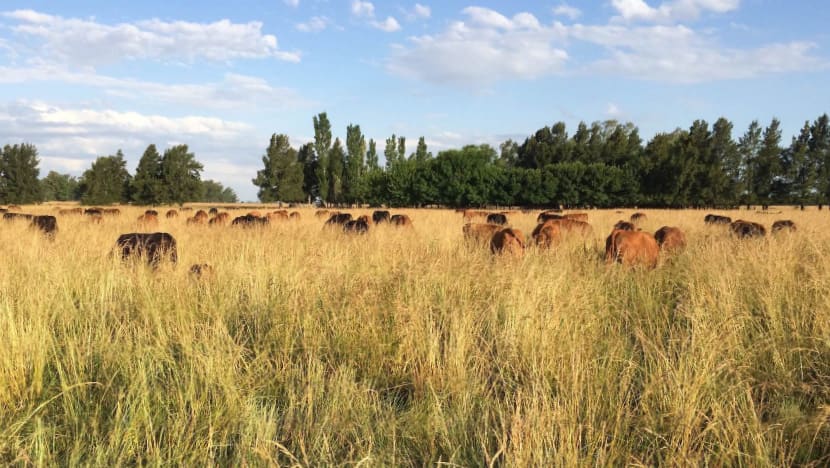
In 2025, Singapore also announced that it would contract 2.175 million tonnes of high-quality nature-based carbon credits from projects in Ghana, Peru and Paraguay. These cover forest protection, grassland restoration and landscape regeneration. Beyond reducing emissions, they support biodiversity, strengthen livelihoods and enhance long-term ecological resilience.
In Asia, Singapore is supporting regional energy transition efforts through The Transition Credits Coalition (TRACTION), a coalition convened by the Monetary Authority of Singapore. TRACTION is studying how energy transition credits could help phase out coal plants in a fair and orderly manner. Initial analysis suggests that around one-third of Asia’s coal-plant capacity could be eligible, potentially reducing emissions by up to one gigatonne annually.
BRIDGING BORDERS TOWARDS A LOW-CARBON FUTURE
How can we thrive in a climate-constrained world? Singapore’s efforts reflect the belief that meaningful progress depends on collective action across borders and sectors.
Singapore remains committed to reaching net zero emissions by 2050, and to reducing emissions to between 45 and 50 million tonnes in 2035. This is an ambitious target that signals the country’s commitment to decarbonisation.
Singapore will continue to pursue climate action through a multi-pronged strategy that calls on it to play many roles in global decarbonisation, as collaborator, partner and facilitator. But climate change knows no borders. No nation can do this alone. Greater and deeper international cooperation — between governments, businesses and institutions — is essential to accelerate progress and secure a sustainable future for all.