
Advertisement
Advertisement

Brand Studio

CPF for dummies (and first-jobbers)

22 Sep 2015 06:27PM (Updated: 15 Oct 2015 10:03AM)


How To Afford The Life You Want

CPF for dummies (and first-jobbers)
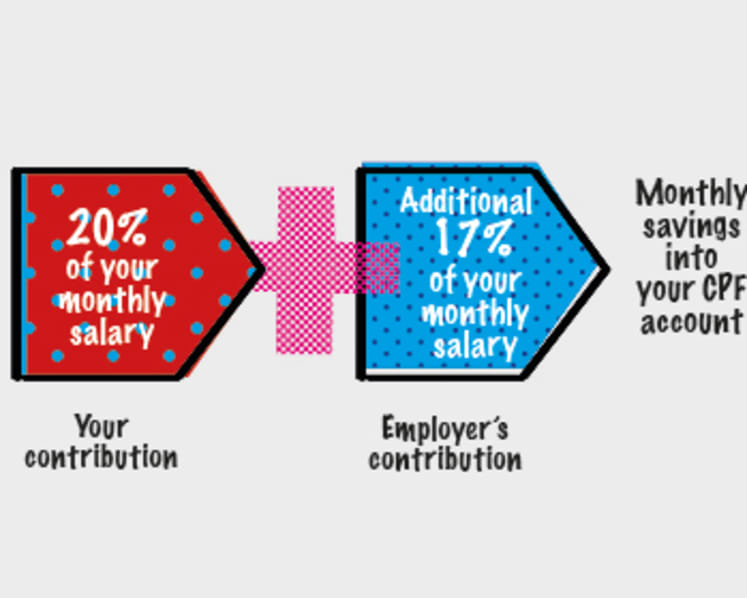
Photo: Shutterstock Everything you always wanted to ask about where 20 per cent of your pay cheque is going – answered simply and plainly by Ryan Ong Congratulations on landing your first job. You are now officially an adult, with cool adult stuff like a regular pay cheque, after-work happy hour drinks with the team, and a wardrobe that holds more than just T-shirts and hoodies. But all that also comes with the not-so-cool adult stuff. Like being aware of how much you have in your OA, what to do with your SA, when your MA suddenly turns into an RA, how to keep up with the MS, while pondering what on earth a CPFIS is and whether it is contagious. FYI: Adults love acronyms. To understand all that, you’ll need to understand what happens to that chunk of your pay cheque (20 per cent, to be precise) that goes into this mysterious entity people call your Central Provident
So if your monthly pay is S$2,500, you’re contributing S$500 to CPF while your employer is contributing another S$425. Ah, okay. So what happens to the money then? Warning: Here come the acronyms Your CPF is divided into three different accounts.
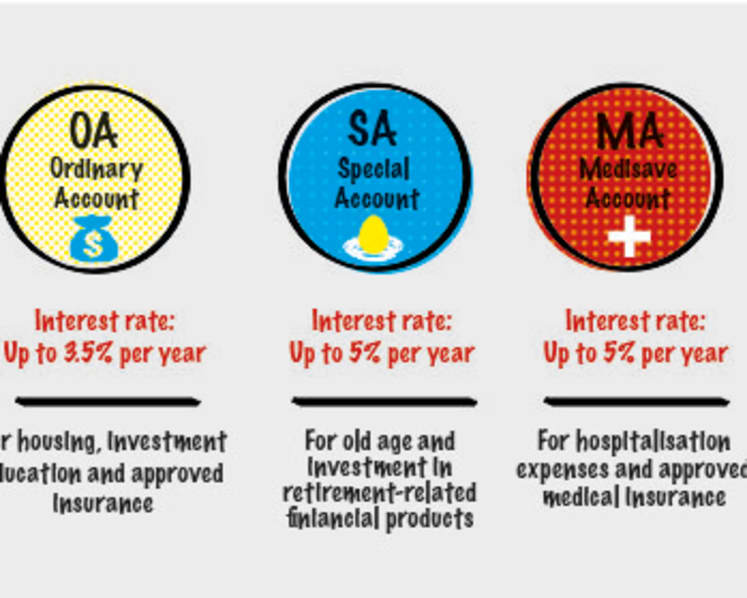
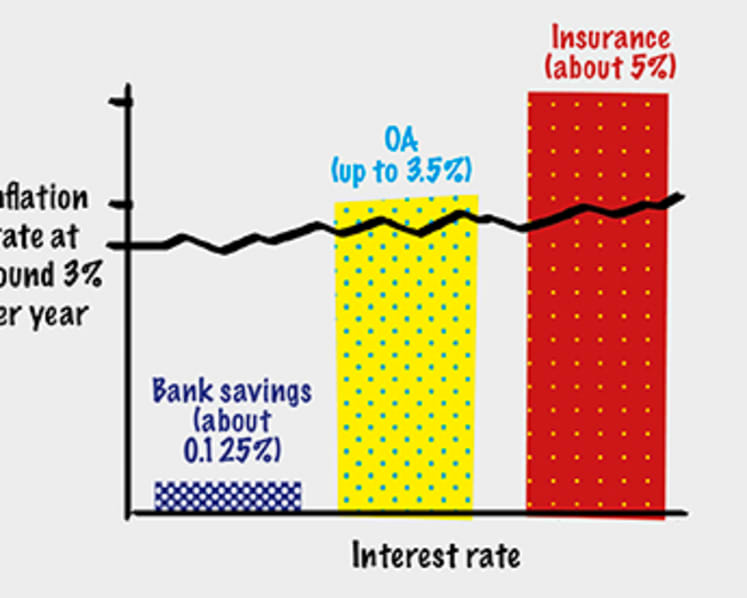
Ordinary Account (OA): Money in this account can be used for housing, insurance, investment, and education. The CPF OA grows at an interest rate of 2.5 per cent per annum*. Special Account (SA): This account provides for long-term needs, and can be used to pay for approved, retirement-related products. Check with your own insurer on how you can best utilise funds in this account. The CPF SA grows at an interest rate of 4 per cent per annum*. Medisave Account (MA): If you are hospitalised, the relevant expenses can be paid out of this account. It can also be used to pay for approved medical insurance products. The CPF MA grows at an interest rate of 4 per cent per annum*. The interest rate on your CPF accounts will increase by a further 1 per cent, after you accumulate your first S$60,000 in it (combined across all accounts, including S$20,000 in your OA). *The CPF
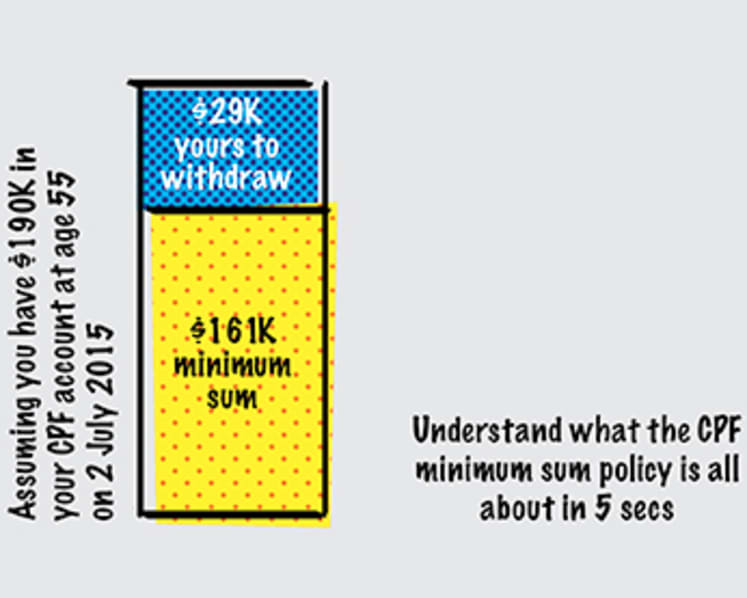
Those who turn 55 in 2015 can also withdraw a portion of savings from their OA and SA as long as certain requirements are met. However, seeing that you’re just starting out in your career, we’ll avoid going into the finer details of the current withdrawal amounts or requirements as they might not even be relevant by the time you’re ready to retire. The important thing to note is that you will probably not be able to take all of your CPF funds out at 55 and therefore should consider making sufficient investments now so that you don’t just have to depend on your CPF to be financially comfortable in the future. So you’re saying that if I just depend on my CPF it won’t be enough for me to enjoy my life when I’m done working for other people? It totally depends on your wants and needs. Some of you may feel that your CPF contributions will sufficient to tide you through
And now you know CPF. Achievement unlocked. Right this way for more stories on how to afford the life you want.
Source: TODAY
Advertisement

Also worth reading

Advertisement