







Analysis:Investors chase cheaper, smaller companies as risk aversion hits tech sector
Feb 8 : Investors are turning to cheaper, smaller companies while reassessing how much risk they are willing to take owning volatile assets after market whipsaws pounded some sectors and assets.
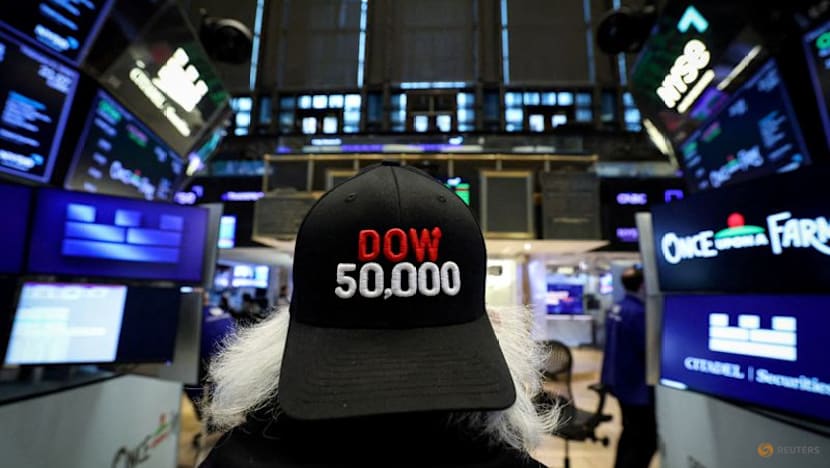
Wariness and risk aversion have swept through some corners of the market that have shone the brightest in recent years, accompanied by gains in other areas, as investors rotate their holdings. For example, the Dow Jones Industrial Average, a benchmark designed to track industrial companies, hit a record high on Friday even as software stocks lost $1 trillion over the week.
"The selloff in the names that carried markets higher may have paused, but we're instead seeing a wave of aggressive buying of altogether different stocks," said Tim Murray, capital markets strategy at T. Rowe Price.
Investors are considering the risk of investing in AI hyperscalers, he said, referring to companies such as Amazon.com, Microsoft and Alphabet whose businesses support the rollout of artificial intelligence, as well as the downside of companies whose business models AI might disrupt.





"Now, they're all chasing to buy cheaper companies, perhaps indiscriminately," Murray said.
While the S&P 500 stock index rallied 1.78 per cent on Friday, and the Nasdaq 100 bounced nearly 2 per cent, the broader Russell 2000 index outpaced them with a 3.5 per cent surge. Some Magnificent Seven companies did not participate in the rally: Amazon shares plunged amid investor worry about how the firm would earn a return on its massive planned $200 billion AI capital spending.
SMALLCAP STOCKS SURGE
Investors have in recent weeks bet that after years of watching technology stocks drive the U.S. bull market, the rally would broaden to industrial, healthcare and smallcap companies.
"I think the broadening we started to see back in the fall and saw most dramatically in the last few days is here to stay after a very protracted period where anything that wasn't megacap technology was pushed to the sidelines," said Simeon Hyman, global investment strategist at ProShares. "Dividend growth, equal-weighted indexes, smaller companies are all likely to be beneficiaries."
This view draws on how investors assess risk associated with segments of the market that were previously on a tear. They include precious metals, tech stocks, and more speculative assets such as bitcoin, which briefly nosedived to a 16-month low of $60,017, before recovering to just less than $70,000 on Saturday afternoon, a level still below its record of $126,000 in October.
"People are reacting to the various reasons that have hurt all of these assets by looking for ways to rebalance their portfolios and move away from the most crowded trades," said Jim Carroll, a wealth adviser at Ballast Rock Private Wealth. Carroll tracks volatility and pointed to the "staggering" intraday volatility as indexes respond to investor attempts to find shelter until the market "settles down."
DOUBTS PERSIST OVER AI RETURNS
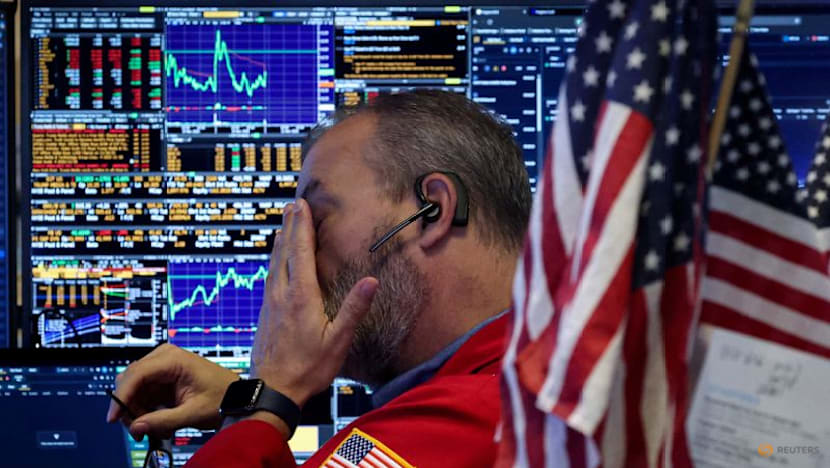
Traders watching the drama unfold caution against reading too much into Friday's big stock-market gains, arguing that a new attitude to risk lingers and that many reliable buyers of previous dips have been notably slower and more cautious to re-engage.
"People are going to have strong doubts and questions going forward," said Thierry Wizman, global FX and rates strategist at Macquarie Group. Those will revolve around how the hyperscalers will generate profits on their new capital spending plans, along with the extent of the damage these investments will wreak on legacy businesses AI might displace.
The iShares Expanded Technology Software ETF rebounded 3.5 per cent on Friday, but finished the week 9.1 per cent lower, signaling that the last-minute rally did not undo all the damage. Similarly, while silver rebounded, it remains well below recent highs above $90 an ounce.
"The defensive stocks have really perked up, which I think is not just a short-term trade but a reflection of the unwind in speculative assets," said Travis Prentice, chief investment officer and portfolio manager at the Informed Momentum Company, an asset management firm.
The result is a market that is increasingly divided between longtime darlings and a new crop of stocks that investors are eyeing for returns, said Scott Chronert, U.S. market strategist at Citigroup.
"While we've all been sitting here focused on this AI debate, the market already has been moving in a different direction as investors have decided they don't just want to buy more of what they already owned at an even higher price," Chronert said. "Instead, quietly, we've seen money move into energy stocks, materials companies, staples and industrials."
Those economically sensitive sectors reflect double-digit gains year-to-date, compared with the S&P 500's 1.3 per cent rise, he said.
"We were expecting some market broadening, but not in this kind of numbing, turbulent way."





