







BOJ policymaker calls for timely rate hike to manage inflation
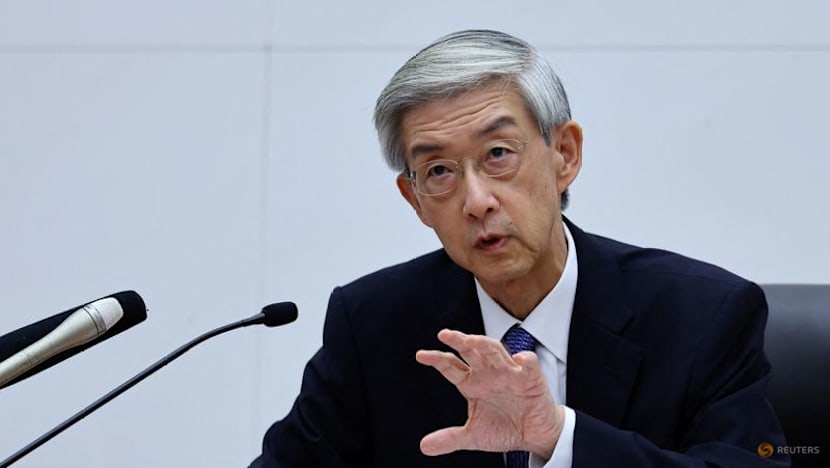
The Bank of Japan's new board member, Kazuyuki Masu attends his inaugural press conference in Tokyo, Japan, July 1, 2025. REUTERS/Kim Kyung-Hoon
MATSUYAMA, Japan, Feb 6 : The Bank of Japan must raise interest rates in a timely fashion to prevent underlying inflation from surpassing its 2 per cent target, central bank board member Kazuyuki Masu said on Friday, keeping alive the chance of a near-term rate hike.
Masu said he believes Japan's underlying inflation remains below 2 per cent but is "drawing very close" to that level, as companies and households shed their deep-rooted deflationary behaviour.
"I am convinced that continuing with further policy interest rate hikes will be needed to complete the normalisation of monetary policy in Japan," Masu said in a speech to business leaders in Matsuyama, in western Japan.
The remarks by Masu, a former trade house executive, reflect growing hawkish sentiment within the nine-member board, driven by sustained wage increases, persistently high food prices, and a weak yen, which amplifies import costs.





"Due attention should be paid to whether inflation triggered by the yen's slide may heighten people's inflation expectations and, in turn, affect underlying inflation," Masu said.
The BOJ raised its short-term policy rate to 0.75 per cent from 0.5 per cent in December, after two hawkish board members voted against a decision to keep policy steady in October. One of the members, Hajime Takata, voted in January for a further rate hike to 1 per cent instead of keeping to the central bank's 0.75 per cent rate.
"Masu's comments weren't overwhelmingly hawkish," said Rinto Maruyama, an FX and rates strategist at SMBC Nikko Securities. "But they did underscore the BOJ's resolve to proceed steadily with rate hikes, rather than sit on the sidelines."
Masu said he was paying particular attention to prices of processed food as a key determinant of future inflation, as surging rice prices may have made consumers more receptive to price increases for other food items.
With Japan clearly entering an inflationary phase, the BOJ must ensure that underlying inflation remains below 2 per cent through "timely and appropriate rate hikes", Masu said.
"At the same time, it is critical to ensure excessive rate hikes do not disrupt the virtuous cycle of a moderate rise in prices and wages that has finally begun to gain momentum in Japan," he said, adding that the BOJ will therefore proceed cautiously with rate hikes.
Masu offered few hints on how soon the BOJ could raise rates again, saying he had no idea at present on their timing and pace.
"It's not as if we raise rates at a set, regular pace," Masu told a news briefing after the speech. "The pace of our past rate hikes won't be any guide to our future moves."
He also brushed aside the view that the BOJ was behind the curve in tackling the risk of too-high inflation.
Core consumer inflation hit 2.4 per cent in December, staying above the BOJ's 2 per cent target for nearly four years, as companies continued to pass on rising raw material and labour costs.
While the BOJ kept interest rates steady in January, it retained its hawkish inflation forecasts and signalled readiness to keep raising still-low borrowing costs.
Governor Kazuo Ueda reiterated the need for caution, citing concerns that underlying inflation - fuelled by domestic demand and wage gains - remains short of 2 per cent.
Markets, however, are pricing in around a 60 per cent chance of another hike in April, as renewed depreciation in the yen heightens the likelihood of higher import-driven prices that would add to inflationary pressure.





