Explainer-What is Indonesia doing in wake of $80 billion market plunge?
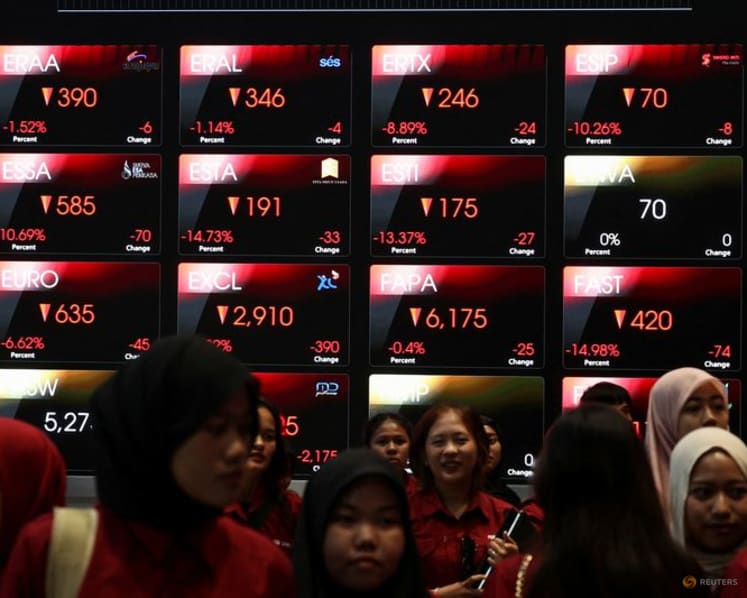
Students walk past an electronic board showing stock market index at the Indonesia Stock Exchange (IDX) in Jakarta, Indonesia, February 2, 2026. REUTERS/Willy Kurniawan
JAKARTA, Feb 3 : Indonesia has promised capital market governance reforms after global index provider MSCI flagged concerns about market transparency that have rocked Indonesian stocks, wiping about $80 billion in value off the exchange.
MSCI also said the capital market of Indonesia - Southeast Asia's largest economy with a GDP of about $1.4 trillion - could be downgraded to "frontier" status if it did not resolve the issues by May.
Here are some measures Indonesia has promised, what they mean, and what the hurdles would be.
WHAT ARE THE MEASURES PROPOSED SO FAR?





Indonesia's financial regulator said it would double the free float requirement for listed firms to 15 per cent from the current 7.5 per cent. Free-floating shares are those openly available for public trading not held by large core holders such as company officials, long-term investors, or government bodies.
Market insiders are concerned stock prices have been pumped up by trading between related parties - a practice brokers have dubbed "goreng-goreng saham" or "stock frying". The general idea is that increasing the free float - i.e. a higher number of openly available shares - makes such price manipulation harder.
The regulator plans to immediately implement this for new share offerings, and provide a longer transition period for existing listed companies.
The classification of shareholder types will be broadened to 27 from the current nine, including disclosure for shareholders with at least a 1 per cent holding, down from the current threshold of 5 per cent. The idea is for more transparency on who is doing the trading and the ultimate beneficiaries.
Indonesia also said it would speed up "demutalisation" of the stock exchange, which means making the exchange itself a public entity owned by shareholders, rather than a member-controlled, self-regulating organisation like now. This transition would bring it in line with regional peers and is expected to improve governance.
WHAT ARE THE CHALLENGES TO THE MEASURES?
Time is of the essence for Jakarta to restore confidence in the market before MSCI's semi-annual index review in May, especially after a spate of resignations at Indonesia's financial regulator and the bourse, which are now being run by caretaker officials. Proper reforms would require long-term leadership.
Analysts believe doubling the free float would help Indonesia's case but would require companies to offer more stocks, which may be a long and difficult process in a relatively shallow market.
There is also concern over who would buy the shares floated in the current environment, with foreign investment chary of President Prabowo Subianto's policies.
One move in the wake of last week's selloff, which could address this problem, is to allow insurance firms and pension funds to increase equity market investments to up to 20 per cent of their portfolio - more than double the current ceiling - which would potentially mean more buyers.
Prabowo's new sovereign wealth fund Danantara Indonesia, with $14 billion to deploy this year, could also increase its investment in stocks and could become a shareholder of the bourse after demutualisation efforts.
Demutualisation has been mandated by law since 2023, but has taken a long time partly because of debates over who becomes the bourse's controlling shareholder.
Publishing more granular share ownership data should be fairly quick as a first step.
WILL IT BE ENOUGH?
Investors have welcomed the proposed measures but worry they might not address the issues or satisfy MSCI, which has frozen Indonesian securities in its products and has not responded to the proposals publicly.
MSCI met Indonesian officials on Monday but declined to give specifics of the meeting, even as the Indonesian regulator said the meeting had gone "well" and agreements reached on technical-level talks.