Japan November real wages fall at fastest pace since January
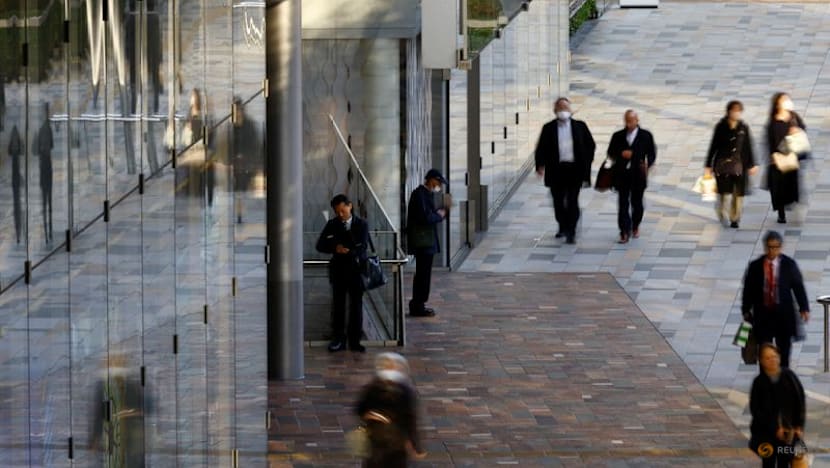
A man uses a laptop on a street at a business district in Tokyo, Japan January 23, 2024. REUTERS/Kim Kyung-Hoon
TOKYO, Jan 8 : Japan's real wages fell in November at the fastest pace since last January, dragged down by a sharp drop in one-off bonus payments, preliminary government data showed on Thursday.
The underlying trend of inflation outpacing wage growth, meanwhile, has not changed, posing a challenge for the Bank of Japan, which has signalled it would continue interest rate hikes through this year.
Labour ministry data showed inflation-adjusted real wages, a key barometer of consumer purchasing power, fell 2.8 per cent in November from a year earlier. That matched a decline in January, which had marked the sharpest drop since a September 2023 figure of 2.9 per cent.
The November number was also worse than a revised 0.8 per cent fall in October and extended a losing streak for the 11th straight month.
BONUS DATA WEIGHS ON WAGES, INFLATION REMAINS HIGH
In a similar vein, average nominal wages, or total cash earnings, rose at the slowest pace since December 2021, edging up just 0.5 per cent from a year earlier to 310,202 yen ($1,983).
Both statistics were influenced by a 17 per cent plunge in special payments - mostly one-time bonuses - an indicator that tends to be volatile outside of summer and winter bonus months.
A labour ministry official said special payment figures in November tend to be lower at a preliminary stage, since few firms' winter bonus data are reflected at that point.
The official added that the wage environment remains unchanged overall. Regular pay, or base salary, rose 2.0 per cent, slightly slower than October's 2.4 per cent growth pace but matching September's. Overtime pay, a gauge of private-sector strength, gained 1.2 per cent, worse than a 2.1 per cent rise in October but better than September's 1 per cent.
The rise in consumer prices, however, remained high at 3.3 per cent. The inflation rate the ministry uses to calculate the headline real wage indicator includes fresh food prices but not rent costs, and it tends to be higher than the core rate.
The Bank of Japan raised its policy rate to a 30-year high of 0.75 per cent from 0.5 per cent last month, judging that firms would continue to raise wages steadily this year through annual labour-management talks.
The country's biggest union group, Rengo, is targeting an increase in overall pay of at least 5 per cent this year.
($1 = 156.4300 yen)
(Reporting by Satoshi Sugiyama; Editing by Joe Bavier)