







Japan Q3 capex growth slows to 2.9%, but points to resilient demand
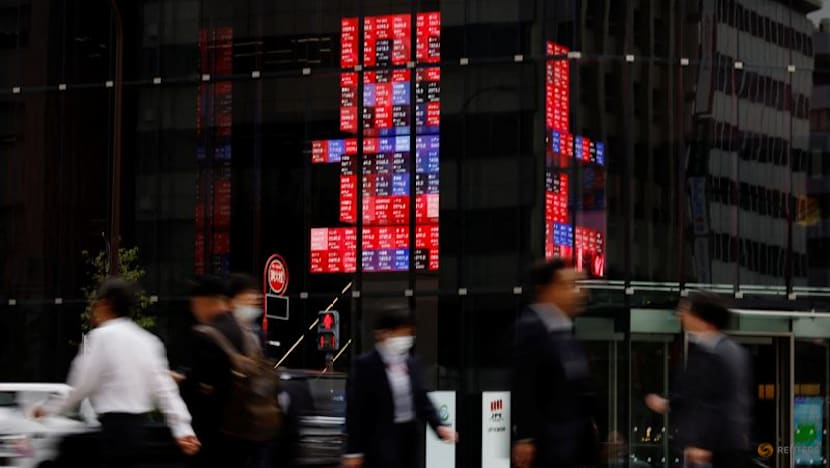
Pedestrians walk past an electronic board displaying various companies' share prices, at a business district in Tokyo, Japan, October 31, 2023. REUTERS/Kim Kyung-Hoon
TOKYO, Dec 1 : Japanese corporate spending on factories and equipment rose 2.9 per cent in July-September against the same period the year before, Ministry of Finance data showed on Monday, slowing from the previous quarter but continuing to underpin domestic demand.
"Growth in capital investment weakened compared to the previous period, so it's slightly concerning including the outlook going forward," Meiji Yasuda Research Institute economist Kazutaka Maeda said.
"Still, I believe capital investment will remain relatively firm to support domestic demand," he said, citing strong investment appetite in software and related areas to counter intensifying labour shortages.
Capital spending in July-September compared with a 7.6 per cent gain in the previous three-month period. It fell 1.4 per cent on a seasonally adjusted quarterly basis.





The data will be used to calculate revised third-quarter gross domestic product figures due on December 8, potentially driving down the reading of the capital expenditure component.
Preliminary data last month showed the economy shrank an annualised 1.8 per cent in July-September, as a drop in exports in the face of U.S. tariffs resulted in the first contraction in six quarters.
Monday's finance ministry data also showed corporate sales rose 0.5 per cent on year and recurring profit increased 19.7 per cent, indicating that Japanese companies have been weathering the impact of U.S. tariffs.
The electrical machinery and equipment sector saw its profits surge, while the automobile sector struggled.
Capital expenditure has been mostly robust in recent years due to strong appetite for investment in information technology to offset a chronic labour crunch in the fast-aging population.
The strength in capital expenditure, a key gauge of domestic demand-led economic growth, is likely to underpin the economy when persistent inflation pressures private consumption and exports continue to battle U.S. tariffs, analysts said.
The government is also focused on stimulating investment through targeted public spending in sectors key to economic security. Last month it finalised a stimulus package of 21.3 trillion yen ($136 billion), the largest since the COVID-19 pandemic.
($1 = 155.8500 yen)





