







Japan's factory activity steadies as demand declines slow, PMI shows
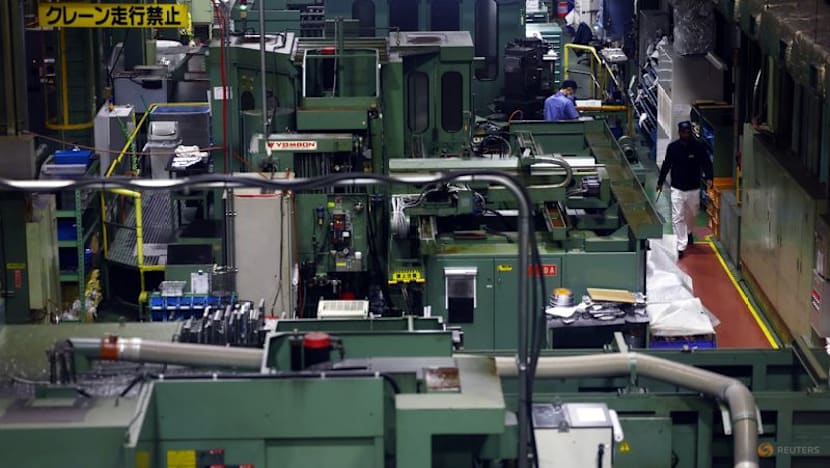
Workers walk between precision-machining machines for automotive parts inside a factory at Kyowa Industrial Co. in Takasaki, Gunma Prefecture, Japan April 11, 2025. REUTERS/Issei Kato
TOKYO, Jan 5 : Japan's manufacturing activity stalled in December as demand declined at a slower pace from the previous month, a private-sector survey showed, ending a five-month streak of deterioration.
The S&P Global Japan Manufacturing Purchasing Managers' Index (PMI) was flat at 50.0 in December, improving from 48.7 in November and hitting the break-even point separating expansion from contraction.
"Japan's manufacturing industry saw conditions stabilise at the end of the year," said Annabel Fiddes, an economics associate director at S&P Global Market Intelligence.
The decline in new orders in December was the softest since May 2024, the survey showed. Although many firms noted subdued demand, some saw sales had improved, underpinned by new projects and stronger-than-expected customer spending.
While consumer and investment goods sectors reported improvement in business conditions, intermediate goods makers said they were weak.
New export orders declined at a slightly softer pace in December from November, partly affected by weaker demand in Asia, particularly for semiconductors, according to the survey.
Looking ahead to the next 12 months, overall business sentiment eased from November but remained above the survey's long-run average, the survey said.
"New product releases and greater demand across key industries such as autos and semiconductors were anticipated to boost the sector's performance in 2026," Fiddes said.
Some downside risks mentioned by firms were sluggish global economy, an ageing population and rising costs, she said.
Staffing levels in the manufacturing sector rose for the 13th consecutive month, while the rate of input prices accelerated to its highest since April, battered by a combination of increases in raw material, labour and transportation costs as well as the weaker yen.
The Bank of Japan in December raised interest rates to levels unseen in 30 years and signalled its readiness to continue raising rates.
(Reporting by Satoshi Sugiyama; Editing by Sam Holmes)





