







Oil prices fall 5% on US-Iran de-escalation
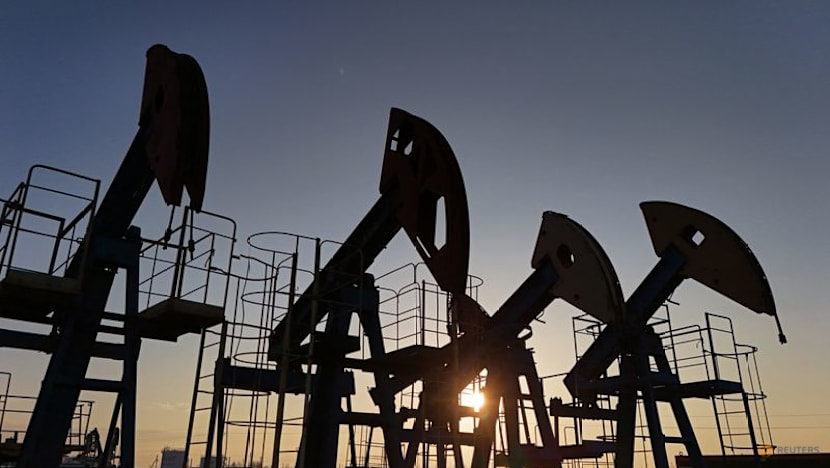
A view shows disused oil pump jacks at the Airankol oil field operated by Caspiy Neft in the Atyrau Region, Kazakhstan April 2, 2025. REUTERS/Pavel Mikheyev
Feb 2 : Oil prices fell nearly 5 per cent on Monday and were heading for the steepest single-session decline in more than 6 months, after U.S. President Donald Trump said Iran was "seriously talking" with Washington, signalling de-escalation with an OPEC member.
Brent crude futures were down $3.38, or 4.9 per cent, at $65.94 per barrel at 0528 GMT. U.S. West Texas Intermediate crude fell $3.33, or 5.1 per cent, to $61.88 per barrel.
Both contracts sank from multi-month highs as risks of a military strike on Iran receded after Trump's weekend comments.
The slump was also driven by a broader commodities markets sell-off led by deep losses in gold and silver, which analysts partially attributed to a stronger U.S. dollar.
Trump had repeatedly threatened Iran with intervention if it did not agree to a nuclear deal or continued killing protesters. The persistent threats have underpinned oil prices throughout January, said Priyanka Sachdeva, an analyst at Phillip Nova.
"The recent pullback has also been reinforced by renewed strength in the U.S. dollar, which typically makes dollar-denominated oil more expensive for non-U.S. buyers, further weighing on prices," Sachdeva said.
On Saturday Trump told reporters Iran was "seriously talking," hours after Tehran's top security official Ali Larijani said arrangements for negotiations were underway.
Trump's comments, along with reports that the naval forces of Iran's Revolutionary Guards had no plans for live-fire exercises in the Strait of Hormuz, were signs of de-escalation, said IG market analyst Tony Sycamore.
"The crude oil market is interpreting this as an encouraging step back from confrontation, easing the geopolitical risk premium built into the price during last week's rally and prompting a bout of profit-taking," he said.
At a meeting on Sunday, OPEC+ agreed to keep its oil output unchanged for March. In November, the grouping had frozen further planned increases for January through March 2026 because of seasonally weaker consumption.
"Geopolitical risks mask a fundamentally bearish oil market," Capital Economics said in a note on January 30.
"The historical example of last year's 12-day war (between Israel and Iran), and a well-supplied oil market, will still bear down on Brent crude prices by end-2026."





