Samsung likely to flag 160% jump in Q4 profit as AI boom stokes chip prices
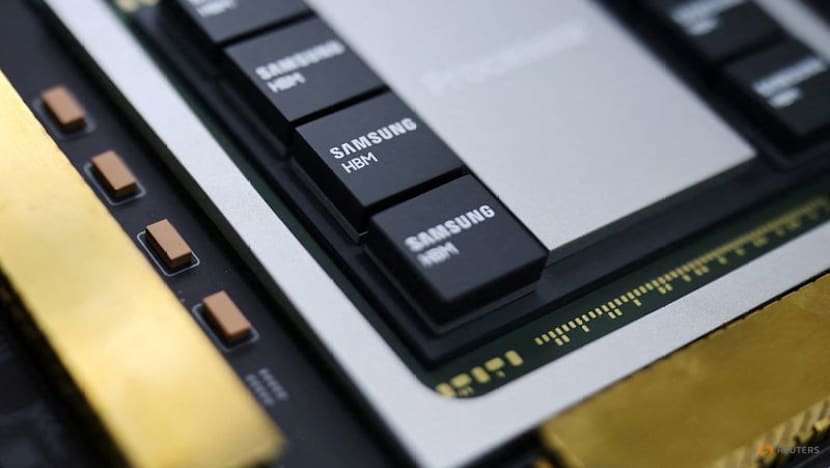
FILE PHOTO: Samsung Electronics HBM4, a sixth-generation high-bandwidth memory solution for AI and HPC applications, on display during the 2025 Korea Tech Festival in Seoul, South Korea, December 4, 2025. REUTERS/Kim Hong-Ji/File Photo
SEOUL, Jan 6 : Samsung Electronics is expected to flag a 160 per cent jump in its fourth-quarter operating profit spurred by a severe chip shortage that has sharply driven up memory prices as customers scramble to meet booming demand for artificial intelligence.
Semiconductor prices have rocketed in recent months, as the industry's shift to AI-related chips has curbed production for traditional memory, while demand has been surging for both conventional and advanced chips to train and run AI models.
Samsung is likely to estimate an operating profit of 16.9 trillion won ($11.7 billion) for the October to December period, according to LSEG SmartEstimate from 31 analysts, which is weighted toward those who are more consistently accurate.
This compares with 6.49 trillion won from a year earlier and would mark the highest quarterly profit since the third quarter of 2018, which was a record high of 17.6 trillion won.





Some analysts have in recent weeks raised their estimates for Samsung's fourth-quarter operating profit to more than 20 trillion won on the back of stronger-than-expected prices of traditional chips.
The world's top memory chip maker is set to release its estimates for revenue and operating profit on Thursday.
SOARING MEMORY CHIP PRICES
Prices for a type of DDR5 DRAM chip jumped 314 per cent in the fourth quarter from a year earlier, according to data from market researcher TrendForce.
It expects conventional DRAM contract prices to rise 55 per cent to 60 per cent in the current quarter, from the October to December period.
"As conventional DRAM prices continue to surge, Samsung - whose production capacity is largely concentrated in this segment - stands to gain relatively more from the current price upcycle," TrendForce analyst Avril Wu said.
DRAM chips are used in servers, computers and smartphones to temporarily store data and help run programs and applications smoothly and swiftly. DDR5 DRAM, a conventional chip, is faster and more efficient than its predecessor.
In December, Micron Technology forecast second-quarter adjusted profit at nearly double Wall Street estimates. Micron CEO Sanjay Mehrotra said he expects memory markets to remain tight past 2026 and that in the medium term, it expects to meet only half to two-thirds of demand from several key customers.
NVIDIA, HBM, MOBILE
Samsung's booming profit marks a dramatic turnaround, just over a year after CEO Jun Young-hyun apologised for the company's disappointing earnings and performance as it lagged its cross-town rival SK Hynix in supplying high-end chips to Nvidia, the dominant maker of AI processors.
Samsung shares jumped 125 per cent last year, marking their biggest annual percentage gain in 26 years. They fell 2.1 per cent on Tuesday morning in a wider market that was down 0.2 per cent, taking a breather after their recent rally.
On Friday, Jun said Samsung customers have praised the competitive edge of its next-generation high-bandwidth memory (HBM) chips, or HBM4, quoting them as saying, "Samsung is back," which helped extend a rally in Samsung's shares to record highs in recent sessions.
He did not elaborate on those customers, but analysts said Samsung is making progress supplying chips to Nvidia, potentially gaining share against SK Hynix and Micron.
Nvidia CEO Jensen Huang said on Monday the company’s next generation of chips is in full production. The Vera Rubin platform, which will incorporate HBM4 chips, is on track to arrive later this year, Nvidia said.
Analysts said Samsung's operating profit is expected to more than double this year to over 100 trillion won as the chip price rally would more than offset slowing profit for its mobile business.
Lee Min-hee, an analyst at BNK Investment & Securities, said he was wary of Samsung's valuations, as surging chip prices may sap demand for PCs and smartphones, and cited "risks of a demand slowdown" for AI data centres increasingly relying on debt to finance investments.
While the global shortage of memory chips is a boon to Samsung's mainstay semiconductor business, soaring chip prices are squeezing margins in its smartphone division, its second-largest revenue source.
"As this situation is unprecedented, no company is immune to its impact," Samsung co-CEO TM Roh, who oversees Samsung's mobile, TV and home appliance businesses, told Reuters, adding it is trying to minimise the impact, which looks "inevitable".
($1 = 1,446.5000 won)