







Taiwan central bank raises growth forecast on AI-driven export boom
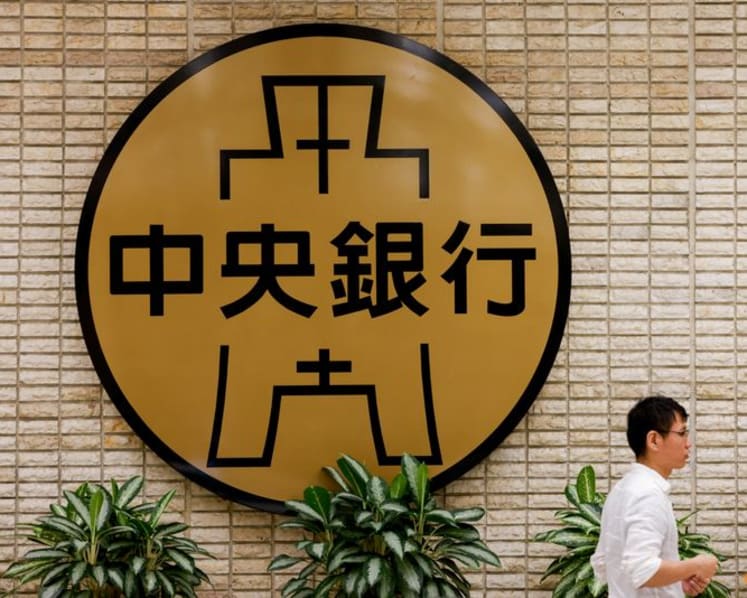
A man stands inside Taiwan's central bank in Taipei, Taiwan May 29, 2025. REUTERS/Ann Wang
TAIPEI, Dec 18 : Taiwan's central bank on Thursday raised its economic growth forecast for the year due to booming exports of tech goods to the United States, driving a yawning trade surplus while keeping its benchmark interest rate unchanged. Taiwan's role as a major producer of advanced semiconductors powering the artificial intelligence boom for companies like Nvidia has fuelled its economy this year. The central bank left the benchmark discount rate unchanged at 2 per cent at a quarterly meeting, in a unanimous decision in line with predictions from a Reuters poll in which all 30 economists forecast no change. It raised its 2025 estimate for economic growth to 7.31 per cent from a previous forecast of 4.55 per cent provided in September. For next year, it expects growth to slow to 3.67 per cent, though that is better than a previous prediction of 2.68 per cent.
Bank governor Yang Chin-long told reporters that U.S. demand for goods from Taiwan, home to the world's largest semiconductor maker TSMC whose chips are powering the AI revolution, was the main reason for strong economic growth this year.
The trade surplus with the United States so far this year was $143.8 billion, almost all due to high-tech goods, which Yang described as a "very strange" situation. That is more than double last year's trade surplus of $64.7 billion.
"The current monetary policy is appropriate," he said following the quarterly rate-setting meeting, adding that for next year inflation, a key policy concern of the bank's, would be "still fine".





HIGH DEMAND FOR AI APPLICATIONS
The central bank trimmed its consumer price index forecast for this year to 1.66 per cent from its September forecast of 1.75 per cent. For next year, it said it expected inflation to slow further to 1.63 per cent.
Taiwan's economy grew 4.59 per cent in 2024, buoyed by robust exports, including high demand for AI applications. Still, there are clouds on the horizon.
In a statement, the bank said it would closely monitor developments in U.S. tariffs as well as geopolitical risks. Goods from Taiwan are subject to a 20 per cent U.S. tariff, as part of President Donald Trump's sweeping measures targeting imports from across the globe, though Taipei remains in talks with Washington to get a better deal. Semiconductors have thus far been excluded from the tariffs. Taiwan's rate decision came after a sharply divided U.S. Federal Reserve cut interest rates last week, but signalled borrowing costs were unlikely to drop further in the near term.





