CNA Explains: The impeachment bid against Taiwan’s Lai – and why it’s unlikely to succeed
The proceedings stem from a political standoff over amendments to a local government spending law passed by Taiwan’s opposition-controlled legislature last November.
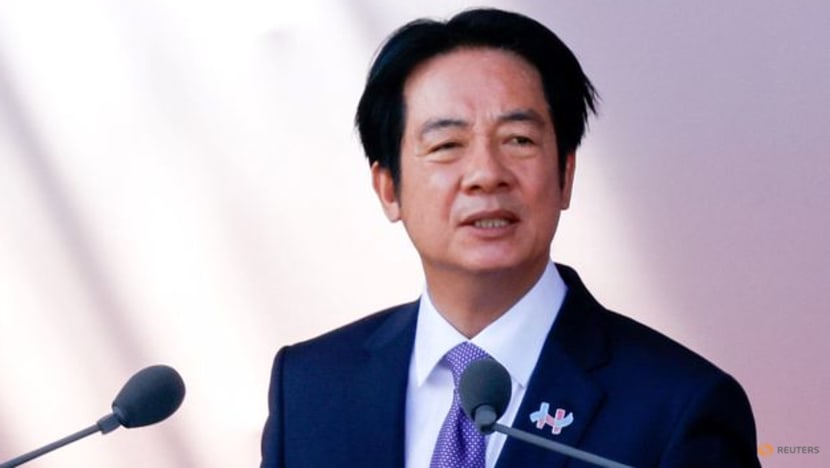
Taiwan's President William Lai Ching-te delivers a speech during National Day celebrations in Taipei, Taiwan, Oct 10, 2025. (Photo: Reuters/Ann Wang)

This audio is generated by an AI tool.




TAIPEI: Public hearings began in Taiwan’s parliament on Wednesday (Jan 14) against President William Lai Ching-te, marking only the second time a sitting president has faced such proceedings in the island’s democratic history.
While the move has drawn intense political attention, the impeachment is widely seen as unlikely to succeed, as the opposition lacks the two-thirds parliamentary majority required to remove Lai from office.
What triggered the impeachment bid?
The proceedings stem from a political impasse over amendments to a local government spending law passed by Taiwan’s opposition-controlled legislature last November.
The changes would alter how tax revenues are shared between central and local governments, granting more funds to the latter.





Lai’s administration refused to enact the amendments, with Premier Cho Jung-tai arguing the plan is fiscally unsound and was pushed through without proper consultation.
This refusal to promulgate a law passed by parliament is unprecedented in Taiwan’s modern democratic history and has escalated tensions between the parties.
Why is Taiwan politically deadlocked?
Taiwan has faced a political gridlock since the 2024 election, when Lai won the presidency but his Democratic Progressive Party (DPP) lost its majority in parliament.
Control of the Legislative Yuan shifted to the opposition Kuomintang (KMT) and its smaller ally, the Taiwan People’s Party (TPP).
Since then, opposition lawmakers have used their majority to block or delay major government initiatives – including the national budget and a proposed US$40 billion supplementary defence spending package – while advancing their own legislation.
The spending law dispute has become the most serious flashpoint yet, with both sides accusing each other of violating the constitution.
The opposition branded Lai an “emperor”, accusing him of defying the will of the democratically elected parliament, and moved to impeach him.
How does impeachment work in Taiwan?
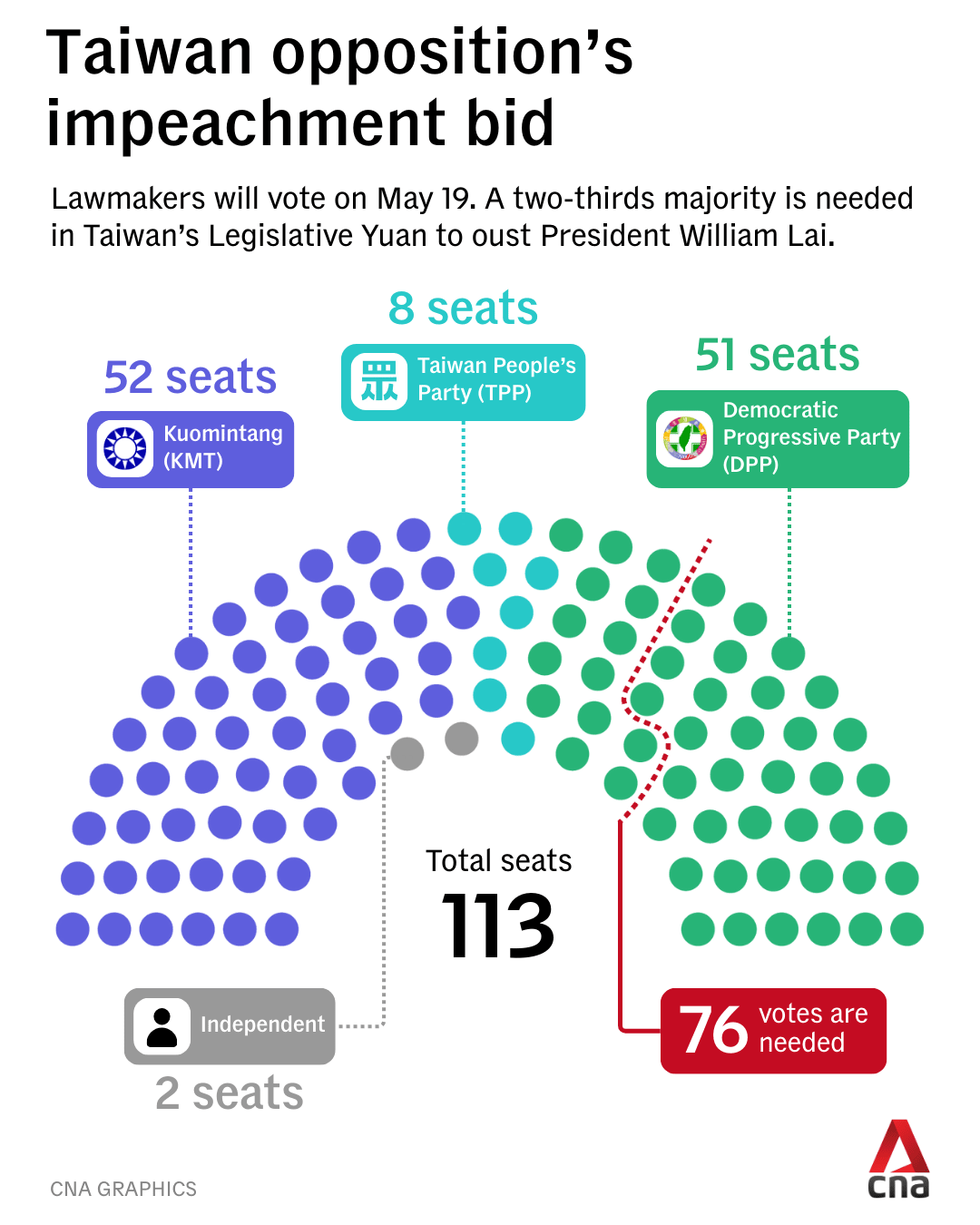
Taiwan’s Legislative Yuan has 113 seats.
More than half of all lawmakers are required to initiate impeachment proceedings – a threshold the opposition cleared last month.
But to actually remove a president from office, a two-thirds majority is needed. That decisive vote is scheduled for May 19.
If the motion passes, the case will be referred to Taiwan’s constitutional court for a final ruling.
At least two-thirds of the court’s justices must agree for the impeachment to be upheld, and the president would then be removed from office.
Why is impeachment unlikely to succeed?
The opposition does not have enough seats to reach the two-thirds threshold required to pass the motion.
The KMT, TPP and two independents control 62 seats – well short of the 76 votes needed to impeach the president.
In the unexpected event the motion clears the legislature, the court is also unlikely to rule in the opposition’s favour. All of the sitting grand justices were appointed by previous president Tsai Ing-wen, who is also a member of the DPP.
As a result, analysts say the effort is largely symbolic, aimed at amplifying political pressure and shaping public opinion rather than actually removing Lai from office.
Has this happened before?
This is only the second time in Taiwan’s democratic history that a sitting president has faced an impeachment.
The only previous case occurred in 2006, during the presidency of Chen Shui-bian, who faced corruption allegations and mass protests.
That impeachment effort also failed because the opposition did not have enough votes.
What happens next?
Ahead of May 19, there will be a series of hearings involving lawmakers, government officials and Lai himself.
The opposition could also turn its attention to Cho, potentially launching a vote of no confidence – a move that could trigger fresh elections.
Experts say the rhetoric and arguments aired during these hearings could have lasting political impact.
Taiwan’s next major electoral test will be local polls in November, widely seen as an indicator of party strength ahead of the presidential and parliamentary elections scheduled for early 2028.