







Gaia Series 115: Tension! Fight animal damage
This week’s episode follows farmers facing boar and deer incursions, a railway-led Hunter Bank training scheme and startups turning game meat into viable markets to curb wildlife damage.

This audio is generated by an AI tool.
Farmers, hunters and entrepreneurs reshape how Japan confronts rising wildlife damage.
Japan’s countryside is changing in ways that are hard to ignore. Fields once relied on predictable seasons and quiet nights. Now they are trampled and emptied by wild boar and deer, animals that are increasingly drawn into human spaces. This week’s Japan Hour follows the people who live with the problem and others who are trying new, sometimes uncomfortable, solutions.
At the Watarase Retarding Basin, a tourist spot that stretches across four prefectures, farmers are waking to new threats. Sadao Kobori shows his ruined sweet potato beds and says plainly, “Wiped out. Nothing left.” He estimates the loss at about three million yen (S$25,000) and his experience is hardly unique. Rice grower Yoshio Ishikawa has spent 1.5 million yen on fences, but says even that “can’t keep boars out,” because the animals vault or find gaps and then wallow through paddies, flattening plants and leaving produce tainted by a lingering smell, forcing downgrades in price.
Nationwide the figures underline the scale of the problem, wildlife damage to crops adding up to 16.4 billion yen a year. The pool of people who historically kept numbers in check is shrinking. Hunting licences are now held by roughly 200,000 people across Japan, less than half the number in previous generations, and about 60 per cent of those licence holders are over 60. That demographic gap is one reason municipalities struggle to mount sustained control efforts.
Local authorities and volunteer hunting clubs try to fill the void. Seventy-five year old Kiyoshi Sekiguchi, who works under commission from Tochigi City Hall, says traps rarely work on their own because the boars, “just walk past the traps,” and insistence on manpower is constant, because traps need watching. Sekiguchi’s group caught 30 boars last year, but with incentives capped at 16,000 yen per captured boar, recruiting younger people who cannot leave their daytime jobs is difficult. “Young people with jobs can’t go out patrolling,” a member of the club says, capturing the tension between need and practical realities.
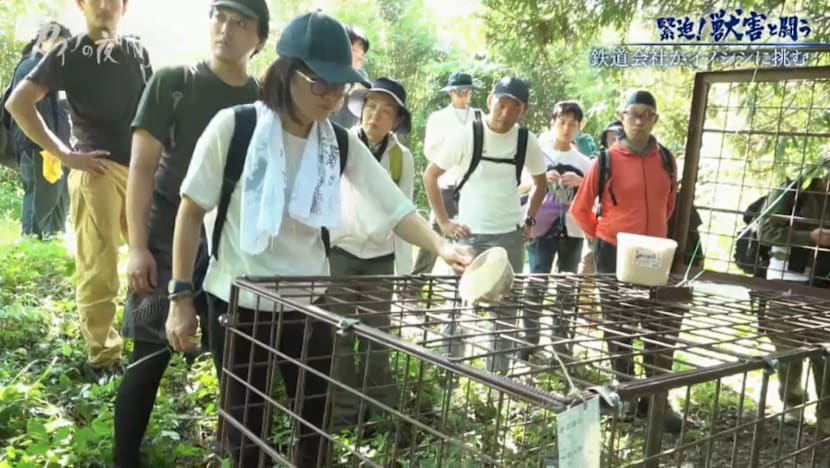
Faced with manpower shortages, some private actors see opportunity. Odakyu Electric Railway is running a programme called Hunter Bank that trains volunteers to help control designated pest species along railway corridors. Kazutaka Arita, who leads the project, explains the idea is to “make hunting accessible to all generations and create opportunities for hands-on experience.” For a monthly membership fee of 15,000 yen, members receive traps, cameras and administrative support. The scheme is pitched as an experience that could convert city dwellers into long term helpers, with roughly 700 participants joining in three years and the organisation expanding to seven locations.
Hunter Bank’s approach is pragmatic. Participants spend three months learning to trap and butcher under the guidance of licensed hunters. Some come from unexpected places, including an Italian chef who says, “One day, I want to open my own game restaurant,” and high school students who join with their parents. The scheme is not yet profitable, but organisers expect it to turn a profit next year. That business framing matters because it aims to create a sustainable labour pool rather than a temporary volunteer surge.
In Hokkaido another business model is trying to turn culls into a marketable product. Satsuki Takano launched Fant in 2019 to connect hunters and restaurants, transforming Ezo deer from pest to ingredient. Less than 30 per cent of culled deer previously made it to processing, despite over 150,000 animals being culled nationally each year. Fant now registers 1,800 hunters and 400 restaurants, and supplies 120 kilograms of thigh meat to one popular Sapporo restaurant every month. The chef at the restaurant says of the venison, “It’s tender, with no discolouration on the surface,” and adds that customers buy it because “If it weren’t tasty, they simply wouldn’t buy it.”
Fant’s system shows the logistics that underpin humane and usable culling. Hunters like 33-year-old Katsuya Suzuki accept orders through an app, then head out into the field, often alone, to fulfil specific requests. Suzuki notes the cost pressures, saying bullets now cost 1,500 yen each, and that the carcass must reach a processing facility within two hours to preserve quality. The work is physically demanding and emotionally testing; after hauling a 100-kilogram deer from the thicket, Suzuki says his goal is always a single, quick shot to avoid prolonging suffering.
Beyond the economics, several people in the programme reflect on ethics and responsibility. Yuuki Ishikawa, who moved from journalism to pest control, is frank about his unease with indiscriminate culling. He has trapped nearly 600 muntjac in 10 years and runs a glamping site that offers tours where visitors confront the realities of culling for themselves. Participants who attend his Hunt Plus experience often describe a complex emotional journey, from pity to a sense of obligation to act, and many conclude that humans must take responsibility because the presence of so many animals began with human actions, such as exotic species introductions decades ago.
The programme in Chiba that targets Reeves’s muntjac illustrates how history has shaped the present. Animals released at a long-closed zoological park have proliferated, and Chiba now counts about 90,000 muntjac and culls roughly 10,000 a year. Local men and women who trap and snare in villages often sit with the ethical weight of that history, even as they protect crops and reduce road collisions with wildlife.
What emerges from the episode is a simple but difficult truth: technology and business models can ease the burden, but cultural change and civic responsibility will define long term success. Whether through railway-led training, marketplaces that turn meat to markets, or small groups who patrol fences at dawn, Japan is experimenting with ways to live alongside wildlife without surrendering farmland, safety or compassion.




