







Biosafety training structure launched by WDA, various agencies
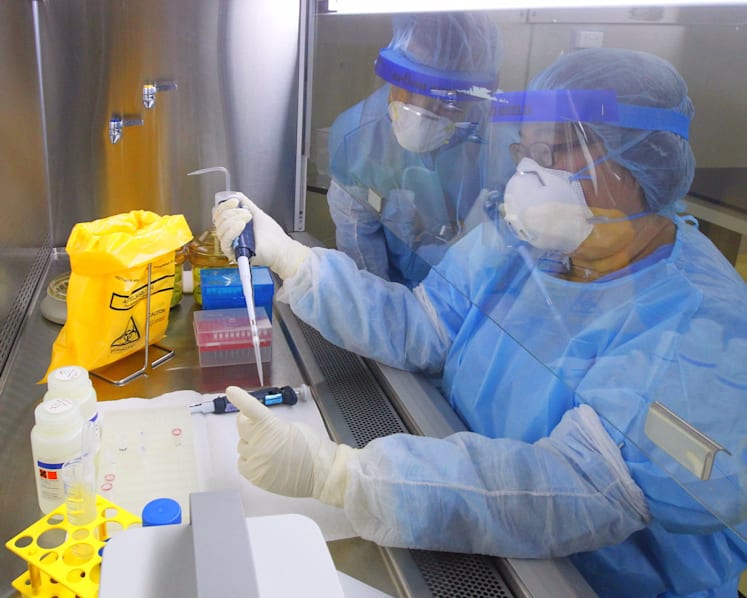
Researchers showing how Ebola is tested at the DSO National Laboratories. TODAY file photo


SINGAPORE — To better equip workers in the biomedical and life sciences sector with work safety skills, the Singapore Workforce Development Agency (WDA) and various agencies including the Health and Manpower Ministries have launched a Biosafety Training Structure.
The training comprises three tiers of qualifications, designed to map the skills gaps and progression pathways.
The first tier, pegged at the Singapore Workforce Skills Qualifications System (WSQ) Advanced Certificate level, is the Biosafety Induction Programme (BIP) — an orientation course meant for workers who will come into contact with biologicals and biologically derived agents.
Tied to the WSQ Specialist Diploma level, the second tier is the Biosafety Professional Programme, designed for experienced workers on the biosafety coordinator or biosafety officer track.





The final tier — the Professional Certification for Continued Education — includes professional workshops, conferences and master classes.
Senior Minister of State for Manpower and Health Amy Khor launched this at Temasek Life Sciences Laboratory today (Feb 5).
In her speech, Dr Khor reminded audience members of recent biosafety threats such as H5N1 and Ebola.
“The increasingly high traffic across borders and high density populations has made it more challenging to deal with these threats. While Singapore has thus far (been) spared, we must not take this for granted. We must remain vigilant,” she said.
A good starting point would be to ensure biological and biomedical lab workers are well-trained, said Dr Khor.
“Besides providing a safe work environment, the best way to protect persons at workplace is to equip them with the necessary knowledge and skills, so that they will be able to identify the hazards associated with their work, assess the risks involved and take the necessary measures to manage the risks,” she added.
Dr Khor also announced a Biosafety Passport — a certification for workers who have completed a WSQ module on following good biosafety practices in the workplace.
The passport will be recognised by employers in the sector and goes towards reducing time spent on retraining employees in biosafety practices as they change employers.
The WDA estimates that close to 9,000 workers across various companies, local universities and public-sector institutes will be able to benefit from these initiatives.




