







Cops to video interviews with some suspects
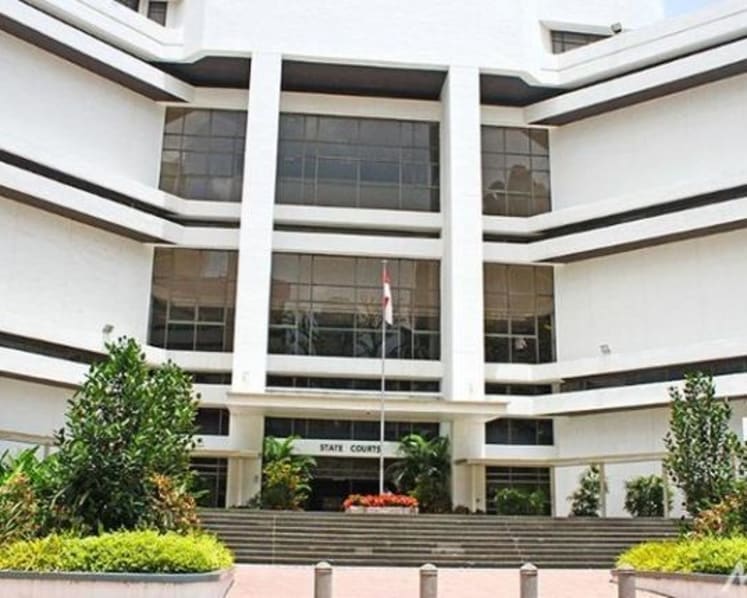
The State Courts. Photo: Channel NewsAsia
SINGAPORE — After previously resisting long-standing calls from the legal fraternity as well as Members of Parliament (MPs), the authorities announced today (July 22) that the police and the Central Narcotics Bureau will pilot the use of video recordings of interviews during investigations from the first quarter of next year.
The move was hailed as a “ground breaking step forward” by the Law Society, and welcomed by lawyers and MPs who had over the years called for the use of video recording by law enforcement officers when taking statements from accused persons and witnesses. Among other things, this would help cut down costs and court trial times, better safeguard the rights of accused persons and at the same time, offer protection to officers.
MHA said it will start consulting various stakeholders on the implementation of the pilot. Further details will be announced after the consultations have been completed. Under the initiative, the courts will be provided with a video recording of the interview. “This will allow the courts to take the interviewee’s demeanour into account in determining the admissibility or weight to be accorded to the interviewee’s statement,” the MHA said. “It will also provide an objective contemporaneous account of the interview process and allow the courts to decide on allegations that may be made about the interview.”
MHA said that together with the Attorney-General’s Chambers and the Ministry of Law (MinLaw), it has been studying the feasibility of introducing video recording of interviews, “as part of continuing efforts to uphold” the standards of an effective and fair criminal justice system.





The feasibility study looked at how video recording has been adopted in the United States, United Kingdom, Australia and Hong Kong, as well as how the various models that were adopted had impacted the administration of criminal justice in these places.
“The inter-agency workgroup found that while Singapore’s existing criminal investigation processes are robust, the implementation of video recording of interviews in Singapore will further strengthen confidence in the integrity of our criminal justice system and assist the courts to try cases more effectively,” MHA said.
The ministry said the pilot will involve “a limited set of offences” and allow for an assessment of the impact on investigations, its effectiveness in different situations, and the resources required before a decision is made on a broader implementation. “The implementation of video recording of interviews is expected to require additional resources and time at various stages of the criminal justice process to record, review and present the ... material,” the ministry said.
The use of video recording during investigation had been debated publicly on several occasions, including during the 2009 review of the Criminal Procedure Code (CPC).
In 2011, the acquittal of Mr Ismil Kadar — who was initially facing the death sentence but was eventually freed after six years behind bars — reignited calls from some lawyers to relook the issue. The Court of Appeal had overturned Mr Ismil’s conviction because it had found his confessions to the police unreliable.
Then, MinLaw said the suggestion had been considered during the CPC review but it was eventually not incorporated because “the Government decided that video recording would not be really effective in ensuring that statements were voluntarily given”. “Nor would video recording prevent allegations that the statements were given under some form of coercion,” it said.
In 2013, Aljunied GRC MP Sylvia Lim and Bishan-Toa Payoh GRC MP Hri Kumar Nair brought up the issue again, with Mr Hri Kumar referring to high-profile cases where court time was taken up to determine if their evidence was properly recorded or accurately represented.
Welcoming the authorities’ change of heart, Mr Wendell Wong, who chairs Law Society’s Criminal Practice Committee, said: “It will better protect the rights of accused persons during statement recording. It will also reduce the time spent on unmeritorious challenges to statements that are taken properly.”
Mr Sunil Sudheesan, who is Acting President of the Association of Criminal Lawyers Singapore, noted that feedback from stakeholders “might have prompted a change” in the authorities’ position.
He noted that with the pilot, significant resources can be saved in trials when it comes to determining the admissibility and the credibility of the statements recorded. The benefits of the pilot might encourage other agencies such as the Corrupt Practices Investigation Bureau to also adopt the practice, he said.
Peter Low LLC director Choo Zhengxi cited the case involving former National University of Singapore law professor Tey Tsun Hang who had taken issue with the words and phrases in his statement recorded by the CPIB during his trial. “A lot of time was spent dealing with the issue of the voluntariness of the statement and these were not be necessary if there were video recordings of witness interviews,” said Mr Choo.
Ms Lim said the video recordings will be useful for both the accused persons and the law enforcement agencies. For example, an accused person may dispute what an investigation officer had included in his statement during the trial. “It’s a check against malpractice,” she said. “At the same time, also, it’s a protection for the law enforcement people because the accused cannot just make baseless allegations against them.”
Still, Mountbatten MP Lim Biow Chuan noted that video recordings may not be foolproof. For example, an investigation officer could force an accused person to make a statement before the start of the recording of statements. An accused person may also claim that he was coerced or threatened before the video recording started, said Mr Lim, a lawyer.
Mr Sunil pointed out that the pilot will give law enforcement agencies insight as to the “best practices” to adopt before, during and after the video-taping. “It will therefore bring into focus the opportunities for interaction between suspects and law enforcement officers,” he said.




