







Covid-19: Expert committee looking into extending vaccination to children aged 5 to 11
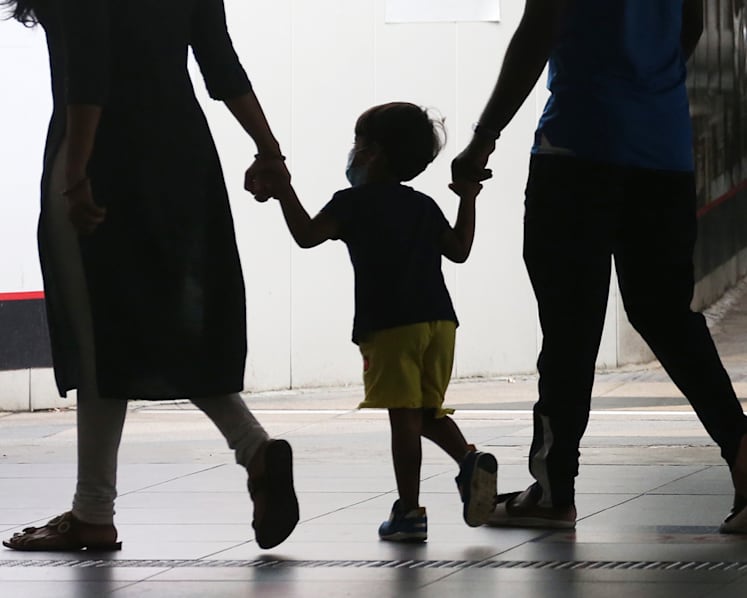
- The United States has approved the use of the Pfizer-BioNTech vaccine for children aged five to 11
- Singapore’s expert committee on the Covid-19 vaccination is also assessing extending the vaccine to children in the same age bracket here
- The home recovery programme will be expanded by lowering the minimum age for default home recovery from five years to three years from Nov 10
SINGAPORE — The expert committee on Covid-19 vaccination is assessing whether to immunise children aged five to 11 years in Singapore with the Pfizer-BioNTech vaccine, after the United States approved the use of this vaccine for US children in that age bracket. The committee is expected to make its recommendation in the second half of this month.
The Ministry of Health (MOH) also announced in a press release on Monday (Nov 8) that from Wednesday onwards, it will also be expanding the home recovery programme by lowering the minimum age for default home recovery from five years to three years if the household is suitable.





These children will undergo a telemedicine assessment by a community or hospital paediatrician, it added.
As for infants and children aged between three months and three years of age, MOH said that they will also be allowed to recover at home, after they have been clinically assessed at hospitals to be suitable for home recovery.
All infants under three months of age who are infected with Covid-19 will continue to be admitted to hospital.
The ministry said that vaccinating younger children would give them protection against infection and severe illness, and “better enable the resumption of a richer educational experience” for school children next year.
Since June 1 last year, students aged 12 and above have been eligible to register for vaccination in Singapore.
Health Minister Ong Ye Kung said during a media conference by the multi-ministry task force on Covid-19 that MOH will be embarking on a study involving “a few hundred children” in the five to 11 age group who will receive a smaller dosage of the Pfizer BioNTech vaccine.
“This is partly to see the results for ourselves in a local context, but more importantly, to work out a smooth vaccination process for the children and young parents before we scale up,” said Mr Ong, who is a co-chair of the task force.
“Hence, we are pushing ahead with vaccination for children aged five to 11 years as soon as we can,” said Mr Ong, who expects the committee to make its recommendation in the second half of this month.
MULTI-SYSTEM INFLAMMATORY SYNDROME IN CHILDREN
Speaking at a press conference to review Singapore’s Covid-19 situation on Monday, Dr Janil Puthucheary, Senior Minister of State for Health, also gave an update on the four rare cases of Multi-system Inflammatory Syndrome in Children (Mis-C), which affects a very small proportion of children infected with Covid-19.
The four cases were announced last Saturday.
Dr Puthucheary said that two of the children have since recovered and been discharged, while the other two still in hospital are being stabilised by a medical team and are recovering.
However, he said that a fifth child has just been admitted with Mis-C, though this latest case will be counted only in Tuesday’s statistics.
Mis-C is similar in presentation to Kawasaki Disease, which has been linked to various viral or bacterial infections, MOH said.
Mis-C occurs in 150 to 200 children a year in Singapore even in pre-pandemic times.
Symptoms include persistent fever above 38.5°C for three days or more, difficulty in breathing, headache, neck swelling, rash, swollen hands and feet, conjunctivitis, diarrhoea, or abdominal pain.
Dr Puthucheary said that although the disease is serious, it is treatable with timely access to the right care.
“We will do our best for all of these children and with the full expectation that they will respond to the treatment that we provide,” he said.
Five cases of Mis-C are among more than 8,000 paediatric Covid-19 cases recorded in Singapore since the start of the pandemic last year.
Dr Puthucheary added that most children with Covid-19 infection will be “entirely asymptomatic or stable”, and not require intensive care or oxygen.
“The best measure to protect all our children from both Mis-C, as well as Covid-19 infection is to avoid them getting Covid-19 in the first place,” he said.
Dr Puthucheary reiterated this can be done through good personal hygiene, safe management measures and vaccination when it becomes available for children.




