







Covid-19 vaccine should be a global public good and not reserved for any one country: WHO regional director
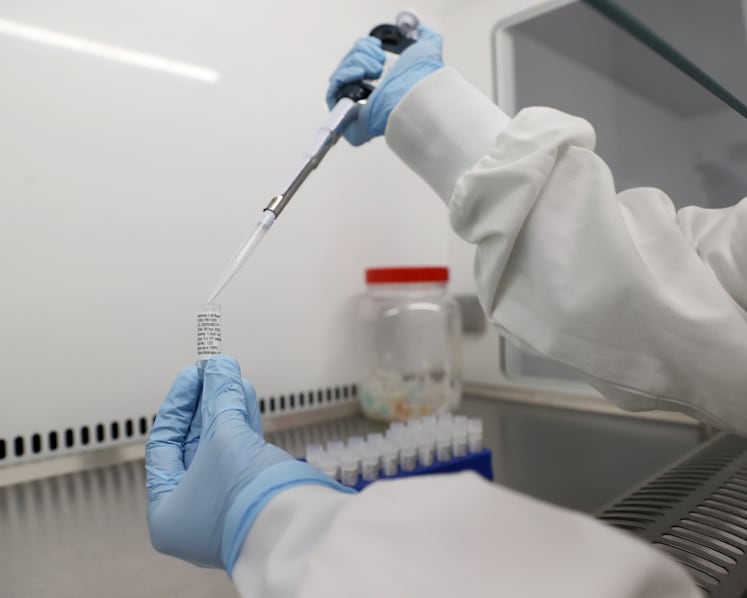
Scientists at Cobra Biologics in Keele, Britain, are seen working on a potential vaccine for Covid-19 on April 30, 2020.


SINGAPORE — Covid-19 vaccines, when they appear, should be a public good that “belongs to everyone around the world”, said a director of the World Health Organization (WHO) on Thursday (May 14).
Speaking at an hour-long Asia media briefing organised by the World Economic Forum (WEF) and broadcast live online, Dr Takeshi Kasai, the WHO’s regional director for the Western Pacific, said vaccines have to be distributed equally to all once they are available.
“We see vaccines as global public goods, meaning that it belongs to everybody around the world and not just something that the countries producing it can reserve for their use,” said Dr Kasai in response to a question from Malaysian news channel Astro Awani.
“Until a vaccine is available, everybody remains at risk,” he added.





Besides Dr Kasai, the panel included Asia-Pacific Economic Cooperation (Apec) Secretariat executive director Rebecca Fatima Sta Maria, Grab co-founder Tan Hooi Ling, and The Straits Times editor Warren Fernandez.
Dr Kasai’s comments came as the race to develop a Covid-19 vaccine heats up.
There are at least 90 vaccines in development for Covid-19, with around 10 frontrunners that have either made it into early human trials or are supported by one of the larger drug companies, JW Scannell Analytics’ founder Jack Scannell wrote in the Financial Times newspaper on Sunday.
Jurisdictions such as China and the European Union have invested billions into the development of vaccines within their borders.
On Thursday, French pharmaceutical company Sanofi said the United States would likely be the first to receive its vaccines if it develops one, “because the US was first in line to fund Sanofi’s vaccine research”, reported financial news outlet Bloomberg.
The US has also accused China and Iran of deploying hackers to steal intellectual property related to Covid-19 research, including vaccines.
At Thursday’s WEF panel, Dr Kasai stressed that equal distribution of the vaccine is the way to “protect every individual around the world”, including citizens in countries that can develop vaccines in-house.
While most vaccines take a decade to develop, some experts have said a Covid-19 vaccine could appear by this year or next.
When asked if the widespread use of the Bacillus Calmette–Guerin (BCG) in Asia could explain why Covid-19 fatality rates in Asia differ from other countries, Dr Kasai said there is no evidence to suggest that this is the case. The BCG vaccine is one of the few Covid-19 vaccine candidates that can be manufactured internationally, as it was first developed in the 1920s against tuberculosis.
Across the Asia-Pacific, Dr Sta Maria said that efforts are under way to remove access barriers to health products, including ventilators, hand sanitiser and potential vaccines, noting that countries have been imposing tariffs on such products.
She did not name these countries, but noted that the World Trade Organization (WTO) does allow countries to impose tariffs in times of a health emergency.
Said Dr Sta Maria: “By working with the economies, what we have done is to track these tariffs, working with the WTO and the Apec members that when tariffs are placed on products like these, it has to be justified, it has to be proportionate and it has to be temporary.”
She noted how some members, such as Singapore and New Zealand, have worked together to reach out to other Apec members to work on reducing these tariffs and making sure that essential medicines are accessible to everybody in the region.
LIVES VERSUS LIVELIHOODS
Mr Fernandez then asked Dr Kasai about the debate over “lives versus livelihoods”, referring to the tug-of-war over which is the bigger priority to some countries when they ease movement restrictions.
Dr Kasai said: “I want to take this opportunity to really reiterate now that we think the question of life or economy is not really the right question — I even think it is a false dichotomy.
“Now is the time for us to think about how to bring both health and the economy back together… think about how to live with this virus and come up with a new normal, which we do not have to choose between life and livelihood.”
Dr Sta Maria said Asia-Pacific economies are expected to contract by 2.7 per cent overall, while economic activity may come to a standstill.
“But we are hopeful that because our economies and our value chains are so interconnected, improvements that will take place in China's manufacturing will lead to (positive) impact on the rest of us,” she said.
Some developing countries are still able to grow owing to increased domestic demand and a possible recovery in manufacturing, she said, responding to a question on why some Asian economies such as Vietnam are able to promise economic growth at this juncture.
On Sunday, Vietnam's Prime Minister Nguyen Xuan Phuc vowed to grow its economy by 5 per cent after the outbreak ends. The International Monetary Fund is projecting Vietnam’s economy to grow by 2.7 per cent this year, the only Asian economy predicted to be in the black.
Grab’s Ms Tan said that she observed how two key trends have emerged amid the national lockdowns around the world that could be a part of this new normal. The first is a greater focus on digitalisation, and the second is a heightened awareness of hygiene and sanitisation.
On its end, Grab has experienced lower net revenue than before the pandemic, and is optimising its operations to be capital-efficient. The company, however, is ramping up its role in logistics and helping businesses to digitalise and thrive online during the crisis.
“Covid-19 is a black swan event that shows how interdependent and connected we are. The virus knows no borders. Meeting the challenge of the post-Covid world is not a task for one company or one country, and corporates need to take an expanded view of their role in society,” said Ms Tan.




