







'This is different now': Doctor who treated first Sars patient says S'pore is better prepared for Wuhan coronavirus
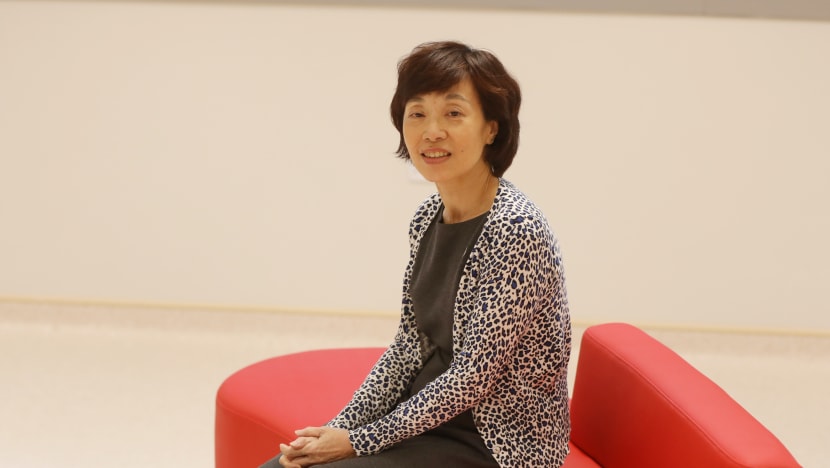
Dr Brenda Ang Sze Peng (pictured), senior consultant at the National Centre for Infectious Diseases, treated Singapore's first patient who was infected with the coronavirus that caused severe acute respiratory symdrome (Sars).


SINGAPORE — During the outbreak of the coronavirus that caused the severe acute respiratory syndrome (Sars) here in 2003, Dr Brenda Ang Sze Peng was attending to Singapore’s first infected patient and she was not wearing any protective gear such as a surgical mask and latex gloves.
Dr Ang, who was then the senior consultant and chairman of the infection control committee at Tan Tock Seng Hospital, did not end up contracting the deadly disease.
The patient, who was then 26, was soon regarded as a “super-spreader”, meaning someone who disproportionally infects a large number of people or contacts. The World Health Organization (WHO) often identifies a patient who sickens more than 10 secondary contacts as a super-spreader.
The young patient passed the Sars virus to her family members and hospital workers. Although she survived, both her parents and her pastor who came into contact with her died.





Dr Ang recalled: “I saw her father, and I saw her mother.
“(This) patient who brought back Sars from Hong Kong was in our hospital before the world knew such a thing called Sars.”
It was only 12 days after this first patient was warded that the WHO warned of the new disease, she added.
The Sars virus, which originated from Guangdong in southern China in November 2002, was identified in early 2003 and affected 26 countries. More than 8,000 cases were reported in 2003, WHO said.
The virus, which is believed to have jumped from bats to civet cats and then humans, ended up killing almost 800 people worldwide, including 33 in Singapore.
Dr Ang, who has been a doctor for 38 years, is now a senior consultant at the National Centre for Infectious Diseases (NCID), which is the primary treatment base for patients suffering from a new coronavirus, also known as 2019-nCov.
The viral outbreak began in Wuhan, capital city of Hubei province in China, late last year.
“We were not prepared for Sars as we simply did not know what it was at that time,” Dr Ang said during an interview with various news outlets that was organised by NCID.
“This is different now, because we had the warning when China told the world and WHO that this is a new disease. And like all the other countries, (we) have taken steps to prepare ourselves.”
The new coronavirus comes from the same family that caused Sars and the Middle East respiratory syndrome (Mers). The Mers virus was first identified in Saudi Arabia in 2012, with dromedaries (one-hump camels) being the animal source of infection in humans.
Common signs of a coronavirus infection include fever, cough, shortness of breath and breathing difficulties. In more severe cases, it can cause pneumonia and even death.
At NCID, Dr Ang’s team of doctors and nurses attend to confirmed and suspected cases of the Wuhan coronavirus.
She said that the difference between the current situation and Sars is that Singapore is now well-prepared for an outbreak of this scale, because there was sufficient warning.
Shortly after China announced that it had identified the new virus in early January, the Singapore Government announced its multi-ministerial task force on Jan 22 — a day before the first imported case was confirmed here.
Quarantine centres which can hold thousands of people were also being prepared before the first case was confirmed.
Dr Ang said that due to the early warning, healthcare workers could be properly equipped with resources such as surgical masks.
There was also time to disseminate information about the disease and assure the hospital workers and members of the public that the steps taken to prepare for a potential outbreak would be adequate.
LESSONS LEARNED FROM SARS OUTBREAK
Dr Ang said: “A lot of what we had developed at that time (during the Sars period), we continue to use many of the same principles.”
These include good communication and information flow so that rumours do not spread.
“Communication is key,” she said, “because what we learned from Sars is that (members of the public) said that they’re hearing (new information) from their friends in other institutions and ministries, and that all kinds of rumours are flying around.”
She added that it is also crucial that the senior ranking hospital staff members work alongside the junior ones.
“This is so that the juniors don’t feel like they’ve been pushed to the frontline without the seniors being there. They will feel like they’ve been thrown in to take care of themselves whereas the senior people hide in the offices.”
She added that during the Sars outbreak, it was all hands on deck.
“The senior staff, the consultants were there, and we didn’t have any healthcare workers running away.”
This protocol has stood constant over the years and is the same for the situation now, she added.
Most importantly, the hospital staff members have kept their spirits high, and are thankful that NCID opened in September last year.
It was previously known as the Communicable Disease Centre and moved to its newly built premises along Jalan Tan Tock Seng.
“I think morale is not bad. We are very, very happy and relieved that between Sars and this time, we had this building, which was built over the past (few) years with lessons of the previous outbreak.”




