







More cars could be allowed in Singapore with move towards ERP2 system, says Jeffrey Siow, as law passed
ERP2 on-board units will be mandatory for all Singapore-registered vehicles as the country fully switches to the ERP2 system from Jan 1, 2027.
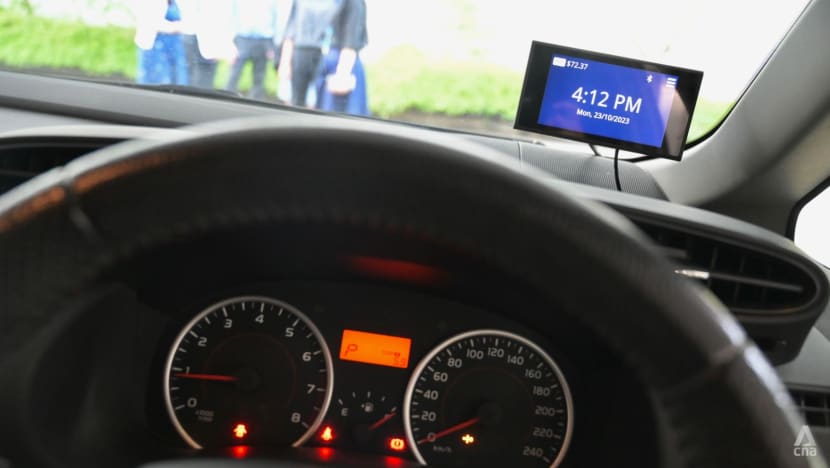
The antenna mounted on the windscreen will not obstruct the driver's view. (Photo: CNA/Hanidah Amin)

This audio is generated by an AI tool.


SINGAPORE: The number of cars allowed on Singapore roads may grow in the future, with improvements in traffic management using data from the ERP2 system, said Acting Transport Minister Jeffrey Siow on Wednesday (Feb 4).
Singapore has been reducing its vehicle growth rate over the years, with the rate kept at zero since February 2018 for all categories except for goods vehicles and buses, according to the Ministry of Transport (MOT) website. The current rates will remain until Jan 31, 2028.
“There is certainly great potential to improve traffic management using ERP2 data.
“As we get better at doing so, it may well be feasible to create more capacity on our roads without taking up more land,” said Mr Siow, in rounding up the debate on the Land Transport and Related Matters Bill in parliament.
“Potentially, this can allow us to have some future growth in our car population.”
The Bill was passed in parliament on Wednesday. It means on-board units will be mandatory for all Singapore-registered vehicles as the country fully switches to the ERP2 system from Jan 1, 2027.
DECRIMINALISING MISSED ERP PAYMENTS
Under the changes to the law, the missed payments of ERP charges will be decriminalised.
“Indeed, most missed ERP payments are due to genuine oversight, rather than an intent to avoid payment. This amendment would therefore make the penalties more proportionate to the offence,” he said.
He echoed MP Hamid Razak’s (PAP-West Coast-Jurong West) sentiment that it is “a more mature regulatory approach”.
In response to MP Choo Pei Ling’s (PAP-Chua Chu Kang) question on whether shifting the onus for missed ERP payments to vehicle owners instead of the driver would create complications for shared vehicles, Mr Siow said that the Land Transport Authority (LTA) has already discussed the matter with fleet operators and taxi operators.
“Today, vehicle owners are already responsible for obligations and fees such as road tax, so putting the responsibility of missed ERP payments on the owner would be consistent,” he said.
“We expect vehicle owners, such as shared fleet owners, to establish their own arrangements with the drivers to recover missed ERP payments if necessary.”
DISTANCE-BASED CHARGING A FUTURE OPTION
Mr Siow said there are no plans to implement distance-based charging immediately, acknowledging concerns from Dr Choo, MP Tin Pei Ling (PAP-Marine Parade–Braddell Heights) and MP Melvin Yong (PAP-Radin Mas).
“I would like the transition to ERP2 to be as smooth as possible, so it's best to let the situation stabilise and to have motorists get used to the new system, before too many parameters or new ones are introduced,” he said.
Noting that distance-based charging is still an option for the future, Mr Siow said that the authorities would have to study this further as there were many trade-offs involved.
If the distance-based format is implemented, “motorists will have ample notice”, he added.
“Our desire to have a smooth transition is also why we are keeping the broad framework for ERP charges for now,” said Mr Siow.
He said that ERP rates will continue to be reviewed on a quarterly basis using data from ERP2, which will now be more accurate and reliable.
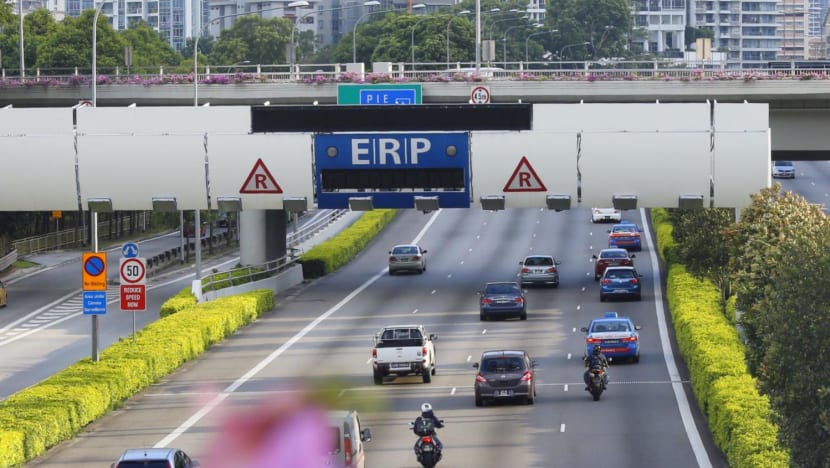
Mr Siow added that the infrastructure-lite nature of ERP2 means the locations where road pricing can be implemented can be more easily adjusted.
“Therefore, we can react more quickly to mitigate traffic congestion at hotspots, including in areas where it may not be physically possible to add an ERP1 gantry today,” he said.
As the country moves closer to completing the transition to ERP2, the difficulties preventing some vehicles from installing OBUs are also being addressed.
For instance, some electric vehicle models are unable to provide a constant power supply to the OBU, so LTA has developed an external battery device to let these vehicles have OBUs installed, said Mr Siow.
In cases where technical problems cannot be resolved, such as old cars on the classic or vintage vehicle schemes, they would be exempt from having to install OBUs. Owners of such cars will then have to pay a daily flat fee if they use their vehicles on ERP operational days.
DATA SECURITY
In response to MP Dennis Tan’s (WP-Hougang) question on the management of ERP2 data, Mr Siow said that it has been discussed before, including during the last parliament sitting when the Public Sector Governance Act was passed.
“LTA adheres to all laws and government-wide standards on data-sharing with other agencies, and this includes how we will manage ERP2 data,” he said.
LTA will use vehicle-specific data only for payment, charges and enforcement, and this will include non-payment of ERP charges and cross-border taxi enforcement, said Mr Siow.
He noted that there are security measures and safeguards in place for data management.
For instance, the design of the OBU is in line with the Federal Information Processing Standard Level 4 security standard with cryptographic security keys.
Mr Siow agreed with MP Edward Chia (PAP-Holland-Bukit Timah) that ERP2 data can result in smarter traffic management and transport planning, adding that LTA officers strongly agree and are excited by the possibility.
The government will use anonymised and aggregated ERP2 data for traffic management and transport planning purposes, said Mr Siow.
“For example, we are experimenting with merging or using this data to optimise the traffic light signal system, amongst other use cases that we are exploring,” he said.




