







The Future of Work: Security sector not safe from disruption, workers scan horizons to reskill
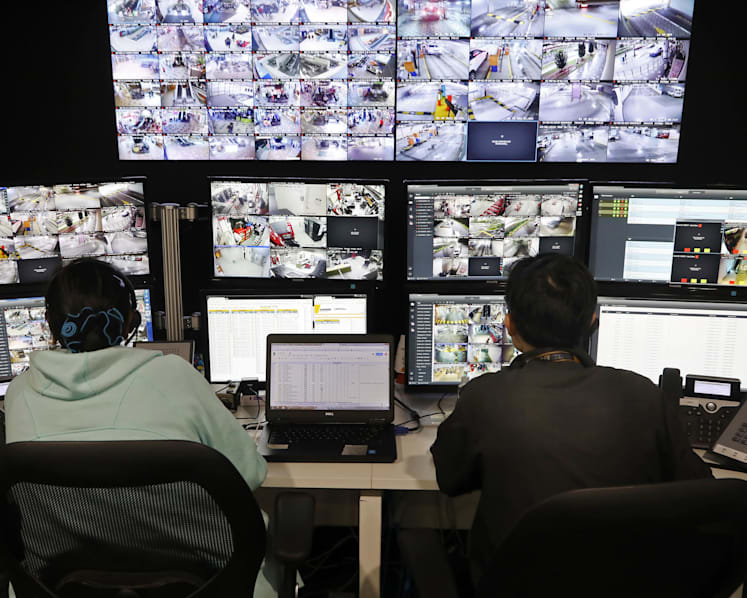
With technology being a game-changer across various sectors, the security industry is not spared.


Late last year, a study by consulting firm McKinsey estimated that almost a quarter of work activities in Singapore could be displaced by 2030. At the same time, however, a vast amount of jobs will be created, with new technologies spawning many more jobs than they destroyed, the study pointed out. The introduction of the personal computer, for example, has enabled the creation of 15.8 million net new jobs in the United States in the last few decades, even after accounting for jobs displaced.
In a new weekly series, TODAY looks at The Future of Work — the emerging jobs fuelled by technological advancements which may not even have existed a few years back, but are set to proliferate within the next decade or so. In this sixth instalment, we feature security professionals who stepped out of their comfort zones to embrace new work challenges.
SINGAPORE — They monitor security at malls not just by patrolling the ground, but through virtual surveillance. And instead of standing around vehicles to prevent theft as goods are being unloaded, they rely on behavioural analytics to detect suspicious acts.





With technology being a game-changer across various sectors, the security industry is not spared. Security operations are evolving and, along with this, the roles of those on the beat.
It has been a steep learning curve for some security professionals, but the prospect of being disadvantaged if they did not grow their skills set was not a position they want to be either.
Mr Deepak Mandraj, 49, for example, left his job as an auxiliary police officer after 28 years to join security firm Soverus Consultancy and Services last year. He is now operations manager of the firm's integrated command centre.
"I was reading newspaper reports on how the security industry is going to change because of technology. I thought that it was time for me to move on rather than stay in the same role."
At the command centre, which oversees security at more than 20 sites — most of them condominiums — video analytics software is used.
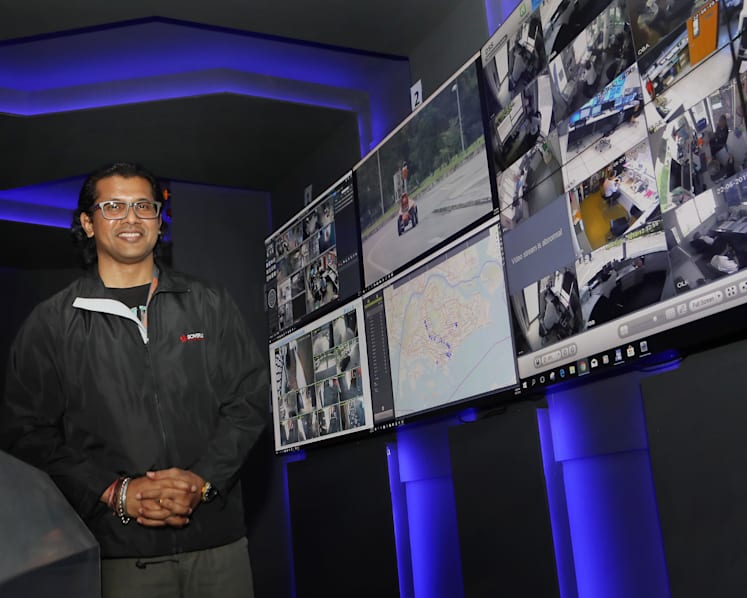
Unlike conventional operations where an individual has to keep an eye on surveillance footage, video analytics can enhance CCTV systems to perform more intelligent detection such as recognising faces of people, bags and vehicles, or measuring speed and monitoring direction of traffic flow, as well as sending automated alerts when the duration of time that people spend in a specific area or how long a bag is left unattended is irregular.
The software may also convert footages into structured data for businesses, or analyse behaviour of subjects captured on camera.
In the room where Mr Deepak works, there is live CCTV footage of car-park entrances or certain restricted areas, for instance, and there are blue lines on the screens.
Mr Deepak explained that those lines are called "tripwires" and they appear on the screens as part of the software, to detect and show peculiar movements in those areas.
"(Before I learnt what video analytics was about), I thought that those lines were really at the sites," he recalled with a laugh.
It was challenging to pick up new skills at first and he was not afraid to turn to his colleagues for help. They would explain things to him, "sometimes repeatedly", until he got it.
There were also occasions where Mr Deepak was studying his course materials at home, sparking questions from his two sons as to why "I am still studying at my age".
"I told them I didn't want to be a caveman and get left behind. Then, I will be redundant."
For others in the industry, change keeps them on their toes.
Mr Mohd Shaleh Halit, 38, used to work as a prison officer and a security supervisor at Resorts World Sentosa. He is now deputy operations manager of a security command centre belonging to security firm Certis Group.
Mr Shaleh said that the typical tasks of a security officer such as routine patrols and checks can be "mundane" at times and "you do get bored".
In 2012, he decided to join Certis, working in its division which deploys personnel to recover vehicles under the Expressway Monitoring Advisory System (Emas).
Then, when he was offered a position at the command centre in January last year, he jumped at the opportunity. "I did question if I could do it, but I told myself that I can learn something new, so why not give it a try."
For someone who was more comfortable being on the ground, sitting behind a computer learning about video analytics took getting used to, not to mention studying a course on the subject.
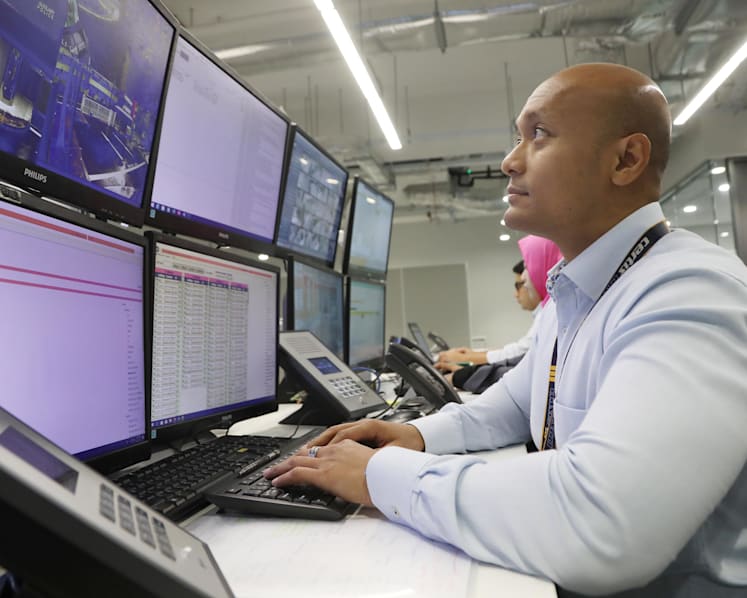
Another challenge was preparing security reports for clients using the data from the software. "It took me the whole day to prepare a report, and I practised at home till the wee hours. If I didn't understand certain things, I would text my boss," Mr Shaleh recalled. Now, he takes just two hours to do the report.
NEW TECHNOLOGY, NEW ROLES
Both Mr Shaleh and Mr Deepak's job positions cropped up only after their companies decided to use new technology such as video analytics and thus set up security command centres.
Other security companies here are also moving towards a similar path, as the sector grapples with a manpower crunch and the increasing demand for efficient and effective security systems.
Certis established its business process re-engineering and operations command centre in 2016. It comprises multiple rooms — each dedicated to a client — with wall-mounted screens beaming live CCTV footage. The centre oversees more than 110 sites, with the majority of them being shopping malls.
Using a video analytics software, a surveillance system could be set to detect any intrusion after a mall's operating hours, for example. It would also alert the command centre if there is any illegal parking at a mall's pick-up or drop-off points, removing the need for a security officer to be stationed in the area 24/7.
The centre now has more than 50 employees, with most of them having worked before as on-the-ground security officers but trained in their new roles.
Mr Tan Toi Chia, senior vice-president of corporate planning and group communications at Certis, noted that these developments have "created opportunities for employees to acquire new knowledge and skills, and expand their scope of work in the organisation".
Banking on technology is key, given that the younger generation grew up in an age of technological disruption and digitalisation. "Our younger colleagues make up a large part of our workforce and represent an important part of our business today, as they do for our future," Mr Tan said.
However, new hires represent one component of its talent development strategy. Certis continues to retain talent by getting employees to go for re-training and having a structure in place to hire those looking to make mid-career switches.
"In the security business, technology can augment, but not fully replace human talent," he said.
Being quick on the feet is, for one, still an asset.
Technology may cut down the need for human supervision and lighten some aspects of the job, but vigilance and speed of response remain a core part of the service.
Mr Shaleh said that in February this year, an officer on patrol stepped in fast to prevent a potential accident when a wheelchair-bound man tried to take a downward-moviing escalator by himself.
This is even though a virtual patrol system performed as programmed to alert personnel on the potential hazard. The system consists of CCTV cameras installed in its client's premises which focus on particular areas of "critical interests" such as escalators or driveways. This frees up manpower resources, allowing its security officers to patrol other areas, instead of continuously walking around the entire building.
As the CCTV cameras make use of data analytics, it would sound an alarm to the security command centre should it detect a safety or security incident at those marked areas. An officer would then be informed to head to the site.
The alarm was triggered in the case of the escalator incident, but even before Mr Shaleh directed an officer to the scene, one had already spotted the man and shouted at him to stop.
DEMAND FOR HIGH-PERFORMING SYSTEMS
Admittedly, keeping an eye out for trouble cannot happen all the time. So at Soverus, the firm is exploring introducing behavioural video analytics.
Its general manager Kelvin Soh said that this because there are areas which could not be captured by CCTV cameras, such as what goes on inside the vans and trucks during the loading and unloading of goods.
There has been a growing interest among its clients for such a surveillance system to deter pilferages.
Such a software will study the behaviour of those involved in the loading and unloading process, and alert the command centre on any suspicious behaviour.
For instance, behavioural video analytics could detect a change in the body shape of an individual involved in the loading and unloading process, signalling that he could have hidden items beneath his clothes.
"As technologies evolve, there is a need to find solutions to client's problems. This makes our work more efficient and productive, leading to cost savings," Mr Soh said.
On the part of workers such as Mr Shaleh, they have to continue adapting to new developments.
He said that "remaining stagnant" cannot be an option.
"If the firm opens up opportunities for you to learn, upgrade your skills and move up the career ladder, why not take it? We shouldn't let the fear of trying something new or failure prevent ourselves from reaching our full potential."
Mr Deepak is also aware of the need to "future-proof" himself. He is even more aware that he still has a way to go before retirement and staying employed not only supports the needs of his family, but also builds his retirement savings. His sons, aged 22 and 19, are serving National Service and studying at a junior college respectively.
"I also want to serve as a motivation to them that you should keep on learning regardless of your age," Mr Deepak said, adding that he is taking a part-time diploma course in security and fire safety at Temasek Polytechnic.
Heading into his 50s, he would just as much like to inspire the older generation, pointing out that they should not be apprehensive of the digital age and disruptive technologies. "There is a common perception that only the young can learn technology. But I've proven that people my age can also adapt and learn new things," he said.




