







Good medicine for a career
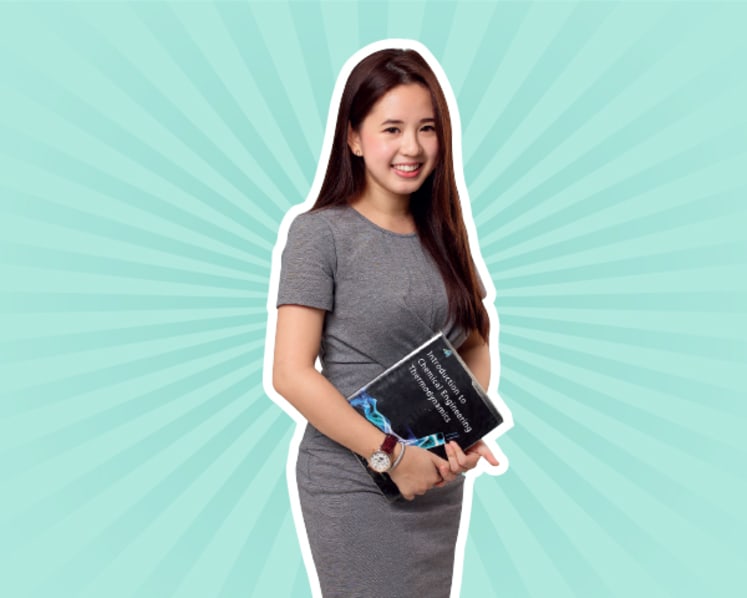
Name: Alicia Khoo Hwee Ming
Course: Bachelor of Science in Chemical Engineering
Institution: Technische Universitaet Muenchen (TUM) Asia
Eye-opening work experience
I started working at the Singapore Association of the Visually Handicapped (SAVH) after I graduated from polytechnic to help support my family. While working there, I became close friends with a SAVH member who was suffering from an eye disease caused by diabetes. He became partially blind because he had skimmed on treatment. He did not want to burden his family with the cost of expensive medication.
My friend’s situation got me thinking about the cost of prescription medication and its impact on the lives of patients. If medication were more affordable, needless health complications could be avoided.





Making medicine affordable
Thanks to a discussion with my uncle, a chemical engineering graduate, I found out that a chemical engineering degree would provide the skills I needed to design affordable solutions to the issue. His advice piqued my interest in the discipline, and, with my parents’ encouragement, I started to look seriously at study options available in Singapore.
The Bachelor of Science in Chemical Engineering programme offered by the Technische Universitaet Muenchen (TUM) emerged at the top of my shortlist of courses. TUM is one of the most renowned German technological universities, and its industry partners include well-established companies like BASF, Siemens and Procter & Gamble. TUM degrees are also well regarded and newly minted graduates enjoy good job prospects.
I did not even need to leave home to attend an internationally recognised university because the school ran an affiliate, TUM Asia, in Singapore. In addition, my Diploma in Pharmaceutical Sciences qualification allowed me to fast track my programme, meaning I could earn a well-regarded degree in about two and a half years.
I am already in the second year of the course, and am looking forward to spending five months at TUM’s main campus in Germany this October. TUM offers students a chance to complete their bachelor thesis there in their final semester to give us more global exposure.
Not Math-anxious
Getting into the engineering programme without a solid grounding in Mathematics did not prove to be a disadvantage. I was set on getting into TUM Asia, and had started studying for the university’s Mathematics foundation module when I was still working. The admissions panel was impressed by my effort.
I also had help from my tutors and classmates when school started. The small class size gave me more opportunities for individual attention and instruction from the instructors. My classmates also went the extra mile by revising the lessons with me after school.
Building blocks
The degree programme is focused on industrial chemistry, such as the development and design of chemical processes. Strong emphasis is placed on inorganic and organic chemistry.
Instead of stretching us with too many modules, courses in TUM Asia follow a block teaching structure. Only two modules are taught at the same time, and the duration of each module ranges from two weeks to a month. This course structure helps us learn better, and we get more opportunities to improve our thinking skills and time management ability — all of which are also crucial at work.
Interactions with our lecturers, many of whom come from other countries, have also trained me to communicate across cultures. This is an important skill to have because I might have to work with companies and people around the world in the future. In addition, my lecturers have helped me gain new perspectives on global issues.
A noble goal
The technical know-how I am gaining from TUM Asia, together with my prior training in pharmaceutical sciences, will get me where I want to go. I haven’t forgotten how my friend lost his sight, and I hope to secure a job in a pharmaceutical company after graduating. I want to fulfil my aim of improving the pharmaceutical processes that can lower the cost of medication.
This article is published in the March 2016 issue of The First Degree, a publication of Mediacorp Press.




