







Singapore to make cool water and breathable clothing mandatory for outdoor workers from Dec 1
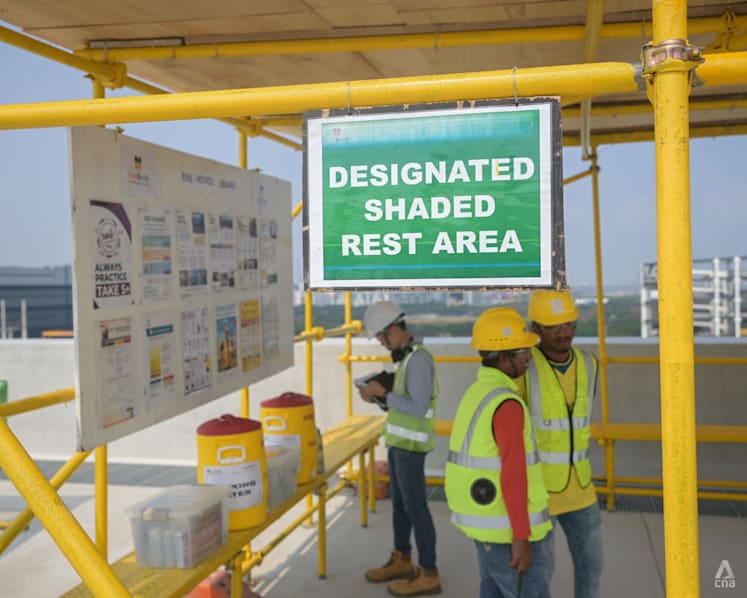
Employers are also recommended to provide shaded rest areas that are well-ventilated and well-insulated or cooled.
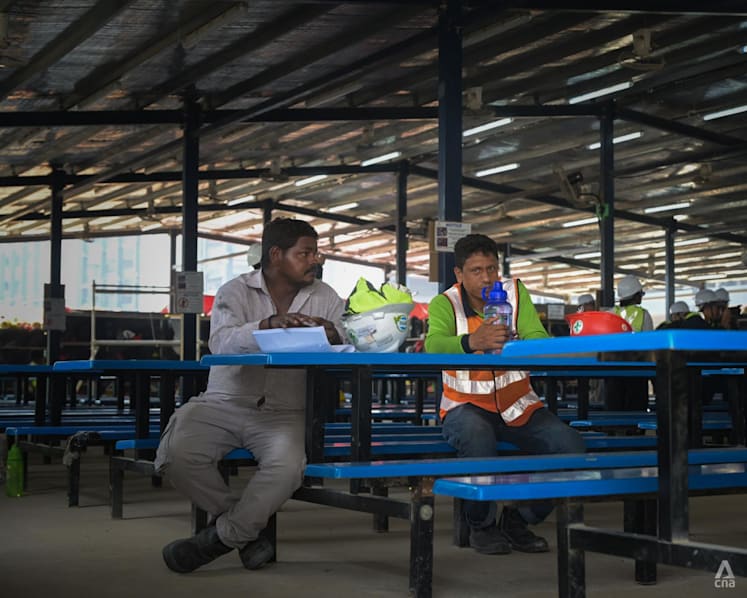
Construction workers taking a break at the rest area with fans and an insulated roof on Aug 28, 2026. (Photo: CNA/Syamil Sapari)

This audio is generated by an AI tool.


SINGAPORE: Outdoor workers must have cool drinking water, clothes suited to hot climates, emergency ice packs and training as part of new requirements to protect them from heat-related risks from Dec 1.
The Ministry of Manpower (MOM) announced these enhancements to the existing heat stress management framework for outdoor work on Friday (Aug 28).
The framework guides employers on practices to reduce heat stress risk for workers who primarily work in the open without permanent shade.
Four practices, which are currently recommendations, will be elevated to mandatory requirements from Dec 1:
- Establish a heat stress training programme for workers exposed to high temperatures
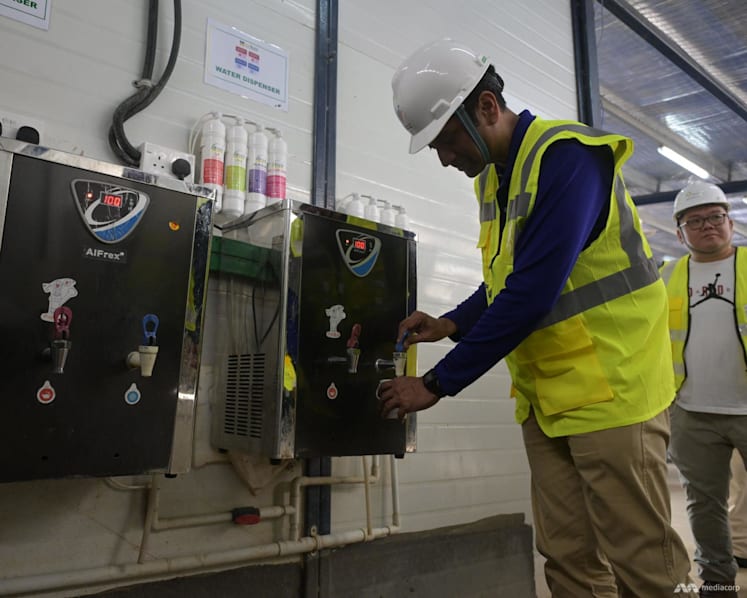
- Provide cool drinking water supply near work areas
- Ensure cold water, ice packs or water spray are on standby for emergency response
- Provide suitable clothing that is loose-fitting, breathable or moisture-wicking





These requirements apply to all outdoor work scenarios regardless of the wet bulb globe temperature.
They join the current requirements for heat acclimatisation, hourly monitoring of the wet bulb globe temperature, regular rehydration, rest under shade, and emergency response and reporting.
If employers fail to comply with the requirements, they may face enforcement actions such as stop-work orders and composition fines.
From Dec 1, there will also be a new recommendation to provide outdoor workers with shaded rest areas that are well-ventilated and well-insulated or cooled.
In the first half of the year, 56 companies were found to have lapses related to heat stress management measures, said MOM.
Common lapses included failure to monitor wet bulb globe temperatures on site, acclimatise workers who are vulnerable to heat, and establish emergency response procedures for heat illnesses.
Enforcement actions were taken against the errant companies, with financial penalties in some cases.
Minister of State for Manpower Dinesh Vasu Dash said employers must take proactive steps to protect workers, as part of Singapore's broader efforts to strengthen its resilience to rising temperatures.
"These enhanced measures provide clearer expectations for employers while strengthening protection for workers," he said.
"Better management of heat stress not only safeguards workers' health and well-being, but also helps employers reduce downtime, maintain productivity and support business continuity."
He encouraged employers to use the remaining three months before Dec 1 to review their workplace practices and put the necessary measures in place.
MOM said the enhanced measures were developed together with tripartite partners, the Singapore National Employers Federation and the National Trades Union Congress, as well as industry stakeholders and relevant government agencies.
These measures are being made mandatory two years after they were added to the framework as recommendations in 2024, noted Mr Dinesh.
NTUC Assistant Secretary-General Melvin Yong welcomed the enhancements, saying in a Facebook post on Friday that heat stress was a “real and growing workplace safety and health risk”, particularly for workers who spend long hours outdoors.
He added that workers and unions had raised concerns about prolonged heat exposure, access to cool drinking water and shaded rest areas, as well as recognising heat-related illnesses early.
“Beyond making these measures mandatory, it is important that they are practical for employers to implement, supported by adequate training, and accessible to all workers, including those in more vulnerable work arrangements,” Mr Yong said.
MEASURES TIMED FOR HOT WEATHER IN 2027
The proactive measures are timed to be in place before the next round of hot weather expected around March to May next year, he added.
Singapore also faces haze risks with a recent increase in hotspot activity in the region.
Mr Dinesh said MOM was constantly watching the haze situation. “Thankfully, we haven't seen an uptick,” he said.
“We’ve got mechanisms in place to alert work sites and especially workers working outside, in the outdoors, for them to be well-protected, either by way of masks and so forth.
“Thus far, we are in a relatively good position, and we continue to observe what's happening in our neighbouring countries to protect our workers who are working in Singapore.
“In the event where you have haze and hot weather happening together, we will have to again look out for the safety and health of our workers to make sure that they are able to continue working.”
This could mean rest measures if the temperature and haze levels become too high, he said.
“We want to place our workers’ health and safety in the centre of all that we do, because by doing so, not only are we protecting them, but we’re also protecting our employers to be able to have a productive workforce that will help them in their overall timelines and their work.
The haze risk was also highlighted by NTUC Assistant Secretary-General Yeo Wan Ling, who said in a Facebook post that Singapore must be prepared to protect workers whose livelihoods require them to remain outdoors, through measures such as appropriate rest, air quality monitoring and proper protection when outdoor work cannot be avoided.
She added that heat stress was becoming an increasingly serious concern for delivery riders, taxi drivers and private-hire vehicle drivers, who often work through the hottest parts of the day.
One practical challenge raised by platform workers was finding cool, shaded places to rest between jobs, Ms Yeo said.
“Platform work is different. Our riders and drivers do not report to a fixed workplace, and the road is their workplace. Protection therefore has to work in the real world too,” she added.
Ms Yeo said NTUC and its platform work associations were working with platform operators on ways to give workers better access to hydration and suitable cool or shaded rest points while on the road.
From 2023 to 2025, an average of six cases of illness caused by higher temperatures and excessive heat were reported each year, with no reported fatalities, said MOM.
TRYING OUT COOLING GARMENTS
One Singapore construction firm is exploring additional heat stress management measures on top of what the government requires.
SoilBuild Construction Group, which is building the PSA Supply Chain Hub @ Tuas, is on its second trial of cooling garments for outdoor workers.
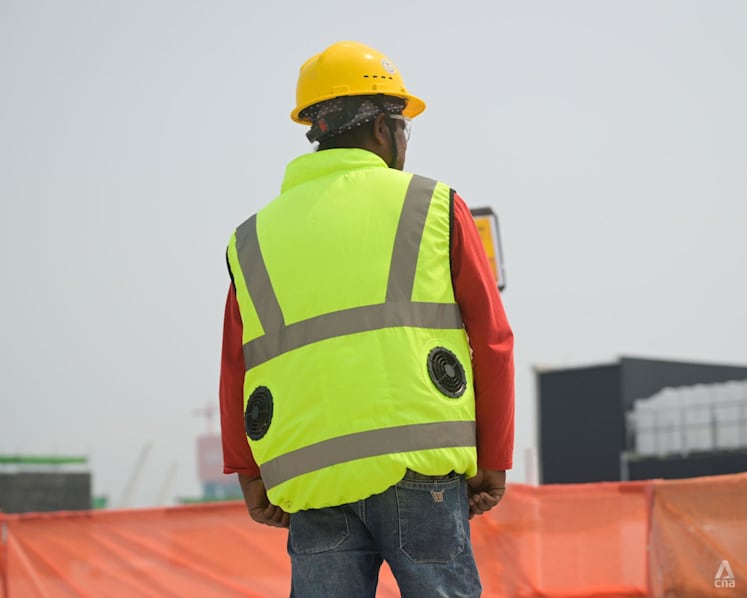
For the past two weeks, 24 workers across two worksites have been wearing fan-based vests, inner shirts with cooling hydrogels, and inner shirts with a printed cooling technology called FreezeTech.
The company's earlier trial found that these garments reduced skin temperature by about 3.9 degrees Celsius.
Solar panel installer Ali Md Eakub, who is testing out the FreezeTech shirt, said it has made a difference to his comfort level at work.
The most impactful heat stress measures so far have been the shaded rest areas and cool water dispensers provided by his employer, he added.
"Workers are also telling us that they don't feel as tired as they were at the end of the work days," said SoilBuild executive director and group CEO Lim Han Ren.
Mr Lim said that hourly measurements of wet bulb globe temperature have been the most difficult measure to implement at work sites.
While some of the heat protection measures reduce productivity slightly, the company sees benefits in avoiding occurrences of heat injury or heat stress among its workers, he added.




