Maersk Line consolidates regional HQ in Hong Kong
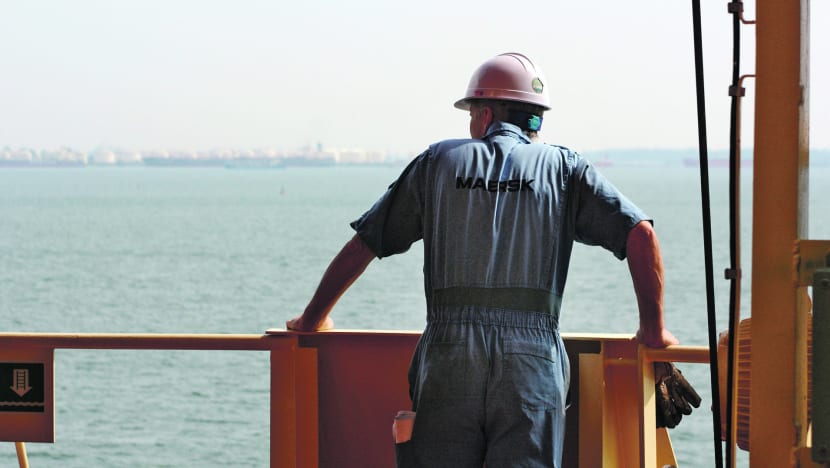
A crewman looks at the view from a Maersk Line container vessel at the Port of Singapore in Singapore, on Friday, Sept. 27, 2013. Bloomberg file photo


SINGAPORE — Container shipping giant Maersk Line today (Feb 3) confirmed the merger of its Asia-Pacific office in Singapore with its North Asia headquarters in Hong Kong, with the Chinese city now serving as head office for the combined operations.
“The regional responsibility for Asia Pacific will be in the combined Asia-Pacific headquarters in Hong Kong,” a company spokeswoman told TODAY. Maersk has reduced the number of regional offices from eight to seven by merging its Asia-Pacific (South-east Asia and Oceania) and North-Asia (China, Korea and Japan) regions.
Following the consolidation, which took effect on Jan 1, Singapore now serves as a country cluster office overseeing its South-east Asia business in the city-state as well as Malaysia, Vietnam, Thailand, Indonesia, Philippines, Cambodia and Myanmar.
The Maritime and Port Authority of Singapore (MPA) said it expected greater industry consolidation and restructuring to take place as industry players look to streamlining and optimising business operations to achieve greater efficiencies.
Saying the Government remains strongly committed to the maritime industry’s growth, the MPA added that it continues to “work closely with the industry to tackle these challenges, and also to ensure that we continue to invest in long-term capabilities, which will enable us to catch the winds when the upturn comes about”.
Maersk’s move comes amid challenging times for the global shipping industry. Freight rates have plunged, driving many shipping companies into losses, as global trade has failed to keep pace with the number of new vessels entering the market in recent years.
Singapore’s container turnover fell for the first time since 2009 to a four-year low in 2015, largely led by a slump in Asia-Europe volumes, said the MPA earlier this month. The annual container throughput fell 8.7 per cent from the record level in the previous year to 30.9 million TEUs (twenty-foot equivalent units), according to the preliminary data cited by the agency.
The container shipper, which owns more than 600 container vessels, in November reported a 61 per cent drop in net profit in the third quarter.
In response to the drop in global demand, the shipping line said in November it would accelerate efforts to slash costs, postpone investments in new capacity and reduce its workforce by 17 per cent or 4,000 people, as part of a programme to “simplify” the organisation. The consolidation of the regional headquarters in Hong Kong is part of those organisational changes announced in November, said Maersk today.
Prior to the merger, the Hong Kong headquarters took care of the North Asia region, comprising mainland China, Hong Kong, Japan, Korea and Taiwan. Now, the restructured Hong Kong outfit, headed by Robbert van Trooijen, will be responsible for a larger geography across four clusters: South-east Asia, with the cluster head office located in Singapore; Greater China, overseen by Shanghai; North East Asia, overseen by Tokyo; and Oceania, with the cluster head office in Auckland.
The company, which has been operating in Singapore since 1975, added the move will lead to more jobs in the Republic as a bigger management team is being set up to head the South-east Asia cluster.
Responding to reports suggesting that Maersk chose Hong Kong instead of Singapore because of costs here, Mr Lars Mikael Jensen, who headed the shipping line in Asia Pacific before the merger of the regions, told TODAY: “It’s not a competition between Hong Kong and Singapore. It’s purely a geographical decision, and has nothing to do with one being more attractive than the other.”
CIMB Private Banking economist Song Seng Wun agreed: “It’s not about Singapore being expensive. Both cities are similarly expensive to operate from. This is really a business decision made in an environment where there is excess capacity, weak global demand and decreasing container traffic volume. Maersk Line may have chosen Hong Kong because of larger volume of container traffic from the North Asian side.”
Mr Jensen will return to the company’s headquarters in Copenhagen, Denmark, to take up a management position within the operations department. He commenced his new role on Feb 1.
Mr Bo Wegener, previously country manager for Thailand and Myanmar, now heads the South-east Asia cluster in Singapore. WITH AGENCIES