Singapore to set up new national space agency on Apr 1
The agency will let Singapore maximise space technology applications for national and regional needs, says Minister-in-charge of Energy and Science and Technology Tan See Leng.
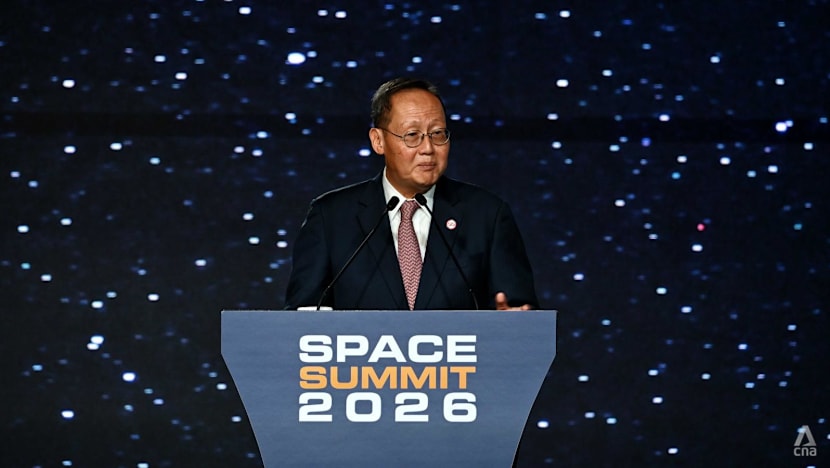
Minister-in-charge of Energy and Science & Technology Tan See Leng speaks during the Space Summit 2026 at the Marina Bay Expo and Convention Centre, on Feb 2, 2026. (Photo: CNA/Wallace Woon)

This audio is generated by an AI tool.


SINGAPORE: Singapore will set up a national space agency in April, Minister-in-charge of Energy and Science and Technology Tan See Leng announced on Monday (Feb 2).
The National Space Agency of Singapore (NSAS) will provide decisive leadership for Singapore to seize opportunities in the expanding space economy and the new possibilities posed by democratised access to outer space, he said at the inaugural Space Summit.
“For Singapore, our journey in space technology dates back over 50 years,” said Dr Tan, who is also manpower minister.
The NSAS will allow Singapore to “unlock the full potential of space technology applications for Singapore’s national and regional needs”, while keeping its assets safe in an increasingly congested space environment, he added.
SATELLITES AND LEGISLATION
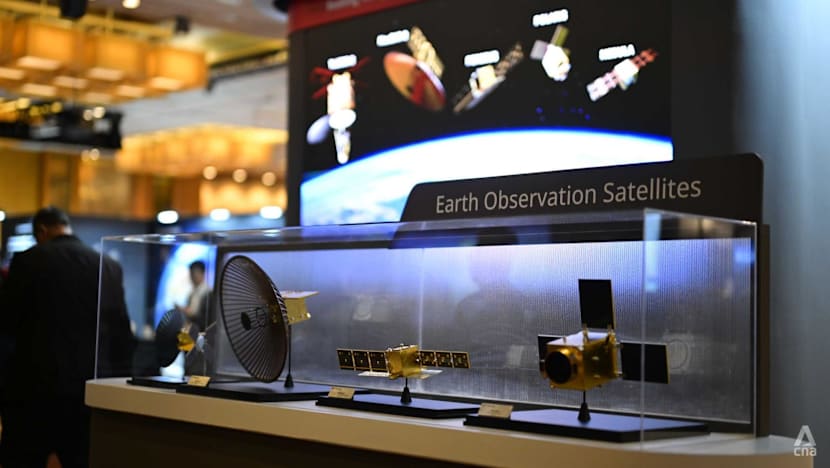
The government currently co-owns three Earth observation satellites with ST Engineering.
“We will establish a multi-agency operations centre that will support government agencies with satellite tasking and bespoke geospatial data analytics,” he said.
This could benefit areas such as port operations, urban planning, environment monitoring and food security, he said.
“Looking ahead, Singapore will explore further developing our constellation of satellites to meet national needs as well as use cases across the Equatorial Belt – as our geographical location positions us to do more in this region,” said Dr Tan.
In an increasingly congested space domain, Singapore will also ensure the safety of its space assets by progressively building up and operating space situational awareness capabilities, he said.
The NSAS will also develop legislation and regulation for the space sector, aimed at being pro-innovation and pro-business, while meeting high standards for space safety and space sustainability, said Dr Tan.
Guidelines for Singapore-related space activities were first established in 2024, covering the registration of space objects and ensuring space safety and sustainability.
“Building on this foundation, the agency will engage our space ecosystem on plans for national space legislation,” he said.
The NSAS will expand on the work of the Office for Space Technology and Industry (OSTIn) under the Economic Development Board, which since 2013 has been leading efforts to build up Singapore’s space technology sector.
Moving forward, Singapore will invest in emerging areas, such as climate and sustainability technologies, particularly satellite remote sensing for carbon monitoring; space sustainability technologies, including space situational awareness and approaches to debris remediation; and microgravity research in space to advance human health sciences.
“The government has set aside over S$200 million (US$157 million) since 2022 for space R&D projects through the Space Technology Development Programme, supporting research institutes and companies to develop and test their space technologies,” said Dr Tan.
He said that Singapore will continue to anchor space technology companies here and help them capture regional growth opportunities.
Singapore’s position as a trusted and connected hub, with a strong finance and logistics sector, makes it the ideal launchpad for companies offering space services across the Asia-Pacific region, said Dr Tan.
“We will continue to groom a strong talent pool, including a bench strength of local expertise, to support the growth of our space technology sector and to access the good jobs created,” he said.
The NSAS will also expand Singapore’s network of international partnerships to pursue new collaborations and facilitate connections between space ecosystems, he added.
Over the years, Singapore has developed research and development capabilities and also fostered a vibrant ecosystem of local enterprises and multinational corporations across the sector, he said.
“We have developed strong and mutually beneficial international space partnerships,” added Dr Tan.
These include cooperation with leading space players like the European Space Agency and India’s IN-SPACe.
BACKBONE OF INTERCONNECTED WORLD
In his speech, Dr Tan called space technologies “the backbone of our interconnected world”.
“Satellite systems for communications, navigation, and Earth observation have transformed how we connect communities, deliver services, and tackle pressing global challenges like climate change,” he said.
The global space economy reached US$630 billion in 2023 and is projected to soar to US$1.8 trillion by 2035, said Dr Tan, describing the trajectory as “remarkable”.
The NSAS will be helmed by chief executive Ngiam Le Na, currently the deputy CEO at DSO National Laboratories, Singapore’s defence R&D organisation.
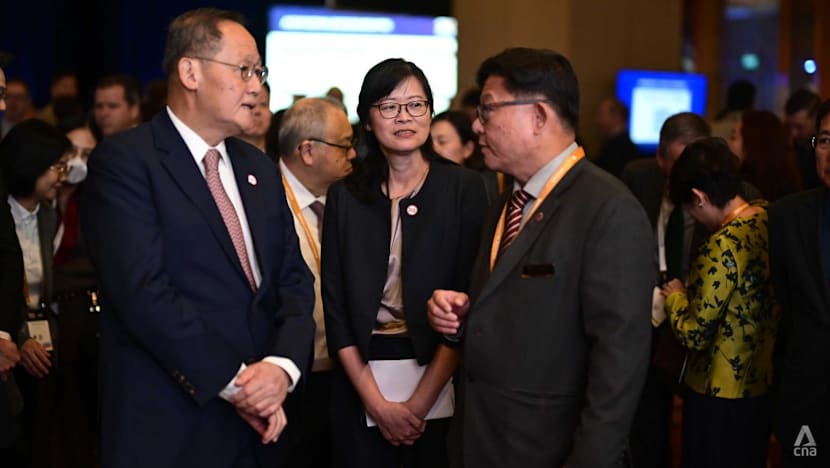
“Singapore’s space ambitions reflect more than a technological aspiration – we want to translate innovation into real solutions that strengthen our economy, improve lives, and address global challenges with precision and foresight,” said Dr Tan.