







NTU splits humanities and social sciences school in restructuring exercise
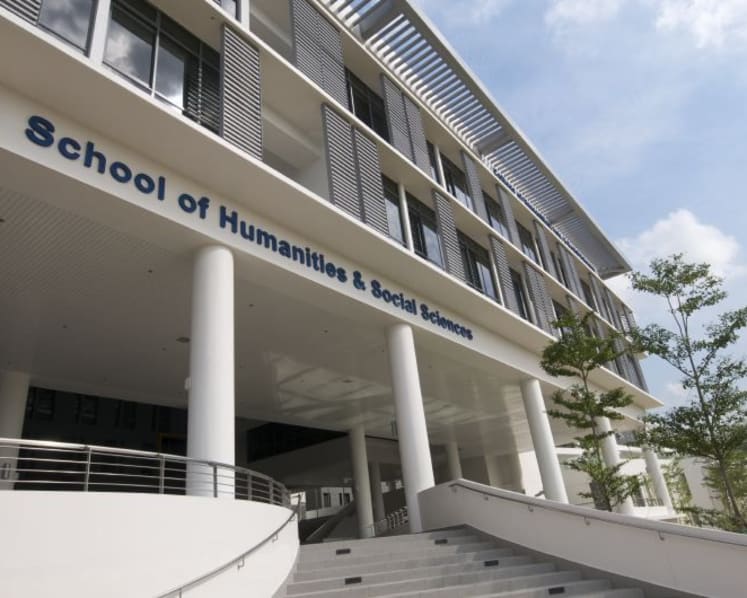
NTU will expand the study of humanities and social sciences with two new schools from 2017. Photo: NTU
SINGAPORE — Nanyang Technological University (NTU) announced on Monday (Oct 31) that from August next year, it would split its humanities and social sciences programmes into two separate schools: the School of Humanities and the School of Social Sciences.
The two new schools will be housed under the College of Humanities, Arts and Social Sciences, which also includes the Wee Kim Wee School of Communication and Information, and the School of Art, Design and Media.
The current School of Humanities and Social Sciences was established in 2004 with only about 60 economics students, and now has more than 3,700 students as well as more than 200 professors and lecturers, making it NTU’s largest school in terms of faculty numbers.
With the restructuring, students majoring in Chinese, English, history, linguistics and multilingual studies, and philosophy will be enrolled into the School of Humanities. Those studying economics, psychology, public policy and global affairs, and sociology will be admitted into the School of Social Sciences.





The new schools will offer four-year direct honours bachelor-degree programmes, with undergraduates majoring in their chosen discipline from the first year, following the existing admission and academic model. Students may choose a second major or minor in other subjects.
The undergraduates may also opt for selected courses outside their degree programmes, from other institutes within NTU, such as the S Rajaratnam School of International Studies, to complement their major.
NTU president Bertil Andersson said that although the institution is known as a science and technology university, having the two new schools would enable it to offer our students a wider breadth of learning and knowledge which will include the humanities and social sciences.
“NTU’s big push in this area will boost students’ ability to think critically about the tough choices facing society in a rapidly changing world driven by technology, global connectedness and climate change,” he said. “Creative thinking is also needed for truly excellent scientists, engineers, mathematicians and other professionals who can solve complex problems by looking beyond their own fields of expertise.”
Professor Alan Chan, dean of the college in charge of the new schools, said that besides the potential to offer more multidisciplinary courses in line with the current approach, there would be deeper emphasis on interdisciplinary research activity and study, such as gerontology, a new growth area involving social science, design, engineering and medicine.
“Ageing is a serious issue for Singapore and many other societies. Technology will play a vital role in addressing the challenges of an ageing population, but technology alone cannot bring about the kind of flourishing and caring society we all desire. There is a need to understand the complex psychological and behavioural conditions and the kind of interventions required, for example, to enable healthy and active ageing,” Prof Chan said.
The new schools will thus focus on research issues surrounding gerontology, working more with the School of Biological Sciences, College of Engineering and the Lee Kong Chian School of Medicine.




