





Public Service Commission to explore new tools to select more diverse scholars
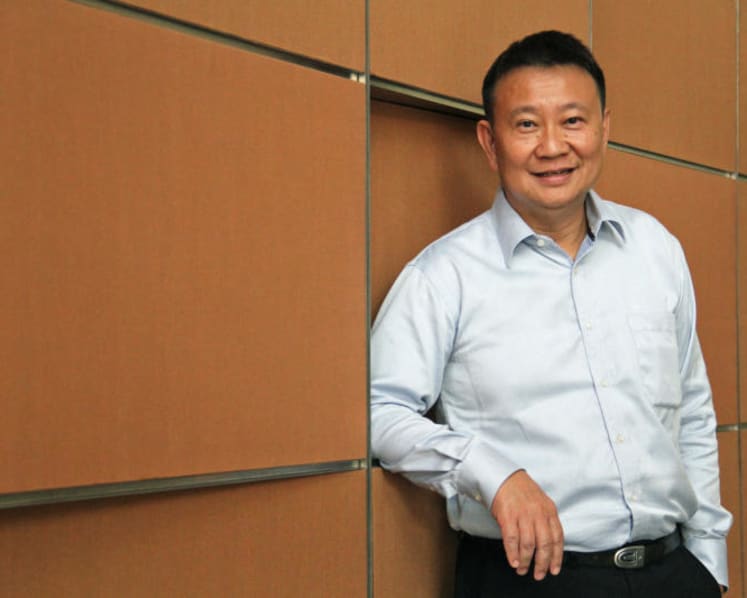
The public sector's appetite for risk has impact on the private sector's deployment of innovation, said Public Service Commission chairman Lee Tzu Yang.

SINGAPORE — The Public Service Commission (PSC) will explore new tools such as game-based assessments to capture a wider range of attributes of potential scholars, said new chairman Lee Tzu Yang in an open letter three months into his appointment.
The new tools will supplement psychometric tests and interviews, opening up opportunities for even more candidates to be considered, he said in the letter released by the PSC on Wednesday (Oct 31).
Many organisations today already use game-based assessments to assess attributes such as perseverance, learning orientation and risk-avoidance, said Mr Lee in his four-page letter that also highlighted the need for diversity within ranks and for public servants to innovate and lead.
Outreach to a wider range of schools and polytechnics is a work-in-progress, he added.





On the selection of PSC scholars, he said: "We can never discount intellect as a desired attribute, but we will consider other attributes, such as evidenced by self-initiated community service and leading change in new, different and difficult directions. We look for leaders for the public service.”
The PSC will actively encourage diversity in scholars’ courses and countries of study.
As Singapore’s need for engineering and technology grows, having such a background gained from study and experience will become an advantage in the public service, he said.
“The building of networks in different countries and understanding of different cultures and peoples are also important, and we encourage you to consider different countries as potential destinations, whether it is an undergraduate degree in France, Germany or Japan, post-graduate studies in China, or a gap year at a start-up in Indonesia,” said Mr Lee.
Support will also be given to those who opt to do their undergraduate studies in Singapore universities before pursuing postgraduate opportunities internationally. This is important for diversity and to grow the local network, said Mr Lee, who succeeded former chairman Eddie Teo in August.
The public service employs about 145,000 officers in 16 ministries and more than 50 statutory boards. Within the public service is the civil service, comprising about 85,000 officers in the government ministries.
Mr Lee was formerly chairman of Shell Companies in Singapore and, until August, a member of the Council of Presidential Advisers.
His comments come amid a debate on meritocracy in Singapore and the need to assess students more broadly.
Meritocracy in the public service “must be the allocation of opportunities to serve Singapore, on the basis of the individual’s ability to contribute to the good of the country”, said Mr Lee. “Scholarships are not rewards but opportunities for responsibility to serve. Appointments and promotions are opportunities to contribute more in service.”
Acknowledging the present concerns in society such as inequality and future challenges, Mr Lee said "disruption is the new normal". The public service must have the skills and flexibility to manage disruption and regulate new activities, he said.
“The public sector’s appetite for risk has impact on the private sector’s deployment of innovation. This is not reserved for the economic agencies alone, because disruption by its very nature has social impact.”
Some technological and digital skills will become “as necessary as language and numeracy” in the public service, he added.
Calling for the awareness and ability to use diversity to build resilience, Mr Lee said group-think is “a weakness in a highly complex and uncertain world”.
Some of his comments echo that of his predecessor. In July, former PSC chairman, Mr Teo, had said at the PSC Scholarships Award Ceremony that public servants should be prepared to "speak truth to power" when they spot a wrong decision or policy.
Mr Teo also spoke about the importance of having diversity so that public servants may connect with Singaporeans from all walks of life and hold different points of view to tackle complex issues.
In his open letter, Mr Lee urged public servants to have empathy, build bridges between competing interests and encourage trust in public policies “which seek to be the best but may not always be perfect”.