







Some primary schools doing away with ‘top classes’
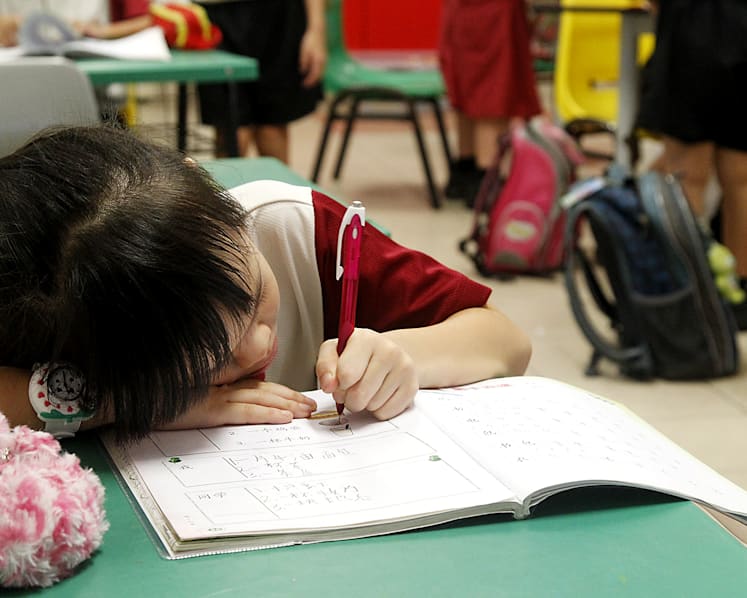
TODAY file photo


SINGAPORE — Starting this year, some primary schools have scrapped the common practice of grouping pupils in classes according to their academic performances at upper-primary levels.
TODAY has learnt that at least three schools — Pei Chun Public School, Zhangde Primary School and Pei Hwa Presbyterian Primary School — are no longer putting top students in the same classes when they start Primary 5, and classes are a mix of pupils of differing academic abilities.
Responding to queries, a Ministry of Education (MOE) spokesperson said schools “exercise their professional judgment in deciding how to group their students in classes that meet the children’s educational needs”.
Currently, schools may group students taking similar combinations of Standard and/or Foundation subjects into the same classes. This helps teachers draw up lesson plans, and build up strong peer and teacher-student relationships. “Schools also balance this consideration with the need to ensure a good mix of student profiles, to enhance social and personal development,” the spokesperson said.





In a letter issued to parents in December last year — which TODAY obtained a copy of — Pei Hwa Presbyterian principal Foo Sook Fong announced the change in the school’s practice as a move that would “reduce unhealthy competition and promote interaction among pupils of different strengths and interests”. To better reflect children’s holistic development, the school will also no longer release the rankings of students by cohort or subject.
“Information related to your child’s holistic progress and performance will be indicated in your child’s report book,” Mrs Foo said in the letter. She added that the changes were in line with the MOE’s move towards a student-centric and values-driven educational system, which will also place less emphasis on academic results.
Pei Chun and Zhangde Primary did not respond to queries.
Previously, the students of these three schools would be placed in different classes, based on their academic performance, when they entered Primary 5. Despite the change, TODAY understands that teachers at these schools will differentiate their teaching between the academically stronger and weaker students, even though they are in the same class.
In Singapore, the streaming of primary school pupils to cater to their different learning needs has been a contentious issue.
The practice of putting the students into the EM1, EM2 or EM3 stream — which lasted about 16 years — was refined in 2008. Instead of streaming pupils into different courses based on their academic abilities, subject-based banding in primary schools was introduced, where schools provide a differentiated curriculum for Primary 5 and students take each subject at either Standard or Foundation level. This practice seeks to “stretch (students’) potential in subjects they are strong at while building up their foundation in subjects they need more support in”, the MOE spokesperson reiterated.
Most parents TODAY spoke to welcomed the change in some primary schools, saying it will help build the confidence of “late bloomers”.
Mr Lee Kai Guan, whose son is in Primary 4 at Pei Chun, said children should not be categorised at such a young age, and those with healthy self-esteem can progress further. “For the fast learners, they are able to mix with friends with different interests and backgrounds. This will improve the social skills of the children,” he added.
One parent, who declined to be named and has a daughter in Primary 4 at Zhangde Primary, said distinguishing students by their academic abilities can be “demoralising” for those who are less academically-inclined. It also creates “unnecessary competition among top students to outdo each other”, she said. Her daughter said: “It’s all about helping and pushing each other to strive for our best. If we can help our classmates, why not?”
Music teacher Alice Chang, 44, whose son is in Primary 6 at Pei Chun, said that parents should also change their mindset, and be less fixated on academic results.
However, Mr Ng Kok Leong disagreed with the move. Grouping students based on academic ability helps weaker pupils learn at their own pace, said the 44-year-old engineer, who has a daughter in Primary 3 at Pei Chun. “If a class has students of mixed abilities, the teacher will also have a harder time to manage.”




