







Student’s death was ‘unfortunate medical misadventure’, says State Coroner
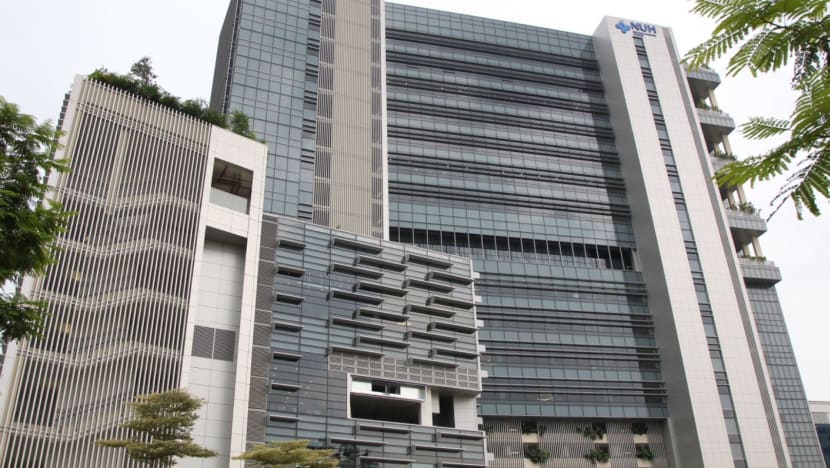
NUH Medical Centre. TODAY file photo
SINGAPORE — Having lived for years with neurofibromatosis, a condition where tumours grow out of nerve tissue, 18-year-old Muhammad Harith Haron underwent surgery to remove several growths on his face, neck and torso.
The operation at the National University Hospital (NUH) went smoothly, but overnight, Harith started feeling pain and he was drooling and having trouble coughing or spitting out secretions.
He died shortly after, at around 8am on Dec 16 last year, a day after the surgery.
An independent expert roped in for the Coroner’s Inquiry into Harith’s death stated that he died due to the loss of a large volume of blood leaking from a 15.5cm-long neck wound.





The ITE College West student had a swollen airway, due to the intubation process, post-surgical trauma and post-operative pressure from the blood clots. These blood clots ended up blocking his airway.
State Coroner Marvin Bay ruled out foul play, and labelled the death as an “unfortunate medical misadventure”.
The Coroner’s court heard on Friday (May 27) that Harith had large benign tumours over his face and body, and these caused him discomfort and functional difficulties.
His mother told investigators that he developed a lump on the right side of his jaw in his teenage years and it started to sag in recent years.
He first visited NUH in November 2013 and had follow-up appointments over the years. Last August, he and his parents discussed surgical options during a consultation and they were told about the risks of pre-operative embolisation — the restriction of blood flow to the tumours. Such risks include pain, fever and blood clots. His parents were not keen to proceed, but Harith wanted the surgery.
The operation on Dec 15 last year took more than an hour, and the teen was stable throughout the procedure, which ended around 10am.
A review at 5.30pm showed that he was well, with no complaints of pain or discomfort, but three hours later, he felt pain and was given paracetamol.
He sent a text message to his mother at 9pm, saying that he was feeling nauseous and would be going to sleep. At 2am, he complained of pain again and was given stronger medication, along with a pressure bandage.
Then things took a turn for the worst, and during a check around 6am, he was drooling and having difficulty discharging secretions.
He was experiencing breathing difficulties even though the medical team gave him supplemental oxygen and drained his secretions.
Harith became unresponsive and died after resuscitation failed.
At the hospital, his uncle was told that there had been massive bleeding around the wound when Harith’s dressing was changed between 5am and 6am.
Coroner Bay said: “The massive haemorrhage that occurred from the surgical site, as well as the swelling that occurred were complications that could be anticipated.”
Hairth had been keen on the surgical option, Mr Bay added, because he understood the progression of his disease. “He had chosen to undergo surgery in the earnest hope of improving his quality of life.”
An NUH spokesperson said that the hospital was saddened by the death of their patient. “After the incident, we have continued to maintain an open channel of communication with his family,” she said.




