







Teen admits registering 25 SIM cards in exchange for money; 2 scam victims lost S$35,000
The 19-year-old told the judge that his friends told him he would not get caught.
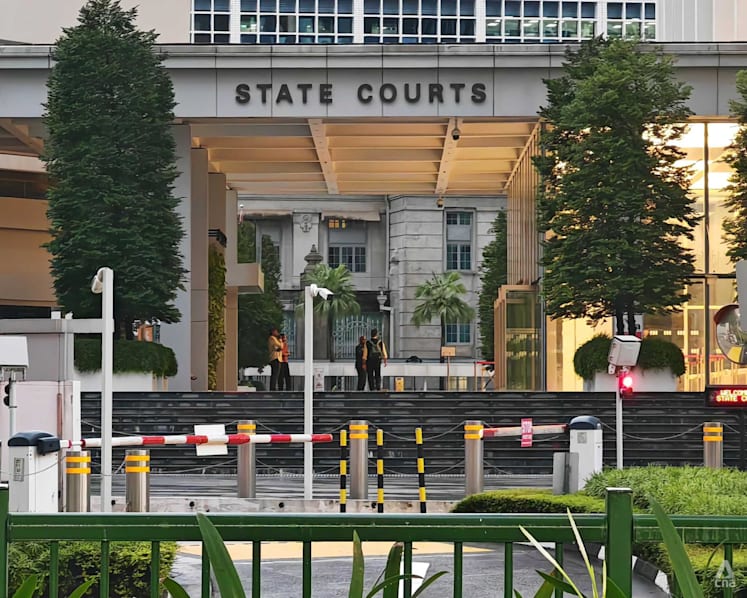
A view of the State Courts building in Singapore. (File photo: CNA/Koh Wan Ting)

This audio is generated by an AI tool.


SINGAPORE: A teenager registered 25 SIM cards in exchange for money, with two of the cards later used in scams that resulted in losses of more than S$35,000 (US$27,140).
Asked by the judge why he agreed to register so many SIM cards, 19-year-old Muhammad Ritzwandy Mazli said: "Back then, I was lazy to work, and my friends influenced me to do all this."
Ritzwandy pleaded guilty on Tuesday (Dec 16) to two charges of providing SIM cards registered using his personal information, with reasonable grounds to believe that they would be used for an offence.
Another two similar charges will be considered in sentencing.
The court heard that two of Ritzwandy's friends, known as "Genji" and "Gillean", offered him S$120 in November 2024 if he registered for and provided SIM cards to them.
Ritzwandy agreed. Between January and February this year, Ritzwandy used his personal information to register for the SIM cards and handed them over. He received the payment of S$120.
Two of the SIM cards were later used by an unidentified person to facilitate scams against victims, including a fake buyer phishing scam and a UnionPay impersonation scam.
Two of the scam victims suffered losses of S$35,603 in total.
The prosecution urged the court to call for only a reformative training suitability report, saying probation would not be suitable.
He said scams remain an ever-growing concern, and a measure of deterrence needs to feature in the sentence.
Ritzwandy was unrepresented.
JUDGE TALKS TO ACCUSED
When District Judge Shaiffudin Saruwan asked Ritzwandy why he registered so many SIM cards, he responded that he was "lazy to work" and was influenced by his friends.
"Easy money, right?" asked the judge.
"Yes," replied Ritzwandy. "I am sincerely sorry and I know I wouldn't do this anymore. Plus, I wouldn't scam anyone, because the current course I am taking right now is cyber security and I know the consequences of scamming and hacking."
In response, Judge Shaiffudin said the offences were committed in January and February this year.
"So during these times, you would have read in the social media, in the mass media, about scam-related offences, the dangers of scam-related offences and all the consequences right? ... People losing their life savings? Tens of hundreds, hundreds of thousands of dollars through these - and you know that people use not just bank accounts and also SIM cards, you know all that, right?" asked the judge.
Ritzwandy agreed.
"Yeah, but at that point in time, my friends told me that I'm not going to get caught or anything," he said.
"Right, so you were influenced by your friends, despite knowing what you were doing, (and that) these SIM cards ... would allow scammers to proceed with their scamming activities?" probed the judge.
"Yes," answered Ritzwandy.
"See, that's the whole reason why the government is clamping down on these (offences)," said Judge Shaiffudin.
"It's a very serious offence. People don't seem to understand, or they just don't want or refuse to understand. Without these SIM cards, the scammers ... will not have the facility to proceed to scam other people. People tend to say - but I didn't really scam them. No, I disagree. By doing this, you are assisting to scam people," he continued.
"Back then I didn't know," answered Ritzwandy.
"But you said you read reports?" said the judge. "They even composed a song about scams ... we hear it on the radio every now and then."
He concluded that these offences are serious and have to be nipped in the bud.
"I see no exceptional circumstances in your case to call for a probation report," said Judge Shaiffudin.
He called only for a report assessing Ritzwandy's suitability for reformative training and adjourned sentencing to January.
For providing SIM cards for the commission of an offence, a person can be jailed for up to three years, fined up to S$10,000, or both.




