Milan and Cortina d’Ampezzo burn dual flames for Winter Games
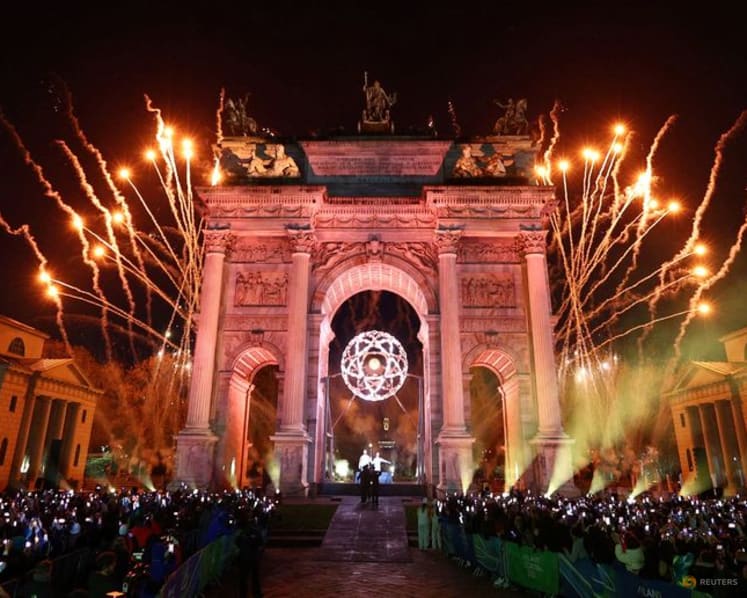
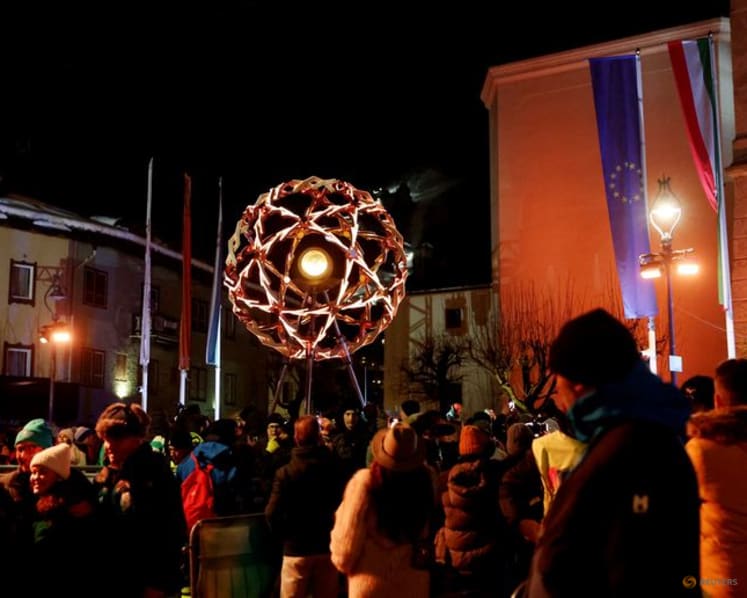
MILAN, Feb 6 : With the lighting of the two cauldrons — one in Milan and one in Cortina d'Ampezzo — the Winter Olympics got under way, marking the first time in history that the Games have begun with dual host-city flames.
The cauldrons built for the Milano Cortina 2026 Winter Olympics pay tribute to the sun and are inspired by Leonardo da Vinci’s geometric "Knots" and are meant to blend natural harmony with human engineering, reflecting the Renaissance artist’s long association with Milan.
Alberto Tomba and Deborah Compagnoni, two of Italy's greatest Alpine skiers, shared lighting it in Milan and Pyeongchang 2018 gold medallist Sofia Goggia, who is aiming for another skiing medal in this Games, did the honours in Cortina.
The flames sits at the centre of the installations, which are made from aeronautical aluminium and open and close through a system of 244 articulation points and more than 1,400 mechanical components.





Their diameter extends from 3.1 metres when closed to 4.5 metres when fully open. The flame is housed in a glass and metal container.
The Olympic cauldron in Milan has been installed beneath the city’s neoclassical triumphal arch in Piazza Sempione, known as the Arco della Pace.
The structure is where, in 1859, Napoleon III and Vittorio Emanuele II entered Milan after the Battle of Magenta, a victory over Austrian forces that led to the liberation of the city.
The episode is widely regarded as one of the key moments paving the way for the unification of Italy.
From February 7, the cauldron in Milan will be used in short daily displays, held hourly from 5 p.m. to 11 p.m., set to music by composer Roberto Cacciapaglia until the Olympic Flame is extinguished on February 22, when the Games close.
A second lighting will follow the arrival of the Paralympic Flame on March 6, with both cauldrons remaining active for the duration of the Paralympic Games until the closing ceremony on March 15.