'Sometimes I wonder how I did it': These Singapore Sports School students juggled IB exams and SEA Games
Student-athletes spoke of packed schedules and the fear of falling behind peers in the classroom and the sporting arena.
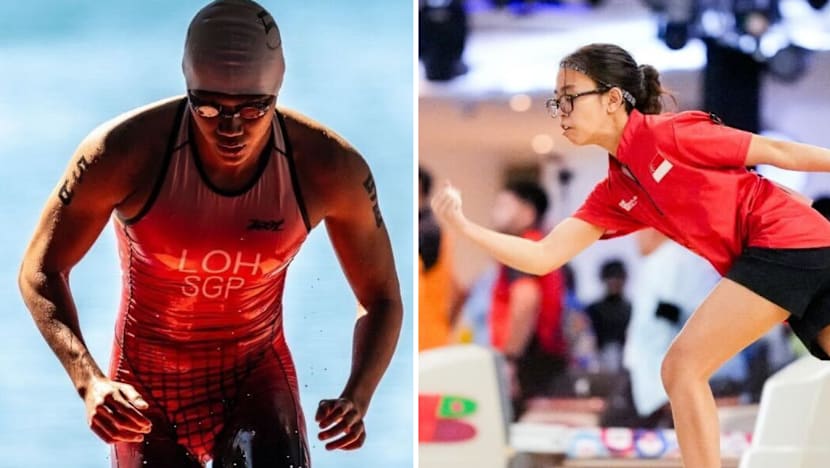
Reyes Loh and Nur Irdina Hazly made their SEA Games debuts in December. (Photos: SportSG/Dumrongsak Angsuworapruek, SNOC/Kong Chong Yew)

This audio is generated by an AI tool.


SINGAPORE: For most students, International Baccalaureate examinations are demanding enough. For three recently graduated Singapore Sports School (SSP) students, it came alongside the added pressure of preparing to compete at the SEA Games.
“Sometimes I also wonder how I did it,” said SSP student Reyes Loh, reflecting on a year that saw him juggling exam preparation and intense physical training.
Before starting 2025, Loh set two goals for himself.
One was to score at least 40 points in his International Baccalaureate Diploma Programme (IBDP) examinations, and the other to make the triathlon team representing Singapore at the 33rd SEA Games, which were held in Thailand from Dec 9 to 20 last year.
Naturally, that meant having to sacrifice much of his personal and family time over the course of 2025. Through sheer hard work, the 19-year-old ended up achieving both his aims.
"(Halfway through the year, I told) my family that this was going to be one of the most tiring and tough years. It's not easy to juggle," said Loh, who competed in the mixed aquathlon relay at the Games.
Loh is one of the 28 student-athletes from SSP who in December graduated from the IBDP, a through-train pathway offered by the school to support long-term athlete development and provide sustained academic support for student-athletes.
Of the graduating student-athletes, four including Loh, competed at the Games.
The demands placed on student-athletes are neither new nor unexpected, and the balancing act between elite sport and academic rigour is one the public is broadly aware of.
Yet the scale of what these young athletes go through – from early-morning training sessions and long school days to high-stakes international competition and major examinations – is no small feat.
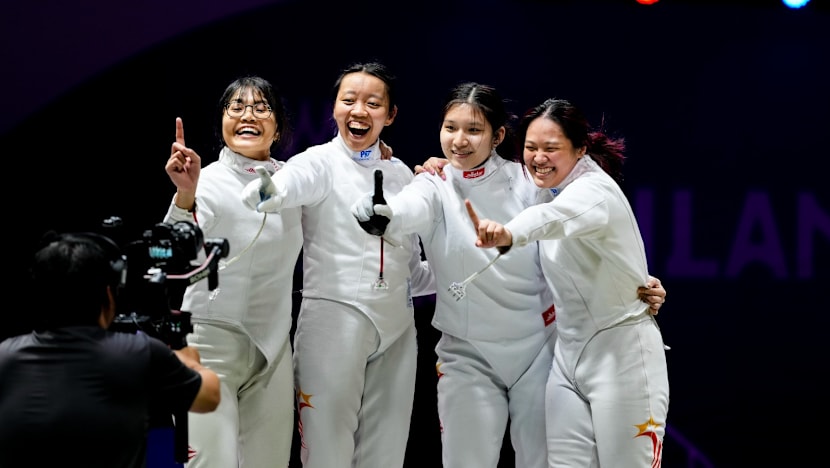
"I spent countless late nights studying for the exam because of the long hours of training," said fencer Esther Tan, who was part of the women's epee team which won gold at the Games.
"It definitely was a little bit overwhelming, but I've managed to push through."
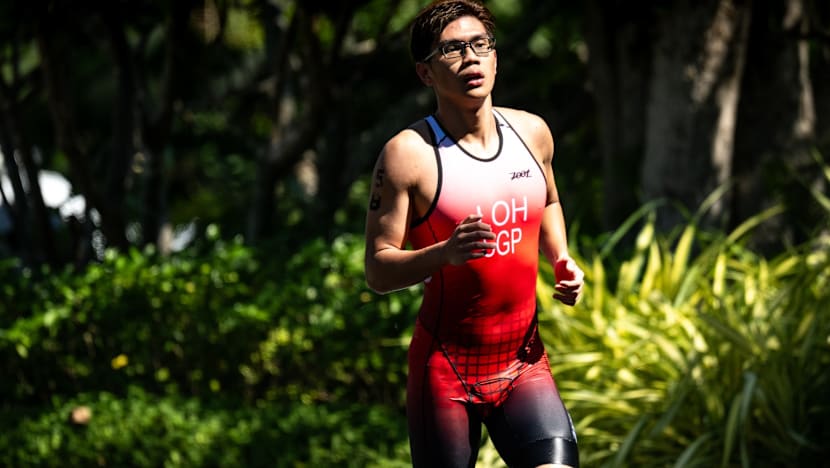
COPING WITH PACKED SCHEDULES
Speaking to CNA about their lived realities, the student-athletes spoke of the tightly packed schedules that they have to navigate week after week.
For Tan, a typical day started with lessons which stretched all the way to the early afternoon. This was then followed by training from 3pm to 8pm, with the rest of the night spent on homework and revision.
Her weekends were busy too. The fencer trained on Saturdays as well, with the rest of the two days dedicated to studying.
On top of these commitments, the 19-year-old took a course to get her coaching license as well.
"With discipline, with good time management, and with the right structure, it's definitely possible," said Tan, who scored 40 points.
The day began even earlier for Loh, whose training typically starts at 5am. After a morning swim of about an hour, it is time for school. After classes, Loh would go on an afternoon run, then dinner, before hitting the books again.
As the exams drew closer, he would scale things down to a single afternoon training session instead.
"I felt that I was sufficiently prepared for the exams. I've been in Sports School for six years, this is not the first time I've had to struggle through sports and studies," he said. "So I'm quite used to this kind of routine."
For both Tan and Loh, what helped considerably was to have a to-do list.
"I would write down my schedule for each day. That helped me to regulate and pace myself really well," said the fencer.
"Usually I already know what I want to do, and what I want to achieve for the day. I will just stick to that and try to finish up everything that I can," added Loh. "I wouldn't try to let it pile up."
'ONE OF THE WORST TIMES OF MY LIFE'
For bowler Nur Irdina Hazly and fencer Tan, not being able to go all in on either endeavour made it difficult.
Not studying enough would see them fall behind their classmates, but missing training sessions could also harm their teams' competitive chances.
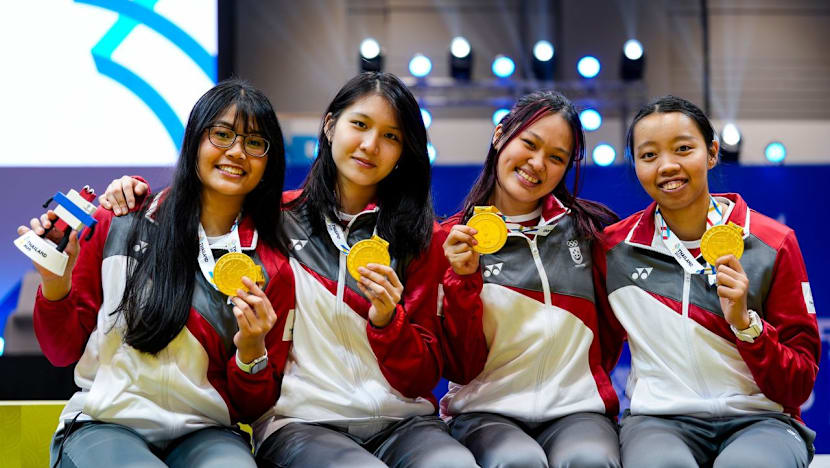
"It was one of the worst times of my life," said Irdina, who was part of a team which clinched bronze at the Games.
"Before I stopped training, my bowling form was already not that great. I realised that if I don't stop training, that I would probably fail IB."
While the 19-year-old tried to scale down to training once a week, it was a compromise that did not work.
"Every time I went to training, I would still be thinking about studies. So it was not quality training," she said. "When I took a break from training, I just tried to maximise my time (with studying)."
There was also a "fear of missing out" as she worried that missing training could result in not being able to "contribute as much" to the bowling team.

"I'm competing with other students who are mainly just studying after school. They spend way more time studying," added Tan.
For Tan, the split focus between studies and sport could have contributed to injuries.
"Other full-time fencing athletes would spend time on physical training or strength and conditioning sessions. But being a student, I'm not able to spend those times doing those sessions as I would be studying," she said.
"I feel that partly led to ... getting injured pretty often because my body is not able to manage the fencing load that I'm doing."
Family time was also few and far between for the fencer.
"I have (had) to sacrifice a lot of family time and family is very important to me," said Tan, who last year clinched bronze at the FIE Junior World Cup in Bahrain.
Loh recalled how the mid-year period was particularly stressful as assignments began to pile up.
"The IB is ... different because there are internal assignments where you have to write a lot of essays, write a lot of reflections," he said.
"Sometimes I didn't even have time to finish up, I remembered I ... asked for extensions to finish up my assessments and write ups."
PRESSURE BUT WORTH IT
While Loh and Irdina were on the standard two-year IBDP pathway offered by SSP, the school also offers an extended IBDP where student-athletes such as Tan complete the programme over three years instead of the usual two.
This allows them to balance sports training and school commitments, as they have greater flexibility in planning their academic schedule to match their long-term sport goals and competitions.
There are ways in which SSP tries to lighten the load for student-athletes.
For one, individuals who are highlighted for academic support and intervention are guided by a team of IBDP academic staff to support them to plan, monitor and evaluate their own learning.
Additionally, those who miss their lessons due to being on leave of absence for competitions are provided with academic makeup through consultations and asynchronous online learning among other teaching and learning approaches.
Ultimately, Tan, Loh and Irdina powered through. With their scores, they are looking to further their studies at local universities.
A perfect score in the IB diploma exams is 45.
"I got higher than what I thought. I thought I would fail, so my score is not bad," said Irdina, who scored 35.
"I wasn't full-on confident (that I would hit my target), but I'm still very happy with what I got," added Loh.
"My lifelong goal was always to make the SEA Games ... Of course, we all wanted a medal but we didn't get it unfortunately. So my next goal would be to aim for the medals at the 2027 SEA Games."
Looking back on the year, Tan said that things eventually all panned out.
"It was definitely a lot of pressure and expectations put upon me, because I know what I'm capable of and mainly the pressure comes from myself, not just from other people," she said.
"(It's) just an honour to be able to go through this kind of process and make it out alive and get something out of it."