VAR delay sparks controversy as player sent off after halftime in Brazilian Super Cup
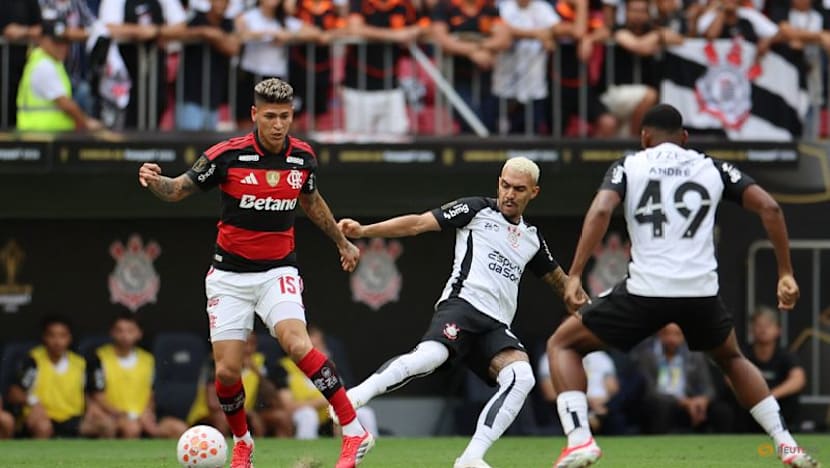
Soccer Football - Supercopa do Brasil - Final - Flamengo v Corinthians - Estadio Mane Garrincha, Brasilia, Brazil - February 1, 2026 Flamengo's Jorge Carrascal in action with Corinthians's Mateuzinho REUTERS/Adriano Machado
BRASILIA, Feb 2 : The use of VAR to send off Flamengo's Jorge Carrascal after halftime for an incident that occurred before the break raised fresh questions about its use during Sunday's Brazilian Super Cup at the Mane Garrincha Stadium in capital Brasilia.
The bizarre red card decision followed after Corinthians players complained bitterly about an alleged elbow strike by Carrascal to Breno Bidon's face shortly before the interval.
The Corinthians midfielder lay on the pitch for several minutes as his teammates demanded a VAR review that never came.
Both teams headed to the dressing rooms assuming the matter was closed.





However, referee Rafael Klein shocked everyone in attendance when he headed to the VAR booth after the players returned for the second half, ultimately concluding there had been aggression, delivering a red card to the Colombian midfielder that left Flamengo stunned.
The decision caused outrage among Flamengo players, who believed any review would have happened during the first half. Corinthians went on to win 2-0 with goals from Gabriel Paulista and Yuri Alberto to claim the trophy.
"I had never seen that in my life," said Flamengo manager Filipe Luis, the former Chelsea and Atletico Madrid defender.
"I don't know if it had ever happened anywhere else. The players waited on the pitch and headed to the dressing room as if the play had already been reviewed. We prepared the whole plan to play 11 against 11 and then that happens... I don't want to make excuses for the defeat, but I had never seen anything like it before."
The Brazilian FA (CBF) later blamed electrical problems for the unprecedented delay. CBF said a power outage hit several stadium sectors during halftime, including the video office room, which remained dysfunctional for large portions of the second half.
"Initially, the available images did not provide conclusive evidence, which is why the first half ended normally," the CBF explained in a statement early on Monday.
"While the procedures were still ongoing, a new check allowed for clear identification of the infraction, which led to the recommendation for review so that the referee could evaluate and consequently send off the player."