

Why I needed extended no-pay leave even though my parents worried my career may suffer
While taking extended time off work might have an impact on one’s finances and career progression, it might be a necessity – and a better option than quitting work.
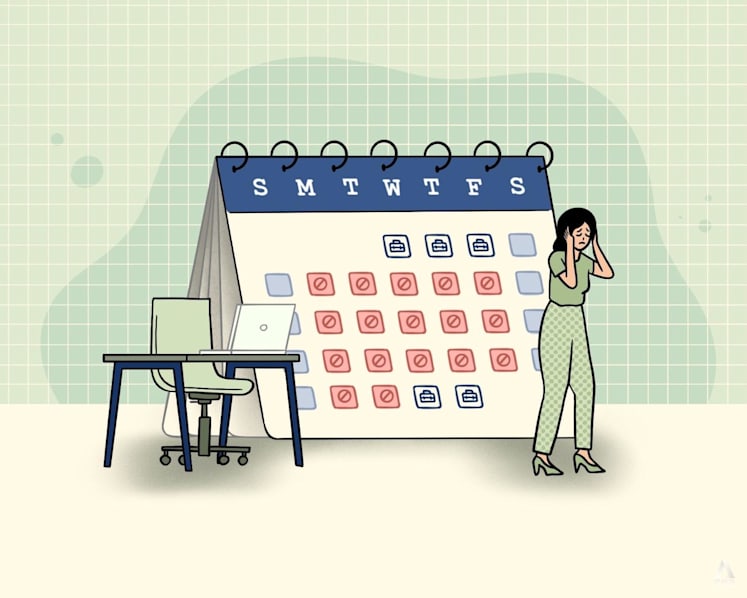
Should employees decide to take the time off, experts said they should focus on restorative activities, disconnect fully from work, and re-enter the workplace gradually. (Illustration: CNA/Nurjannah Suhaimi)

This audio is generated by an AI tool.
Adulthood is not just one phase of life but comes in stages. Its many facets can be overwhelming, from managing finances and buying a home to achieving work-life balance and maintaining healthy relationships. In this series, CNA TODAY's journalists help readers deal with the many challenges of being an adult and learn something themselves in the process.


When my grandfather died in September last year, my life ground to a halt. After the funeral, to run away from the pain, I rushed back to work in my grief-stricken state.
Even though my editors had kindly provided help in my transition back to the office and my colleagues would check in on me, the once-manageable workload felt like an uphill battle.
Sending an email became an ordeal. Picking up the phone for a quick interview took a toll. Writing an article, my passion for the last four years, suddenly felt torturous.
While I had not been particularly exhausted prior to my grandfather's death, the emotional toll left me wrung out.
Simply stated, I had burned out severely.
A few days of leave did little to resolve my mental exhaustion. Knowing that continuing to work would only harm my mental health further, I decided to apply for no-pay leave, which was granted by my bosses.
While my family were understanding of my decision – having seen first-hand my meltdowns – my parents worried that taking an extended unpaid break would impact my career in the long run.
CONSIDERATIONS BEFORE TAKING NO-PAY LEAVE
Their concerns are not unfounded. After all, unpaid leave for an extended period means being away from the office, not contributing to regular day-to-day work and being absent from key projects and decisions.
Mr Gerald Tan, projects director at career guidance service provider Avodah People Solutions, outlined several considerations to weigh up before applying for no pay leave.





Some no-pay leaves are also non-binding, meaning if you're away for a long period of time, the company is not obligated to hold your position and take you back because business needs may have changed.
First, determine the purpose of taking no-pay leave.
Some reasons include becoming a caregiver, recovering from burnout, and taking time out to figure out life goals and direction.
But if the motivation is to run away from work problems such as poor relationships with colleagues or being unable to deliver on work, Mr Tan said a job switch may be more productive.
Next, find out your employer’s attitude to no-pay leave applications.
Policies vary across companies. This includes having a list of acceptable reasons for taking no-pay leave, the durations that can be granted and qualifying criteria.
Another issue to consider is whether your boss will guarantee taking you back.
"Some no-pay leaves are also non-binding, meaning if you're away for a long period of time, the company is not obligated to hold your position and take you back because business needs may have changed," Mr Tan said.
Beyond not having an income for an extended period, human resource experts say that no-pay leave can impact your career.
"Your professional standing in the company may be diminished or put on hold. The saying 'out of sight, out of mind' applies," Mr Tan said.
Mr Zheng Yee Tan, a consultant at executive recruitment firm Ethos BeathChapman, added that when employees are away during a key project cycle or review period, they will have less output and results for managers to evaluate.



SHUTTING OFF WORK
If you do decide to go ahead with no-pay leave, being honest with your boss about why you need time off is key, said Mr Zheng.
"I think it’s best to frame your request positively and with accountability," he said, suggesting that people outline their timeline and handover plans.
"Leaders tend to respond better when the request is made thoughtfully."
Mr Tan added that flagging your intentions early gives your manager the chance to offer additional support while you're still at work – be it lightening your workload or referring you to the company’s employee assistance programme.
Such programmes may include counselling and wellness resources.
Once the no-pay leave starts, it can be difficult to suddenly turn off from work. But doing so is important, especially if you're taking the time off to recover from burnout, said Ms Stella Ong, a clinical counsellor with LightingWay Counselling and Therapy.
One way to tune out is by deleting work-related applications from your phone. Keeping work-related devices out of sight can also help.
Beyond that, taking extended time off to rest does not mean just doing nothing. Rather, it’s important to engage in restorative activities.
"Research shows that engaging in absorbing activities like sports, hobbies or meaningful social activities tends to be more restorative than passive activities like scrolling social media," Ms Ong said.


RETURN TO WORK
Similar to the dread of returning to the office after a nice holiday, employees may experience anxiety towards the tail-end of their no-pay leave as the prospect of returning to the workplace looms closer.
This phenomenon is called anticipatory anxiety, where thinking about future work responsibilities triggers similar stress responses as actually being back at work.
"This often intensifies when returning to a work environment previously associated with burnout, especially if the underlying workplace stressors are still unchanged," said Ms Ong.
However, there are ways to ease the transition back to the 9-5 routine.
Mr Zheng suggested reaching out to your colleagues about two to three weeks before you’re due to return to the office.
“Not that it has to be formal, just a quick check-in to understand if any priorities have shifted, or if the team is focusing on anything new,” he said.
“If we wait till our first day back, it’s likely a ‘cold restart’ – you’ll be playing catch-up and it sometimes can get overwhelming.”
When you return, do not try to make up for lost time by diving straight back into work, added Mr Zheng.
Instead, give yourself a runway to ease in, starting by reconnecting with your manager or colleagues early to get up to speed on changes in the workplace.
And for the first few days or weeks, setting bite-sized, achievable goals can help make the transition less stressful.
Employers can also help employees feel supported when they return to work through "re-onboarding" sessions.
“Think of re-onboarding as welcoming someone back into a team that has been operating without them and get them up to speed, instead of expecting them to figure everything out alone,” he said.
This could include a refresher for systems, processes or tools that might have changed, or a roadmap outlining immediate priorities and projects.




