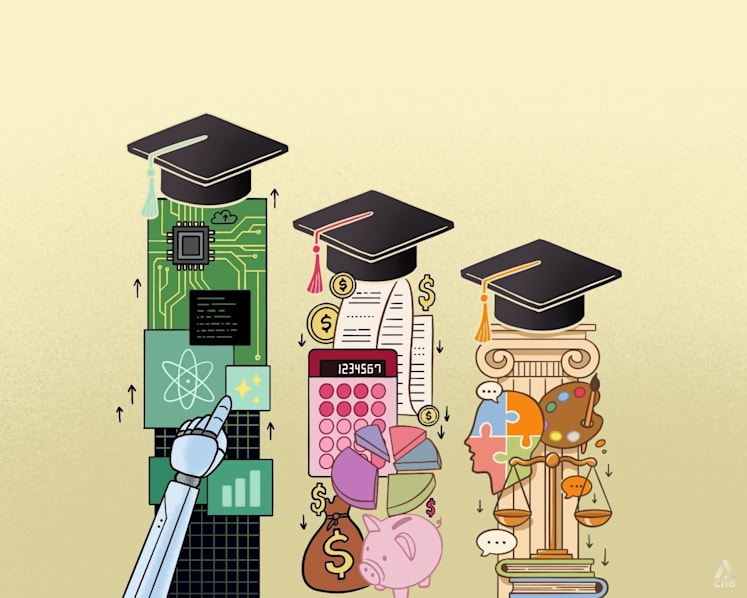
With AI doing the grunt work in law firms, where does this leave junior lawyers and fresh grads?
Young lawyers will thrive if they can leverage AI while sharpening the human-centric skills that technology cannot replicate, experts say.
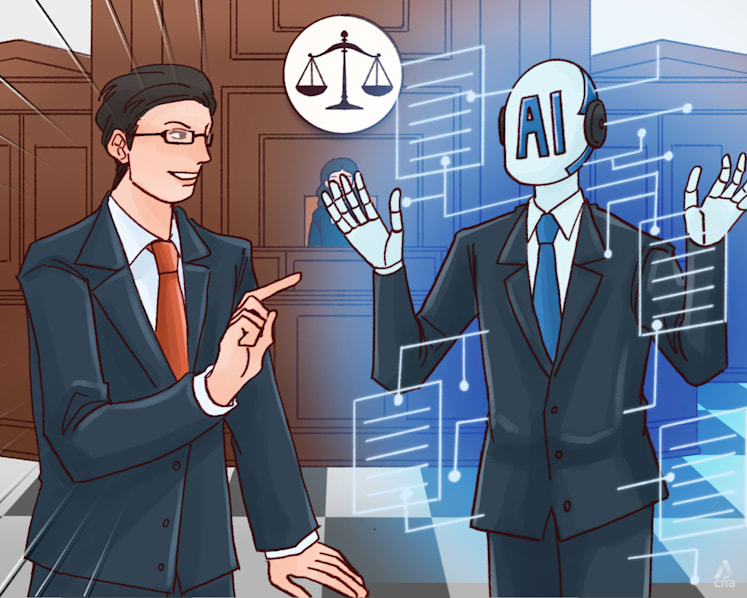
As artificial intelligence takes on some of the work traditionally handled by junior lawyers, questions are emerging about what this means for new entrants to the profession. (Illustration: CNA/Clara Ho)

This audio is generated by an AI tool.


For law student Sarika Chatterjee, the use of artificial intelligence (AI) in her studies can be a double-edged sword. While it makes her academic life easier, it has made her worry about what she can offer law firms after graduation.
The third-year law undergraduate at the National University of Singapore (NUS) said that she uses AI for basic tasks such as preparing summaries of cases or assigned readings, including condensing a 120-page reading into a 10-page examination-style summary.
"There seems to be this general air of 'everything is going to be fine'. But we students know that … law firms are increasingly investing more in specialised legally trained AI, and some partners at firms have already acknowledged that AI is able to take over the basic legal work that is done by junior associates.
"We do not receive any specific support related to AI, and it seems that we have been left to our own devices when it comes to dealing with AI in the workplace," the 21-year-old said.





She is now focusing on developing skills such as client management and presentations.
Although Ms Chatterjee is concerned, she takes some solace in AI's limitations, including its inability to provide in-depth analysis and the difficulty it has in handling cases without legal precedents.

From automating routine tasks to threatening livelihoods and displacing roles at both entry and senior levels, AI is reshaping industries and jobs – and the legal sector is no exception.
In September 2024, Singapore's courts issued a guide on the use of generative AI tools by court users, including lawyers, which took effect on Oct 1 that year.
Last year, the judiciary collaborated with American legal tech start-up Harvey AI to launch a summarisation tool for the Small Claims Tribunals, where parties are self-represented.
Across the legal industry in Singapore, several law firms have also adopted the technology in their processes, including generating quick case summaries, supporting preliminary legal research and drafting first-cut submissions.
Junior lawyers, partners and law firms told CNA TODAY that AI has helped to shave significant time off these tasks and allowed them to focus on other aspects of lawyering.
Speaking at a legal convention earlier this month, Law Minister Edwin Tong said that AI is among the most significant disruptors affecting the profession, with the technology able to automate up to 44 per cent of legal tasks – performing them faster and better.
Responding to queries from CNA TODAY, the Ministry of Law (MinLaw) said that while AI is a disruptor, it brings "immense opportunities" that will reshape legal jobs and roles.
"Lawyers who can use AI well and blend it with their technical legal expertise will thrive in the future.”
It added that the legal market will "learn to redefine value" and that lawyers will move up the value chain.
"Overall, the profession's long-term sustainability will depend less on preserving existing work structures, and more on how well it adapts to new ways of delivering legal services," the ministry said.
So with AI taking on some of the work traditionally handled by junior lawyers, what does this mean for new entrants to the profession and their responsibilities going forward?
LESS GRUNT WORK, LESS TRAINING?
The good news for fresh law graduates is that several law firms and recruiters told CNA TODAY they have not seen a material decline in hiring or demand for junior lawyers due to AI, given the manpower crunch and high attrition in the industry.
There is even hope that AI will help improve retention rates by easing the burden of traditionally labour-intensive tasks.
Ms Tessa Arquilliere, a director at legal executive search firm Aslant Legal, said law firms continue to face challenges in retaining young talent, driven in part by the growing appeal of in-house roles and alternative career paths.
This retention pressure has kept junior hiring relatively stable for now, she said.
Mr Kenji Naito, chief executive of recruitment agency Reeracoen Singapore, agreed and said that in recent years, his company has observed a more selective approach to hiring entry-level talent, rather than a broad reduction in demand.
After all, law firms and recruiters said that although AI can take on routine tasks traditionally handled by young lawyers – including surfacing relevant statutes and texts for reference – the technology is not yet sophisticated enough and typically produces just a first cut, which must then be reviewed by humans.
Mr Terence Yeo, 30, a senior associate at TSMP Law Corporation, said a common complaint among junior lawyers is the sheer volume of repetitive, labour-intensive work in the early years of practice.
When he started in 2021, much of his time was spent on reviewing and proofreading stacks of documents – processes that AI can now significantly shorten.
By taking over more mechanical tasks, AI allows lawyers to focus on higher-value work such as strategy, advocacy and problem-solving, potentially making the profession more sustainable and rewarding, especially for younger lawyers, Mr Yeo added.
"Instead of spending years doing purely mechanical work, they may have earlier exposure to higher-level thinking and client-facing work."
That time saved can also be redirected to other aspects of legal work that AI cannot handle, such as applying the law creatively to a client's situation, as well as negotiations and litigation strategy.
Mr Benjamin Cheong, deputy head of technology, media and telecommunications at law firm Rajah & Tann Singapore, said he now uses AI almost daily for tasks such as initial contract drafting and generating summaries.
He described it as a "great help" that has freed up time for higher-level legal work, as well as mentoring young lawyers and business development.
For smaller law firms in particular, the shift has been especially tangible.
Amid a labour shortage and a talent drain to larger firms, technology and AI have helped them handle basic legal support tasks, which in turn has allowed them to operate more leanly and manage costs.
Mr Nico Lee, managing director at Triangle Legal, a small firm that opened in June last year, said he turned to AI tools to plug manpower gaps in the early stages.
"This allowed me to multiply my productivity, without having a large team to assist, while we slowly interviewed and hired more staff," Mr Lee added. His firm now has three lawyers, including one junior and three paralegals.
However, some smaller firms also highlighted the cost of enterprise legal technology, warning that the gap between adopters and non-adopters could widen, especially as larger companies are better able to afford such tools.
Overall, pointing to the current limitations of AI, the law firms, recruiters and lawyers interviewed by CNA TODAY emphasised that the technology cannot, at this point, replace the role of a junior lawyer.
One common concern is AI's tendency to "hallucinate" – generating non-existent cases or citations – which means that its outputs must be supervised and verified by a lawyer.
This glitch in the AI tool has resulted in lawyers getting into trouble.
Last October, a lawyer here who referred to a fictitious legal authority generated by AI was ordered to pay S$800 (US$620) in personal costs to the other party in a civil case.
Earlier this month, two lawyers here were each ordered to pay S$5,000 in personal costs for misusing AI, after quoting two fictitious cases in their closing submissions.
Beyond hallucinations, lawyers also pointed to other limitations of AI, including its ability to surface relevant laws or research without guidance on how to apply them to a client's case.
Mr Lee Jin Loong, 31, a senior associate at Setia Law, said that furthermore, AI tools do not now have access to the legal research databases that lawyers typically rely on, such as LawNet, LexisNexis and Westlaw.
In his speech at the opening of the legal year in January, Chief Justice Sundaresh Menon said that as AI increasingly displaces opportunities for young lawyers to develop foundational skills such as legal research and analysis, these capabilities could erode – potentially affecting their ability to assess whether AI-generated work is accurate.
He also said that the profession must be ready to harness new technology responsibly to improve public access to justice, but it must also guard against the risk of AI degrading lawyers' skills.

HOW THE BAR IS SHIFTING FOR JUNIOR LAWYERS
Even though AI is unlikely to replace junior lawyers in the near term, industry experts said that it is expected to reshape their roles, with expectations moving towards higher-value work earlier in their careers.
Recruiters said that legal firms now also look for candidates with at least a baseline familiarity with AI tools, alongside strong people-centric skills such as negotiation, analytical thinking and problem-solving.
Mr Linus Choo, regional head of legal and governance recruitment at Ethos BeathChapman, said that employers want junior lawyers who are "AI-fluent" and able to integrate technology into their workflows, including using it for project management.
The need to be AI-savvy is inevitable. However, Mr Abdul Jabbar Karam Din, deputy managing partner at Rajah & Tann, said that lawyers will continue to gain an edge from skills that AI cannot yet reliably replicate, such as strong specialist legal knowledge and a deep understanding of clients' commercial and operational needs.
"Lawyers who are able to combine such human capabilities with a disciplined use of AI will deliver the best outcomes," Mr Jabbar added.
Law professors and senior lawyers said that using AI does not mean junior lawyers can get by with weaker legal knowledge.
On the contrary, they need a strong foundation to assess whether AI-generated work is accurate.
Mr Alexander Woon, provost's chair and law lecturer at the Singapore University of Social Sciences (SUSS), said: "I tell my students that AI is like a calculator.
“In primary school, we teach students how to do maths by hand, before later on allowing them to use a calculator in secondary school.
"The same goes for AI. They should learn to do things themselves first, so that they build their core legal skills. Later on, when they enter practice, they can use AI to speed things up.
"Otherwise, they will not be able to detect when AI is feeding them the wrong answers, or deal with novel situations that go beyond its capabilities."
Several firms and lawyers also noted a growing trend of clients turning to AI for an initial round of advice or even drafting before approaching law firms.
This, they said, means that lawyers must still guide clients on the risks of relying on AI without fully understanding the law, contract clauses and their implications, and to provide proper advice on how these apply to their case.
A representative from law firm Joyce A Tan & Partners said: "AI tools may be able to give some level of explanation of the clauses, but such explanations may still not be sufficient for clients to appreciate the rationale."

Some lawyers acknowledged that the "grunt work" they did as juniors – such as manually poring through cases – helped sharpen their legal instincts, and expressed concern that these may be diminished as certain tasks are outsourced to AI.
Mr Cheong from Rajah & Tann said: "When we did legal research (in the past), we would refer to law textbooks and read them thoroughly … Because if you need to do research on a legal query, then you need to identify the legal issues relevant to the query, find the correct law textbooks, read and understand the law from these textbooks and then apply the law to your query in order to come up with a legal response."
This, in and of itself, is a form of training, Mr Cheong added.
"When you open the textbook, you won't only read one point. As you flip through the pages, you will read about other areas of law and contrasting legal arguments, which you may not have thought of when you first started on your research.
"You will pick up different things along the way. This kind of thing is lost in an AI age, when you just get a direct response to the query that you type into the AI platform. It becomes more tunnel-focused, so I think that's the risk as well."
Still, Mr Cheong noted that the reality is different for today's generation of young lawyers, who are entering practice with AI.
He said that such training and ways of thinking can still be developed by encouraging junior lawyers to analyse the legal problem carefully before using AI to do the research and initial drafting, and to critically evaluate the responses that they receive from AI to check for hallucinations and relevance.
This, he added, helps train them to conduct research more rigorously and to recognise that many legal issues are interconnected – rather than simply relying on AI outputs for a specific scenario.
Mr Melvin Loh, a senior lecturer of law at SUSS, said: "You have these tools and mechanisms – with safeguards (around confidentiality, for example) in place – that can speed up your work in an accurate way, and not in a made-up, hallucinated way.
"I would think it's a bit self-limiting if you don't use it, because it will put you at a disadvantage compared to people who do."
Separately, junior lawyers and undergraduates said that using AI need not come at the expense of building strong legal domain knowledge, viewing it as a tool to support – not replace – their work.
They acknowledged that there is still a need to build a strong foundation and to put in the hard work.
Mr Kevan Wee, 24, a third-year student in the computing and law programme at Singapore Management University, said that although grunt work was tedious, it also "trained important habits of reading closely, spotting fine distinctions, understanding how judges reason, and developing the instinct to verify rather than accept things at face value".
For him, the way forward is to redesign training so that students and trainees still engage in the hard thinking involved in critical reading, reconstructing arguments and stress-testing conclusions, while using AI to reduce low-value repetition.
This could include requiring students to reconstruct parts of an argument from primary sources before turning to AI summaries, or to critique AI-generated drafts – approaches he believes will help future lawyers continue to read critically and exercise independent judgment.
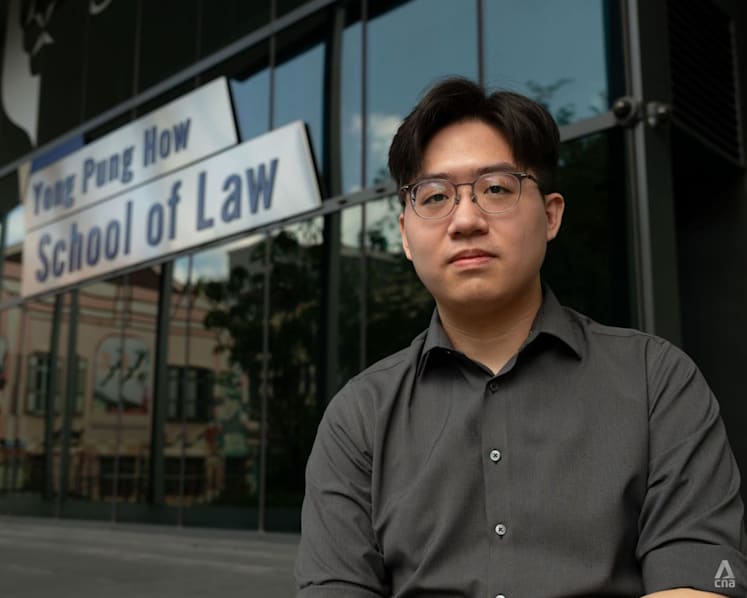
Ms Adele Lim, 26, a legal practice trainee, said it remains important for junior lawyers to continue reading widely and pore over cases to build a strong grasp of the law and understand how it is applied over time.
She added that sharpening their own instincts is also important, since "AI cannot develop (this) for you".
Mr Lee from Setia Law maintained that there is value in drafting a motion or set of legal submissions from scratch, rather than outsourcing the thinking entirely to AI.
Doing so forces lawyers to engage with the underlying material and take ownership of both the approach and the wording of their arguments.
"Such skills take time to be honed through repetition and an amalgamation of experiences, and there is no good substitute for hard work," he said.
MAINTAINING THE HUMAN CONNECTION
Over the years, lawyers have had to navigate waves of technological change, from the introduction of online legal databases such as LawNet in 1990 – which shifted research from physical law reports and libraries to searchable digital platforms – to the rollout of mandatory electronic filing systems by 2000, which replaced paper filings and transformed how cases were managed.
In the current landscape, the pressure is on for undergraduates and junior lawyers to carve out a distinct professional identity, industry experts said.
Lawyers said that what will distinguish practitioners is their ability to connect with clients such as understanding their concerns, commercial priorities and risk appetite, as well as to communicate advice to them in a way that builds trust and confidence.
Other skills that will put young lawyers in good standing are sound judgments, along with creative and strategic thinking.

Mr Yeo from TSMP Law Corporation said: "Those human elements – empathy, judgment and the ability to connect with clients – are areas where AI still falls short."
Universities said that they are well aware of the need to prepare their undergrads for a career increasingly shaped by AI.
Professor Tan Cheng Han, chief strategy officer at NUS' Faculty of Law, said that institutions will need to be "alive to the need to adapt" as AI becomes more sophisticated.
This is so that students can continue to stretch themselves intellectually despite whatever assistance AI can offer them.
He added that with AI automating aspects of legal research such as due diligence and document review, the entry point for young lawyers is "shifting upward", and that it will be the "higher order skills" that differentiate lawyers going forward.
At NUS, this means ensuring that teaching and assessments continue to require students to think critically about the law, understand legal principles and doctrines, and apply them meaningfully – without allowing AI to substitute their reasoning, even where its use is permitted.
He said that the school does not want students to spend much of the semester curating materials and to take along prepared essays into final examinations, which could "dull the development of their thinking and reasoning skills".
Therefore, from the coming academic year onwards, most compulsory law exams will be closed-book and conducted without access to AI.
Mr Melvin Loh, a senior lecturer of law at SUSS, said that one of the biggest challenges facing educators today is that some students turn to generative AI before building a strong foundation of domain knowledge.
To address this, he encourages students to build up their foundational knowledge first and not take AI outputs at face value.
Beyond honing client management skills, Mr Loh also urged students to invest time in building relationships with mentors they hope to learn from and with firms.
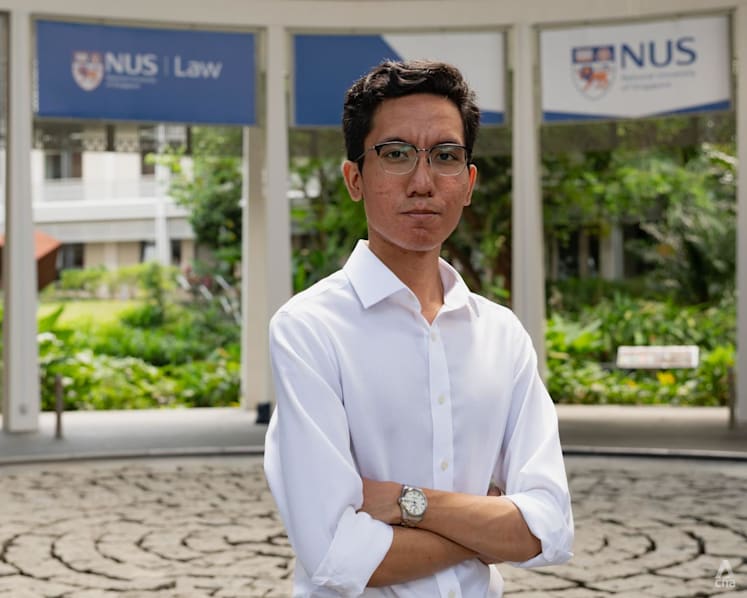
This is what Mr Kamal Ashraf Kamil Jumat is focusing on as he prepares for legal practice.
He said that he is "cautious but not panicking just yet", noting that the roles he hopes to take on are more human-centric, where clients still require a person on the other end.
For now, the 24-year-old final-year NUS Law student is focused on sharpening his soft skills and learning from legal professionals, especially those who can empathise, demonstrate the sharp wit associated with lawyers, and build strong relationships with the people they serve.
Senior lawyers said that ultimately, the qualities that made good lawyers in the past will continue to define good lawyers today, even as AI becomes a useful tool to support their work.
Mr Cheong from Rajah & Tann said: "If you know how to harness AI properly, it will change you from a lawyer to a superlawyer."